Heading to the well to ‘accesswater’? Why not ‘get water’?
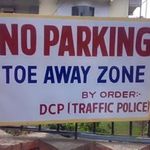
This beauty was captured and shared by a leading supporter of ‘Our Kind of English’ column, plus what goes with it to make it more colourful. Now, what’s THRUSDAY? Nothing! We suppose the signwriter was assigned to paint THURSDAY. Trust Signwriters! PHOTO | MH
Bongo’s senior-most broadsheet of Saturday, September 5, has a story on Page 17 whose headline reads, ‘Hulia women leave midnight WATER journeys behind as new project brings WATER closer home.’
We’d rather the headline writer replaced the “second” water with this common idiom that connotes the primary thirst quencher, PRECIOUS LIQUID. Reason? To reduce monotony.
To add colour on the space carrying the longish feature article, there’s a five-column photo in which, among other things, a VIP lady is helping a village woman to balance a bucket of water on her head. A very noble gesture, if you ask us.
Following is what caption scribbler says in describing the activity that’s taking place during the special occasion to inaugurate a project that will certainly make life much easier to long-suffering women and girls of Hulia:
“World bank representative RKW assists a Hulia Village resident in ACCESSING water during a visit to the 1.1 billion-shilling Ruwasa water project in Tunduru District...”
The action in the photo is instantaneous—just a one-off activity in which a woman has just filled her bucket with water to carry home. We consider the use of the word “access” to describe the activity rather superfluous. Pretentious!
Picture this: You meet a fellow neighbourhood citizen carrying a jerry can, heading to the community tap to get water for his morning bath. On asking him where he’s going, would he reply, “I am going to the tap to ACCESS water?” We doubt it!
And now, after a long hiatus, we’ve landed some goodies from the tabloid closely associated with columnist (Friday, September 4), whose Page 1 has a story entitled, ‘Why Tanzania’s cement prices remain a puzzle.’
For a summary, the we’ve the following:
“The clinker PROBLEM, a key material in cement production, has emerged as one of the main reasons the PROBLEM is proving difficult to resolve.”
The subject (matter) in this sentence is “clinker problem,” not clinker! It means, there’s a dubious suggestion that “clinker problem” is a “key material” in cement production! We aver our scribbling colleague meant to say, “Getting clinker, (which is) a key material in cement making, has emerged as one of the main problems affecting production.”
On Page 4, we take an interest in a story entitled, ‘Quality, sustainability earn Alliance One top award.’ Therein in Para 4, the scribbler writes: “Receiving the award on behalf of Alliance Tanzania, company SPOKESPERSON Advocate John Magoti said the recognition reflected the contribution of more than 350 permanent employees...”
The term “chairperson” is meant to get rid of masculine bent, carried by the term “chairman.” Chairperson, however, is gender free, that’s why it’s favoured by those keen on removing the old notion that leadership is about masculinity. But we don’t see why one should use the term chairperson when the title holder is clearly a man.
How about simply saying “chairman,” a word that’s shorter, given that apt journalese is about brevity? Indeed, modern usage endorses the shorter word “chair” in the place od chairman, chairwoman and chairperson.
A reader, one Ali Makengo of Kinondoni, Dar, communicated to this columnist to point at a goof he identified on Page 15 of the tabloid, featured in a humour piece entitled, ‘Everybody will eat where they work, bars included.’ He guides us to a paragraph in which the scribbler writes on the plight of a typical Bongo barmaid who’ll ask you for a beer and, instead of actually getting herself the drink, she does something better for herself.
“Why, most likely, would she be, one, sparing the beer money for her FAIR back home and two, slowly collecting cash to top up her puny monthly pay of 80k?”
Oops! It’s certain the hapless scribbler had in mind the word FARE (nauli). “Fair” means something very, very different!