Tanzania stands at the intersection of agriculture, education and sustainable economic transformation. With agriculture directly engaging over 65 percent of the national workforce and youth comprising more than 60 percent of the population, the opportunity to unlock youth employment, climate action and rural prosperity has never been greater.
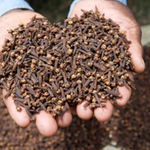
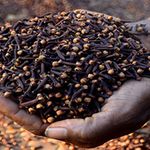
At the heart of this opportunity is an iconic East African crop – cloves (known in Swahili as karafuu). Traditionally associated with Zanzibar, cloves are high-value perennial trees with global demand in spice markets valued at over $3.5 billion annually.
Yet, despite their value and cultural resonance, clove production has remained geographically constrained and under-optimised on the mainland.
A growing movement—rooted in schools, communities and policy innovation—is changing that.
When schools become green engines of growth
Education is no longer confined to classrooms. Around the world, schools are emerging as “living laboratories” where students practise sustainable agriculture, climate adaptation and economic enterprise. They are the green engines of future productivity.
According to the Food and Agriculture Organization (FAO), school gardening and farm programmes in Africa have improved agricultural literacy and food security, with reported increases of up to 30 percent in local crop yields where school agriculture is institutionalised.
In Europe and North America, agro-tourism linked to schools contributes 10-20 percent additional revenue to rural communities by integrating educational tours, farm stays and community events. Tanzania – and Morogoro Region, in particular – is poised to replicate and surpass these models, starting with cloves.
Youth at the centre of a cloves-driven future
Youth involvement isn’t just desirable, it’s crucial. For Morogoro, Tanga, Dodoma and Dar es Salaam, youth MUST be at the centre of the karafuu-driven future.
Research from the International Fund for Agricultural Development (IFAD) reveals that youth engaged in agricultural programmes are 30-50 percent more likely to adopt modern farming technologies and entrepreneurial practices than peers outside such programmes.
By embedding cloves into school curricula and extracurricular activities, students gain:
l Practical skills in agronomy, nursery management and climate-smart practice
l Business and entrepreneurship experience in value chains
l Opportunities as tour guides and cultural ambassadors
This learning-by-doing approach (case-learning) prepares youth for jobs that are permanent, scalable and climate-resilient, a stark contrast to seasonal or subsistence labour that has long characterised rural employment.
Teachers and parents: Unsung architects of sustainability
Globally, teacher-led agricultural clubs like the United States’ 4-H movement and the international Eco-Schools programme have demonstrated that educators are powerful agents of behaviour change. These programmes show significant improvements in student outcomes and community uptake of sustainable practices.
Likewise, in countries such as Kenya and Rwanda, parents engaged through school–community agriculture programmes have adopted climate-smart farming techniques at rates 20-40 percent higher than non-participant communities.
This kind of inter-generational collaboration dramatically increases the multiplier effect of school programmes, expanding impact beyond school gates into homes, farms and neighbourhood enterprises.
Agro-tourism and karafuu culture: A new economic frontier
Cloves aren’t just crops, they are a cultural economic asset. Thoughtfully designed agro-tourism can transform clove farms into destinations for:
l International flavour and spice festivals
l Cultural heritage tours celebrating East Africa’s spice history
l Harvest celebrations and student-led storytelling experiences
Similar models in Italy’s agro-tourism sector and Japan’s “forest school” farm visits have boosted local rural income by 12-20 percent while reinforcing heritage and environmental stewardship.
In Tanzania, events like the proposed International Karafuu Festival, the Karafuu Marathon 2026 and the Global Youth Karafuu Tournament are attracting attention from investors and tourists alike, signalling untapped potential in climate-smart tourism integrated with agriculture.
Clove trees play a significant role in climate resilience. As long-lived perennials, they:
l Sequester carbon effectively over decades
l Enhance soil stability
l Provide continuous ecological benefits compared to annual crops
When incorporated into school agro-forestry systems, cloves contribute to community climate adaptation plans—a key priority of the United Nations Framework Convention on Climate Change (UNFCCC) and Tanzania’s own National Climate Change Strategy.
Policy alignment: From classroom to national strategy
It is vital for the ministry of education to align and integrate its policy to accommodate the integrated education–clove model. This classroom to national strategy model will support:
1. Tanzania’s ASDP III (2025–2030)
2. Vision 2050 climate and economic strategies
3. UN Sustainable Development Goals (especially SDGs 4, 8, 13, 15)
It will also dovetails with Environmental, Social and Governance (ESG) frameworks and Environmental and Social Impact Assessments (ESIAs), making it attractive for climate finance instruments and public–private partnerships.
Looking ahead
At a moment when the world is rethinking how education, climate resilience and economic growth intersect, Tanzania’s clove-based school program offers a replicable and impactful model. It demonstrates that sustainable agriculture is beyond just livelihood, it’s a learning ecosystem.
With strategic leadership and investment, community engagement and policy support, Tanzania can transform karafuu from a historical spice into a 21st-century engine of youth employment, climate action and rural prosperity.
Bryan Toshi Bwana is the Founding Trustee of Umoja Conservation Trust (UCT). www.umojaconservation.org
Register to begin your journey to our premium contentSubscribe for full access to premium content