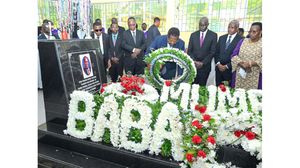
The government’s decision to commemorate the five years since President John Pombe Magufuli passed away on March 17, 2021, after just over five years in office, gives his admirers a chance to reflect on his performance, each from their own point of view.
There is however general agreement that his tenure was momentous and thunderous. Suddenly, the impossible became possible. There was no mission impossible. Discipline, speed, accountability, and respect for public resources became part of everyday working life. I recall visiting a daughter-in-law who had given birth in ward that had been created from an unused office accommodation, to address the existing shortage!
The nation was jolted. Slumber was intolerable. Yes, it was possible to work long hours, on site. You had to have data, especially on government resources, on your ‘tongue tip’, otherwise, you could lose your position, in a public meeting, at that. He wanted every shilling accounted for and used productively, especially on his favourite sector, infrastructure. He cancelled various celebrations, committing the saved money to other needy sectors.
While research may be needed to quantify the impact of Dr Magufuli on Tanzania’s development, anecdotal evidence allows us to make some observations.
The hospitality sector, especially hotels, which depended on conferences to sell food and accommodation, was ruffled, when government policy changed into the public sector using their own home accommodation for meetings, instead of hiring. The downturn in the hospitality sector contributed to the observed increase in non-performing loans (NPLs) in the financial sector. NPLs stood at 11.7 percent in December 2017, 23.6 percent in April 2018, dropping to 9.3 percent in 2020, but still above the five percent required by Bank of Tanzania.
In order to address the shortage of planned land as urban areas developed, a number of entrepreneurs had turned to buying large pieces of land, planning and surveying it servicing it and selling it to the general public. This business, which was doing well, went flat after 2015. The expected upward curve in the value of land as time went by slowed down, flattened, and in some cases, took a dip. Some of those who engaged in selling planned land are still struggling, especially if the location is not conducive.
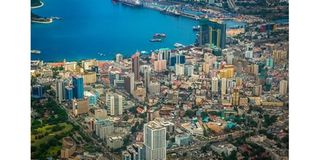
While the government boosted infrastructure, high-end private real estate in major cities like Dar es Salaam saw an oversupply and falling demand.
Both the private sector and, to some extent, the financial sector were shaken, as the government took measures that disciplined and constrained private sector expansion, including moving government accounts from commercial banks to the Bank of Tanzania, which reduced private bank liquidity and lending capacity. In general, the government favoured the public sector compared to the private sector. Many, who had construction sites, took a wait and see stand as both the credit crunch and government reduced spending going to the private sector, took bite.
President Magufuli loved infrastructure: roads, bridges, flyovers, dams, railway lines, bus terminals, large buildings for hospitals, markets, and education establishments, airports, ports, ships, ferries. Indeed, that is development. His achievements in these areas need not be repeated here; only to emphasize that he was doing all these for national development.
His love for Air Tanzania, and airports in general is illustrative. He greatly improved the aviation sector while he eschewed flying himself. Late President Mwinyi pointed out several times that every era, every person, has his/its own book. Mwinyi accepted to be called Mzee Rukhsa because he had a lot of economic and social opening up to do during his time. Magufuli came with a different “crie de guerre”: “Hapa Kazi Tu”, meaning, “Work, hard work”. I never met him face to face, but I know he was a man of action on the ground, who would not take explanations on paper, for an answer.
With regard to urban development, it looks like the Local Government Reform Programme was put on hold, though many urban areas saw their status raised: to town, municipal or city councils.
The Dar es Salaam City Council, however was dismantled and its status transferred to the Ilala Municipal Council, much as the need for an overall metropolitan authority over the mega-city of Dar es Salaam is still required.
In case this paper ever reaches the powers that be, Dr Magufuli has promised us, in Minziro, a tarmac road liking Minziro and Mutukula. He passed on before this was done. Subsequently, around half the distance (5km) was improved to murram level. Work has stopped for four years now. Could the promise be fulfilled please?
Dr Magufuli died before writing his own book. Now that the government has elected to construct a monument in his memory, a team could be set as well, to write his book; especially about his way of making decisions and making sure these are implemented with zero excuses. This could help, especially the young generation, to be dedicated to building their nation, just as Magufuli was.
Lusugga Kironde is Professor of Land and Urban Economics and lead consultant at TKA Company Ltd. [email protected]