Dar es Salaam. A nation must have critics. Former British Prime Minister Winston Churchill famously remarked that while criticism may not be agreeable, it remains necessary.
Critics ought to be protected, even if their criticism is unappealing, provided they operate strictly within the law.
Criticism is essential feedback. Microsoft co-founder Bill Gates attributed his success to feedback, noting: "We all need people who will give us feedback. That is how we improve."
Equally, a nation desperately needs advisers and mediators. It is impossible for a country to be permanently split into two opposing factions, where one side only generates heat while the other's sole function is to defend itself or retaliate.
There must be neutral figures who bring all sides together to speak with one voice for the country's greater welfare.
If everyone chooses a side, either continuously criticising or defending and praising, when will the nation ever speak as one? While it is neither possible nor desirable for everyone to think alike, there must periodically be fundamental issues that unite the citizenry.
In his classical text Politicus ("The Statesman"), part of his Socratic Dialogues, ancient Greek philosopher Plato explains that a Statesman possesses vast knowledge of statecraft, knows how to govern with justice, and considers the best interests of the public.
In modern global governance, a Statesman is widely understood to be a retired senior leader who held high office and possesses extensive administrative wisdom.
A Statesman serves as an adviser to incumbent leaders, even if informally. They ought to act as a bridge and mediator within the nation.
As American author Stephen Covey noted, a Statesman should be a light, not a judge, a mirror, not a harsh critic. They should be part of the solution, not part of the problem.
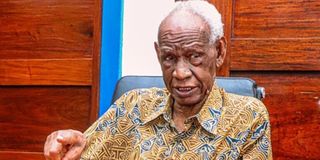
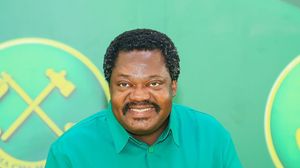
Judge Joseph Warioba is a former First Vice President and Prime Minister. He is an established Statesman. In his capacity, he ought to be a mediator.
The legal entitlements granted for his distinguished service are meant to afford him stability in retirement while enabling him to serve the country whenever called upon.
However, Judge Warioba has increasingly positioned himself as a critic rather than an adviser. Once you stand primarily as a critic, you forfeit the authority of advice and mediation.
No leader who feels publicly attacked will easily believe you can offer objective guidance. Human nature dictates that public attacks inevitably strike at the heart.
Tanzania's Fourth Phase President, Mr Jakaya Kikwete, early in his presidency, famously responded to criticism from Judge Warioba and his peers by stating: "I would be very surprised if they praised me." In essence, President Kikwete no longer expected constructive engagement from them.
Once a leader views you purely as a critic, they cannot regard you as a trusted adviser. They may meet you, but they are merely hearing your opinions rather than receiving actionable advice.
A genuine adviser must demonstrate goodwill towards the person being advised.
If a retired leader never publicly acknowledges achievements but constantly hurls verbal missiles, the administration will view them as harbouring ill will.
Human leadership inevitably involves achievements alongside shortcomings. Has Judge Warioba stepped forward to praise any notable milestone of President Samia Suluhu Hassan’s administration?
Many positive developments have transpired, including the recent 100 percent completion and launch of the Julius Nyerere Hydropower Project (JNHPP).
At least one positive statement was expected. Instead, Judge Warioba has adopted social media rhetoric, labelling supporters of the administration as chawa (sycophants).
Criticism remains a fundamental principle, but as the 16th President of the United States, Abraham Lincoln, observed: "He has a right to criticise, who has a heart to help."
A Statesman's criticism must be anchored in a genuine desire to assist the country, free from apparent malice toward incumbent leaders.
The nation faced a difficult period following the events of October 29, 2025. In the aftermath, Tanzania needed statesmen who would heal the nation through measured utterances and genuine steps toward reconciliation.
Instead, Judge Warioba addressed the press and declared that the death toll from October 29 exceeded that of the Kagera War.
The figures he cited were drawn from unverified social media platforms rather than official state records. Judge Warioba was fully aware that internet access had been disrupted, making it impossible for ordinary citizens to establish exact casualty figures.
A figure of his stature should not have relied on unverified claims before the media.
Furthermore, on December 17, 2025, Judge Warioba met President Hassan at State House, Dodoma. Less than a week later, he addressed journalists to claim that the Tanzania Police Force was divided, citing information allegedly provided to him by two traffic officers.
Even if true, such sensitive security details should not be rushed to the press for political exposure. The Police Force is an instrument of civil security, and the President serves as Commander-in-Chief.
If a Statesman receives such information, it should be shared confidentially with the Commander-in-Chief, not broadcast to journalists.
Statesmen must strive to remain non-partisan so they can unite the country during crises. They should neither praise the government blindly nor align exclusively with opposition critics. Only then can they retain the trust of all sides to mediate effectively.
Publicly lambasting the government will not steer the country toward justice and democracy.
Dialogue has always been the mechanism that moves Tanzania forward. As a Statesman, Judge Warioba ought to champion genuine dialogue and national reconciliation, ensuring that the country wins, rather than taking sides.
Register to begin your journey to our premium contentSubscribe for full access to premium content