There is a tendency to view sector reports through the lens of growth alone. Subscriptions rise, transactions increase and percentages rise & fall. But every so often, the data reveals something deeper, not just growth, but a shift.
The latest Tanzania Communications Regulatory Authority (TCRA) sector report offers one such insight. During the first quarter of 2026, telecommunications subscriptions grew by 4.6 percent. Internet subscriptions increased by 1.5 percent. These are steady, expected gains which signal a maturing connectivity landscape. But mobile money data tell a different story; subscriptions grew by 5.9 percent, and more notably, transactions increased by 7.4 percent.
At first glance, this may appear to be a continuation of Tanzania’s well-documented digital progress. In reality, it signals something far more significant: mobile money is no longer growing alongside telecommunications; it is beginning to outpace it and, more importantly, to redefine the industry.
For years, Tanzania’s digital transformation agenda has focused on access: expanding coverage, increasing connectivity and bringing more people online. That work remains important. But as connectivity matures, the question is no longer simply whether people are connected. It is what they do once they are connected and this is where mobile money is emerging as the central player. The growth in mobile money transactions suggests that digital financial services are becoming increasingly embedded in everyday life. Tanzanians are not just signing up for mobile money accounts; they are relying on them more frequently, more consistently, and more deeply in their daily lives. Transactions are no longer occasional. They are habitual, they are part of everyday life
This is a critical distinction.
Because growth in usage signals something that growth in access cannot: dependence.
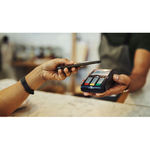
From paying school fees to receiving salaries, from settling supplier invoices to supporting family members across regions and most recently investing in capital markets, mobile money has quietly embedded itself into the rhythms of everyday economic activity. It is no longer a convenience layered on top of the system; it is becoming the system itself.
This is why it is no longer sufficient to describe mobile money as a financial service. It is the financial infrastructure. Not in the traditional sense of roads, ports or power stations, but in the same functional sense: a system upon which millions of economic interactions depend.
Globally, the GSMA has recognised mobile money as one of the most transformative financial inclusion innovation of the last two decades. Across Africa, it has become the primary gateway to formal financial services for millions of people who previously operated outside the financial system. Tanzania has been one of the continent’s strongest examples of that transformation.
The true impact of mobile money extends far beyond payments.
Over the past years, millions of Mixx customers have collectively saved billions through digital savings solutions. Across agricultural value chains, including cashew nuts, cloves, cotton, sesame and coffee, thousands of farmers receive digital payments, financially including them for the first time, improving transparency and reducing the risks associated with cash transactions.
These examples point to a deeper reality. Mobile money is not simply digitising transactions. It is reshaping financial behaviour, expanding opportunity and enabling greater participation in the economy.
Imagine a Tanzania where mobile money is removed from the equation, even for a single day. Can we survive? Informal traders would struggle to transact. Small businesses would face delays in payments. Families would find it harder to support one another across distances. Entire segments of the economy would slow down.
That is the hallmark of infrastructure. Every successful digital economy is built on the ability to make secure, affordable and convenient everyday payments. Whether paying for transport, groceries, utilities or agricultural inputs, digital payments create the transaction layer upon which modern economies operate. The more frequently consumers and businesses transact digitally, the more efficient and transparent the economy becomes.
This has important implications for policymakers, businesses and development partners. If the first phase of Tanzania’s digital transformation was about connectivity, the second phase is about utility. It is about enabling people not only to connect, but to participate meaningfully in the digital economy—to transact, save, borrow, invest and grow.
The TCRA data does not simply tell us that mobile money is growing. It tells us that it is becoming more central, more embedded and more essential to how Tanzanians live and work. In other words, the conversation must evolve.
Mobile money is no longer a parallel story within telecommunications. It is no longer simply an instrument of financial inclusion. It is the infrastructure powering economic participation at scale.
And as Tanzania’s digital economy continues to evolve, the question is no longer whether mobile money will grow. The question is how we ensure it continues to serve as a trusted, resilient and inclusive foundation for the opportunities ahead.