New capital city: Uganda can borrow a leaf from Tanzania

The relationship between Tanzania and Uganda is certainly growing, what with the recent visit to Tanzania by the Ugandan President His Excellency Yoweri Kaguta Museveni, where a number of issues on key economic undertakings were discussed with his counterpart, Her Excellency, the Tanzanian President, Samia Suluhu Hassan.

In between these discussions, Uganda’s Minister of State for Urban Development, Margaret Muhanga Mugisa, has proposed reviving the idea of moving the country’s capital from Kampala to Nakasongola, where the authorities could build a new city from scratch. She made her remarks at a meeting of the Parliamentary Committee on Lands, Housing and Urban Development.

My hunch feeling is that the Minister is impressed with the move by Tanzania, to shift its capital city from Dar es Salaam to Dodoma. Ipso facto, Uganda can learn from the Tanzanian and other countries’ experiences in relocating capital cities.

I personally love urban areas and the idea that Uganda has a Ministry of State for Urban Development is exciting and points to some institutional set up that Tanzania may want to take on board. The way our urban areas, are growing chaotically, be they small, medium-sized, large or mega-large, points to the need to have a strong political and economic push to salvage them.

Soon after Independence, a number of African countries embarked on relocating their capitals, although some, like Botswana, had to build new ones from scratch, in what came to be known as “necessary capitals”. Malawi, Nigeria, Côte D’Ivoire and Tanzania decided to abandon their old capitals of Zomba, Lagos, Abidjan and Dar es Salaam, for new ones of Lilongwe, Abuja, Yamoussoukro and Dodoma, respectively. By mid-1990s, only Tanzania remained entrenched in Dar es Salaam, despite the plan to have moved to Dodoma in 10 years from 1973.

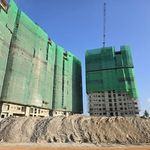
Today, however, the government of Tanzania operates from Dodoma, the relocation having been accelerated from 2016, after many years of dilly dallying and U-turns. This is something the Ugandans may need to learn. You need a strong political push to realise the relocation, and to do so within a short time span. A long period increases the risks of the relocation movement getting thwarted by economic and political adverse circumstances.

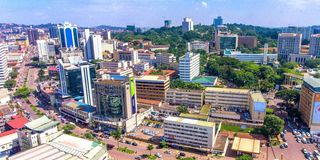
The Ugandan Minister of State for Urban Development seems to have given up about Kampala, getting quoted as saying: “Kampala has become unlivable because of chronic traffic congestion, unplanned development and a lack of space for expanding road infrastructure”. She said the country loses around $1.6bn every day because of traffic jams and that residents are forced to leave for work as early as 4 am to arrive on time”. Sounds like Dar!

Last year we had an opportunity to go for a pilgrimage in Uganda, and yes, the traffic congestion in Kampala is out of this world. Yet, there is need to ponder whether moving government from a large city relieves traffic congestion.

Large cities have their own momentums driven by investments in various economic, social and cultural ventures and activities. Moving the capital from the city has limited and short-lived impact on relieving traffic congestion, as those living in Dar es Salaam will attest. “Foleni” is everybody’s cry, and this is not an exceptional case. The following has been written about Lagos:

“Lagos experiences some of the worst traffic congestion in the world, with commuters spending an average of two to three hours daily in gridlock. This massive congestion drains billions in productivity losses, elevates air pollution, and is driven by a high vehicle density squeezed into a limited road network”. You are reading right. Lagos is heavily congested, despite the relocation of the capital from there to Abuja in 1992.

Abuja too, despite being a well-planned city, is suffering from daily traffic congestion as a result of a growing population, heavy commuter movement from satellite towns, roadside trading, and high volumes of commercial traffic. These cause severe delays on major routes into the city center. Those who moved early in Dodoma were happy with easy movements. Today, traffic congestion is creeping in as well.

Kampala’s woes are, in part caused by huge infrastructure gaps, massive growth of motor vehicles and heavy through traffic to/from neighbouring countries.

The Ugandan Minister is pessimistic: “Kampala is unlivable, it can no longer be changed. We have to move out of it”. Yet, even if the government moves out, people and economic activities, will remain and, in order to improve their well-fare, as well as make the city work, heavy investment will still be needed in infrastructure: roads, drains, water, sewers, housing, electricity, public places, and what have you.

Late President Magufuli, while pushing for relocation to Dodoma, made it clear that the government was not abandoning Dar es Salaam.

Moving the government from a current capital city need not be justified on the grounds of the need to run away from existing problems.

Centrality has been often cited. Creating a new national psyche, in a green lush city, has been dreamed of. The earmarked site of Nakasongola for Uganda’s new capita is centrally located with easy access to different regions. The land is flat and open, making it cheaper to acquire large areas for a planned smart city. Planners (who have failed to protect Kampala’s wetlands on Lake Victoria) look at the shores of Lake Kyoga as a good spot for a new modern administrative center.

While moving Uganda’s capital city has been on the agenda for some time, the main problem with our cities is that of governance. A new capital may seem livable when the population is small, but problems in the old city will get replicated with time, in the new one. You cannot keep moving. You cannot keep on abandoning public property and investments. Important public records get misplaced or destroyed altogether in such movements.

Lusugga Kironde is Professor of Land and Urban Economics and lead consultant at TKA Company Ltd.