President Samia Suluhu Hassan speaks with Nigerian billionaire and President and Chief Executive Officer of the Dangote Group, Aliko Dangote, at the State House in Dar es Salaam on May 16, 2026. PHOTO | STATE HOUSE
Africa's richest industrialist just placed two very different investments in two neighbouring countries, and the split tells sophisticated capital more about East African competitiveness than either deal does on its own.
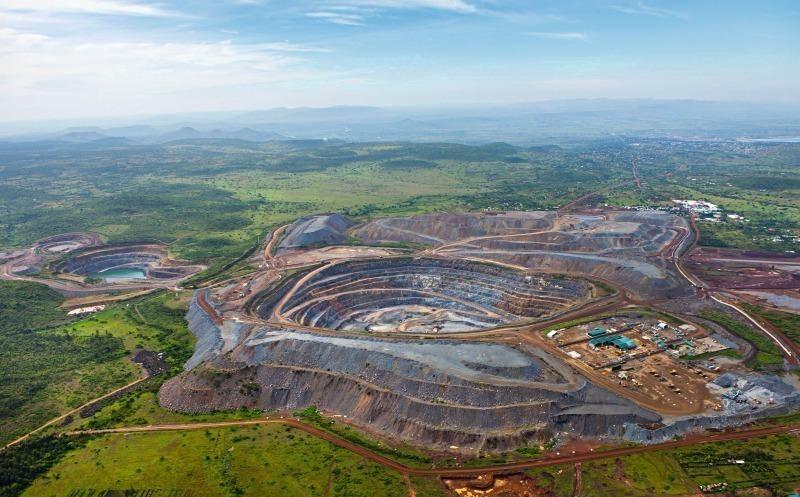
At State House in Dar es Salaam, Aliko Dangote laid out a project pipeline for Tanzania that goes well beyond the cement plant that has anchored his presence there for years. On the table: a 2,000-megawatt coal-fired power plant, a urea fertiliser complex, new port infrastructure, a special trade zone, a 40-kilometre concrete access road, and an 812-kilometre transport corridor linking Mtwara to Mbamba Bay in the south. It builds on an existing $500 million cement operation in Mtwara producing three million tonnes annually and sits inside a wider Dangote Group commitment to deploy $40 billion across the continent over five years. President Samia responded quickly, directing her ministries to open technical discussions and appointing the Minister of Planning and Investment to coordinate formal negotiations, with a Tanzanian delegation expected in Nigeria in the coming weeks.
Read against Dira 2050's flagship pipeline, this is the kind of signal investment climates are built on: a repeat investor, already embedded in the local economy, choosing to multiply his exposure rather than simply maintain it.
For DFIs and sovereign funds weighing Tanzania against its regional peers, that is a data point worth more than most communiques.
But the same meeting carried a second story, and it belongs to Kenya. Dangote's planned East African refinery, long discussed as a Tanga project, will now be built at Lamu instead.
President Samia has clarified that her administration had not cleared the Tanga plan, and Dangote has since pointed to commercial and technical considerations, chiefly Kenya's larger domestic fuel consumption base, as the deciding factor.
He has invited Tanzania to take an equity stake in the Lamu asset rather than host it. That is a generous offer, and a real one. It is also a reminder that anchor investment decisions of this scale are won on feedstock logistics, demand depth, and regulatory readiness well before they are won on diplomatic goodwill.
The two outcomes are not a simple win and loss. Tanzania secures upstream capacity across power, fertiliser and ports, precisely the infrastructure a manufacturing and mining economy needs to move up the value chain.
Kenya secures a strategically significant downstream energy security asset. Both governments got something real. What the split does confirm is that Dangote, like any investor deploying capital at this scale, is running the same siting discipline his peers apply everywhere: proximity to demand, cost of logistics, and speed of regulatory clearance decide where the largest tickets land, not the strength of the relationship alone.
For investors watching Tanzania specifically, three things are worth tracking before treating this as done. First, everything announced remains at the stage of technical and legal review. Implementation is explicitly contingent on ministries checking the proposals against legal, policy and development priorities, and formal negotiations have not yet concluded.
Second, a 2,000-megawatt coal-fired plant is a financing question as much as an engineering one. Development finance institutions and export credit agencies have moved decisively away from coal in the past five years, which narrows Tanzania's options to commercial lenders, Dangote's own balance sheet, or bilateral financing from markets less constrained by coal-exclusion policies.
That detail matters for anyone modelling how this gets built, and it sits awkwardly beside Tanzania's parallel push to position itself as a regional hub for green investment. Third, the power plant and fertiliser complex will need offtake agreements, land arrangements and local content compliance worked out in detail, the same categories of commitment that determine whether ambitious announcements in Tanzania become operating assets or remain permanently at the memorandum stage.
None of this diminishes the significance of the announcement. A repeat investor choosing to expand rather than exit is itself a credible signal, and one Tanzania's competitors would be glad to receive. But the discipline that separates a signed memorandum from a functioning power plant is the same discipline that should separate an investor's enthusiasm from an investor's due diligence.
The gap between the two is where the real work, and the real risk, sits.
Tanzania's flagship pipeline under Dira 2050 will keep attracting announcements of this size. The question worth asking of each one, this deal included, is not whether the investor believes in the country, but whether the terms on offer can clear the financing, regulatory and offtake hurdles that stand between a State House meeting and a plant that produces power.
Amne Suedi is the Managing Director of Shikana Investment and Advisory, Honorary Consul of Switzerland in Zanzibar, and Chair of the Switzerland-Tanzania Chamber of Commerce. Views expressed are strictly Amne Suedi’s only.