Rethinking the abolition of VAT deferment on imported capital goods in Tanzania
By Adam Magombola
In a move to fully exploit its plentiful natural resources, Tanzania desires to attain a diversified and globally competitive economy. As articulated in the Tanzania Development Vision 2050 (TDV 2050), the country seeks to transform itself into an industrialised, knowledge-based, upper-middle-income economy with a $1 trillion economy and a per capita income of $7,000 by year 2050.
Fundamental to this determination is the recognition of the private sector as a significant driver towards socio-economic development. As such, TDV 2050 is determined to reshape the country’s business and investment environment by empowering, among others, a dynamic private sector capable of bringing about innovation, growth, and sustainability. Within this context, capital goods emerge as a vital catalyst for Tanzania’s transformation agenda.
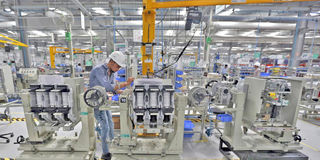
Capital goods, including machinery, equipment, factory installations, and infrastructure, form the backbone of industrial development and major component contributing to the higher cost of setting up business and investment in the country.
Sectors such as manufacturing, mining, and construction depend heavily on capital equipment to increase production capacity, improve product quality, and reduce unit costs. Without adequate capital goods, efforts to industrialise and transform other sectors such as agriculture through value addition and production for export would remain a far-fetched dream blurred by low productivity and inefficiencies.
The government, through the Finance Bill of 2023, proposed to abolish VAT deferment on imported capital goods by June 30, 2026. This proposal was driven by the government’s intention to support local manufacturing projects for capital goods by, among other measures, limiting the importation of such goods in order to protect local manufacturers. The proposal was subsequently introduced by parliament through the Finance Act, and a provision to abolish VAT deferment was successfully introduced into the Value Added Tax Act, Cap 148.
Despite the government’s well-intentioned efforts to boost local manufacturing of capital goods, this target remains far from being achieved, even though there has been a remarkable start with the assembly of some complex commercial vehicles in the country.
When considering items such as industrial robots, assembly line equipment, excavators, cranes, bulldozers, drilling rigs, and the specialised equipment required for factories and manufacturing plants, it is obvious that importation is still necessary. Local manufacturing capacity for these capital-intensive goods is currently limited, and most of these items are not yet produced domestically.
In a nutshell, goods imported into the country are categorized into three main groups: capital goods, intermediate goods, and consumer goods. Notably, between 2020 and 2025, capital goods topped as the second-most imported category, behind intermediate goods.
Numbers do not lie. Let us consider the trend of importation of capital goods from 2020: In 2020/21, imports of capital goods accounted for 18.05 percent, equivalent to $1.54 billion out of total imports of $8.55 billion across the major import categories. By the year 2024/25, capital goods imports stood at $3.06 billion, representing 21.16 percent of imports.
This trend as reported in Bank of Tanzania Annual report for year 2024/25 underscores the critical role played by the capital goods to our economy and sheds some light on the adverse impacts the economy may sustain on abolition of VAT deferment on imported capital goods.
With the highlighted trend, it is apparent that the planned cessation of the VAT deferment regime would adversely impact cashflow and hence expansion for capital goods importing firms. Most importantly, it will impede the continuity of businesses.
While the introduction of VAT deferment on locally manufactured capital goods, alongside the removal of the same incentive on imported capital goods, was intended to promote domestic industrialization and enhance competitiveness, the limited transition period sets a significant test to investors seeking to establish and expand their operations in the country given that the intended objectives have not yet been fully attained.
To align with TDV 2050, the government should considers extending the VAT deferment period for imported capital goods for a further reasonable period until the capabilities of local manufacturing of capital goods has developed sufficiently.
Adam Magombola is a Tax Manager with Deloitte Consulting Limited. The views presented are his own and do not necessarily represent those of Deloitte. [email protected]