This column is interested as well in the advice which the CAG gave to Tarura, “stressing the importance of incorporating designs that promote safe mobility and physical activity, as part of broader efforts to address non-communicable diseases (NCDs)”.
Whenever news from the office of the CAG (Controller and Auditor General) is reported upon somewhere, we are used to believe that wrong doing, which the media loves to call "madudu", has been unveiled.
This is especially so when talking of the use of public funds. “Billions unaccounted for”, “millions used without receipts”, “faulty tendering and procurement processes”, “Value for public money not realized” and similar headlines. These are what we tend to expect from the media when the CAG makes a statement.
The news item on what the GAG said recently in Dodoma would therefore appear to be an exception, more so since he was talking to a public executive agency, Tarura (Tanzania Rural and Urban Roads Agency), under the Prime Minister’s Office, Regional Administration and Local Government (PMO-RALG), established in 2017, to manage the development, rehabilitation, and maintenance of rural and urban road networks covering a total network of over 144,429 kilometers, which was previously handled by local government authorities. Tarura uses trillions of public funds annually.
The exceptional headline read as follows: “CAG commends Tarura on road improvements”, where it was said that the CAG had commended TARURA for its significant contribution to the development of road infrastructure in the country.
He was speaking at a meeting with Tarura management, at the agency’s offices at Mtumba Government City, in Dodoma on 14th January 2026. The CAG noted that Tarura’s impact was evident through the construction of roads and bridges that had improved access to social and economic services.
This column is interested as well in the advice which the CAG gave to Tarura, “stressing the importance of incorporating designs that promote safe mobility and physical activity, as part of broader efforts to address non-communicable diseases (NCDs)”. He noted that well-planned road infrastructure not only contributed to economic development, but also contributed to the improvement of public health and quality of life.”
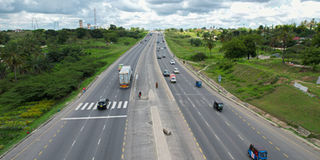
The CAG’s advice therefore was that roads should not be constructed just for motor vehicles, but should also include provisions for non-motorised transport (NMT), that is provisions for pedestrians, joggers, cyclists, the aged and those who have disabilities.
According to UNHABITAT well designed and managed public spaces and streets are a key asset for a city’s livability and economy since it increases property values; multiplies retail activity; enhances safety; fosters social cohesion and equality; improves health and well-being; improves the environment; makes the city more attractive; and, promotes more effective and efficient transportation and mobility.
Designing safer streets means a number of things, which urban road designers like Tarura should take into consideration. One is prioritizing people over cars: Here streets are designed for pedestrians, cyclists and public transport first. Second, designing for all, meaning that streets should be for everyone despite of age, gender or ability.
Designing streets for all, helps to promote social cohesion and connectivity. Third is promoting public transport in the sense that streets should not be seen as the realm of just cars, but that they are also for other modes of transport.
This can lead to a reduction of traffic congestion and the accompanying reduction in emissions, making cities much more climate friendly and healthy.
Fourthly is putting safety first, meaning designing roads that reduces traffic speeds which in turn increases safety for all users, particularly children and the elderly.
A study carried out in the UK and published in the “Conversation” in December 2025, found that streets in that country were not friendly for the elderly.
Much as traffic regulations are observed, it was noted that the growing population of senior citizens with limitations to their mobility, strength or balance, crossing the road can be a stressful and sometimes life-threatening experience. This because cities in general, and streets in particular, simply are not designed for older people and others with restricted mobility
In African cities, is there consideration for the elderly, for those on wheel chairs, for those with impaired vision when we design our streets? Africa roads are life threatening for many people, much as they are seen as symbols of development.
When the CAG advises, when UN-HABITAT advises, there is need to listen. The CAG put it in no uncertain terms that streets should be designed with health improving consideration in mind.
This means enabling those who want to walk or cycle, to, or from their various activities, as well as those who may want to use the roads for health and relaxation exercise, to be able to do so. For the moment our roads are very much unfriendly and this needs rectification as we get along our development highway.
Lusugga Kironde is Professor of Land and Urban Economics and lead consultant at TKA Company Ltd. [email protected]