What Zanzibar can learn from Rwanda and Mauritius on investor-friendly reforms
By Omar Ahmed
Guest Columnist
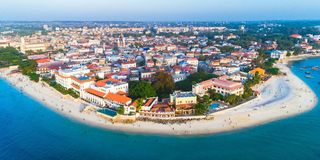
Zanzibar’s investment story over the past five years has been nothing short of remarkable—and the numbers now firmly back that narrative. The archipelago, long known for its rich cultural heritage and pristine beaches, is rapidly positioning itself as a serious player in the global investment landscape.
Data from the Zanzibar Investment Promotion Authority shows that by early 2026, cumulative registered investments had surpassed $14.4 billion (about Sh37.4 trillion) across 1,351 projects (The Citizen). This is not incremental growth—it is a surge that signals a structural shift in Zanzibar’s economic trajectory.
A closer look at the figures reveals just how steep this upward curve has been. Between November 2020 and September 2024 alone, more than 350 high-value projects were registered, with a combined value of between $5.5 billion and $6.9 billion. Even in the immediate post-2020 period, momentum was clear: 181 projects worth $3.056 billion were recorded between 2021 and 2022.
The pace has not slowed. In just the first 100 days of 2026, 45 new projects were registered—an indication that investor appetite remains strong.
This growth is underpinned by a deliberate policy shift toward the Blue Economy, with targeted expansion in tourism, marine transport, manufacturing, and real estate, and an ambition to register at least 150 projects annually.
Importantly, the benefits are tangible. The investment boom is estimated to have generated between 20,000 and 28,000 jobs, while also boosting government revenues and enabling improvements in infrastructure and social services—from roads to schools and healthcare facilities.
The property and hospitality sectors, in particular, have been at the forefront, attracting globally recognised brands and developers eager to secure a foothold in what is increasingly seen as the “next frontier” for luxury tourism and real estate.
Yet beneath this impressive growth lies a structural weakness that threatens to undermine Zanzibar’s momentum: persistent delays and inconsistencies in the issuance of permits.
For investors, time is not just money, it is value. Every delayed permit translates into escalating project costs, missed market opportunities, and, in some cases, diminished investor confidence.
This is not a trivial bureaucratic inconvenience. It is a systemic risk. When investors commit millions—sometimes hundreds of millions—of dollars into projects, predictability and regulatory clarity are non-negotiable. Without them, even a destination with $14.4 billion in committed investments can quickly lose its competitive edge.
There are lessons Zanzibar can draw from peers who have faced similar challenges and successfully addressed them.
Take Rwanda, for instance. Over the past two decades, it has built a reputation as one of Africa’s most efficient investment destinations. A key pillar of this success has been the streamlined, one-stop investment framework under the Rwanda Development Board, where investors can secure key approvals within days—not months—and with assurance that those approvals are final.
Island economies offer even more relevant parallels. Mauritius has long demonstrated how regulatory efficiency can drive high-value investment. Through institutions such as the Economic Development Board, the country has centralised approvals, minimised red tape, and ensured legal certainty—factors that have been critical in attracting global real estate and hospitality capital.
Similarly, Seychelles has adopted coordinated regulatory frameworks suited to its island economy, emphasising inter-agency collaboration, digitalisation, and clear approval timelines. The result is a system where investors are not trapped in bureaucratic limbo.
The common thread across these examples is not just efficiency, but coordination. Investors are not forced to navigate competing authorities with overlapping mandates. Governments speak with one voice, backed by clear and enforceable institutional frameworks.
Zanzibar, with its current trajectory need this clarity. The inflow of capital, the rise in registered projects, and the continued interest from global investors all point to immense potential.
But potential alone is not enough. Without urgent reforms to address permit delays the very growth Zanzibar celebrates today could begin to slow.
What is needed is not a reinvention of the wheel, but a deliberate alignment of systems. A strengthened one-stop investment centre with binding authority, clearer delineation of roles among regulatory bodies, and strict timelines for approvals would go a long way in restoring investor confidence.
Digital tracking systems could further enhance transparency and accountability, reducing opportunities for arbitrary delays.
Ultimately, the question is simple: can Zanzibar match its investment ambition with regulatory efficiency?
If it can, the islands are well on their way to becoming a leading investment hub in the Indian Ocean. If it cannot, investors—who always have options—may look elsewhere.