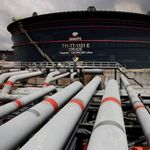
Africa stands at a rare moment in its economic and environmental history, the rise of the Dangote Refinery. Operating at full capacity of approximately 650,000 barrels per day with its growing exports across the continent, this signals an industrial milestone. It represents the early foundations of Africa beginning to supply itself.
Early shipments, estimated at 456,000 tonnes (about 608 million litres), have already reached countries including Tanzania, Ghana, Côte d’Ivoire, Cameroon, and Togo. Additional demand from South Africa and Kenya underscore a rapidly shifting dynamic. For a continent that has long exported crude oil only to re-import expensive refined products, this is a structural break from the past.
But beyond economics and geopolitics, this transformation carries deep environmental implications, and if managed wisely, it could become one of Africa’s most important unifying forces.
For decades, Africa has suffered from a paradox: it produces vast amounts of crude oil, yet lacks sufficient refining capacity. As a result, the continent has depended heavily on imports from Europe, the Middle East, and Asia. This has meant long supply chains, higher costs, and increased carbon emissions associated with transporting fuel across oceans.
The emergence of a major refining hub within Africa changes this equation. Regional exports (now estimated at roughly 90,000 barrels per day) are beginning to reduce reliance on distant markets. This is not yet full self-sufficiency, but it is a decisive first step toward energy sovereignty.
From an environmental standpoint, shorter supply chains translate into reduced maritime emissions, lower risk of oil spills during long-distance transport and environmental compliance. Refining fuel closer to where it is consumed reduces the continent’s carbon footprint per litre of fuel delivered.
It may seem counter-intuitive for an environmentalist to celebrate fossil fuel infrastructure. But the reality is nuanced. Africa’s immediate development needs still depend significantly on petroleum products especially for transport, industry, and energy stability.
The key question is not whether fossil fuels are used, but how efficiently and responsibly they are managed.
The Dangote Refinery introduces several environmental advantages:
1. Cleaner fuel standards: Modern refineries are capable of producing low-sulphur fuels, which significantly reduce air pollution. Many imported fuels historically used in Africa have been of lower quality, contributing to urban air crises. Cleaner fuels mean less respiratory diseases and lower particulate emissions, hence improved urban environmental health.
2. Reduced waste and inefficiency: Local refining minimises the inefficiencies of exporting crude and re-importing refined products, a process that has historically wasted both energy and resources.
3. Opportunity for regulatory control: African governments now have greater leverage to enforce environmental compliance, emissions standards oil and petrol-waste management protocols.
However, without strong governance, the environmental benefits could be undermined by poor oversight and pollution.
Perhaps the most powerful implication of this development is political and economic rather than industrial. Energy has always been a unifying force in regional blocs. Europe’s integration, for example, was built in part on shared energy systems.
The current model (where many shipments are still sold to international traders rather than directly between African states) limits this potential. It keeps Africa within a global system where value chains are externally controlled.
To transform this into a true continental advantage, Africa should prioritise state-to-state energy agreements, strengthen regional trade under frameworks like the African Continental Free Trade Area (AfCFTA) and develop shared infrastructure corridors for fuel distribution.
Without these steps, Africa risks remaining a supplier within global systems, rather than becoming a fully integrated energy market.
A call to the African Union and governments
If this moment is to become a true turning point, coordinated action is essential.
1. Build a continental energy strategy: The African Union must lead in developing a unified framework that aligns refining, distribution, and environmental standards. AU must lead in encouraging intra-African trade in refined products and reduces reliance on external intermediaries.
2. Invest in green refining and transition technologies: Africa must not repeat the environmental mistakes of industrialised nations. Governments should incentivise cleaner refining technologies and integrate renewable energy into refining operations.
3. Strengthen environmental regulation: Refining expansion must be matched with strict emissions controls, transparent environmental monitoring and enforcement mechanisms to prevent pollution
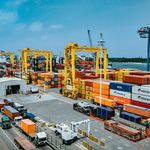
4. Develop regional infrastructure: Pipelines, storage facilities, and transport networks must be expanded to reduce inefficiencies, lower costs and minimise environmental risks.
The choice, as always, is Africa’s to make.
Toshi Bwana is the Founding Trustee of Umoja Conservation Trust (UCT)