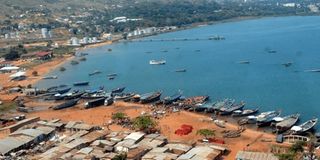
Kigoma. Residents of Kigoma Municipality have called on the government to provide clarity and take decisive action on the long-delayed Katosho Dry Port project, a strategic investment intended to strengthen transport and trade between Tanzania and neighbouring countries, particularly the Democratic Republic of Congo (DRC) and Burundi.
The project, located in Katosho area in Kigoma Ujiji Municipality, was launched in 2019 following agreements among Great Lakes region countries that rely on Lake Tanganyika for cargo transport. Its primary objective is to ease congestion at the ports of Dar es Salaam and Kigoma while improving the efficiency of cargo movement within and beyond Tanzania.
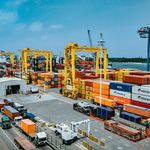
Once operational, the dry port is expected to streamline cargo handling, storage and distribution services, reducing both transport time and costs for traders.
It is also seen as a key driver for enhancing trade flows across East and Central Africa, especially for countries that depend on Lake Tanganyika as a major transport corridor.
In addition, the project is anticipated to stimulate economic growth in Kigoma and surrounding areas by creating employment opportunities and expanding commercial activities.
However, nearly five years since its launch, progress has remained slow, raising concerns among residents about its future and overall management.
Residents question fate of project
Residents of Kibirizi Ward say they are increasingly frustrated by the lack of visible progress, despite being relocated from the area as early as 2015 to pave the way for construction.
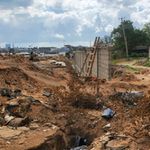
Instead of development, they claim the site has been turned into a parking area for trucks travelling to Rwanda.
A Soweto resident, Mr Malik Bocho, said the public has not been informed about the reasons behind the delays.
“We do not understand what is happening with this project. If it had been completed, many young people would have secured employment and improved their livelihoods,” he said.
He said that unemployment among youth remains high, with many left idle and without direction.
“We urge the government to revisit the original purpose of the project. It should not remain a mere parking yard for vehicles,” he said.
Another resident, Mr Buchumi Ali, said the absence of official communication has fuelled speculation that the project may have been abandoned or relocated.
“If the government is unable to continue with the project, it would be better to return the land to residents so they can develop it themselves,” he said, noting that some affected families are still struggling without permanent housing.
One of the compensated residents, Mr Ruegwa Juma said the prolonged delay has deprived locals of potential income opportunities.
He warned that the idle land has become unsafe, particularly at night, citing incidents of robbery and sexual violence.
“The area has turned into a bush. There are frequent criminal incidents, including attacks on women and theft of phones and motorcycles,” he said.
Mr Juma, who is involved in community policing, recounted rescuing women who had been surrounded by a group of youths after being robbed.
Similarly, Butunga Street chairperson, Mr Hamisi Yasini, said residents were assessed for compensation in 2012 and began receiving payments in 2015 to vacate the area.
He noted that insecurity has persisted around the project site, with between seven and eight reported cases from 2019 to 2025, including rape and child abuse.
“We have reported some perpetrators to the police and courts, but incidents continue to occur,” he said.
Mr Yasini urged the government to complete the project, noting that substantial public funds have already been invested.
He also highlighted concerns over compensation, saying some residents were fully paid, others received partial payments, while some have yet to be compensated, prompting legal action.
The Tanzania Ports Authority (TPA) said recently that it disbursed Sh12 billion in 2021 to compensate 1,228 residents of Katosho and Kigoma affected by the project.
Of these, 1,196 accepted the payments, while 31 declined, arguing that the compensation did not reflect the actual value of their properties.
The project has been described as one of TPA’s major investments, expected to serve not only Tanzania but also countries in East Africa and the Great Lakes region.
Government explanation
Kigoma District Commissioner Mr Rashidi Chuachua said the project officially began in 2019, covering 67 hectares in its first phase, including designated areas for Burundi and the DRC.
He said more than Sh2.4 billion was allocated for the initial phase, which involved constructing a perimeter fence—a stage that has been completed.
“As part of opening up Kigoma, there are plans to strengthen railway and road infrastructure and bring services closer to Burundi and the DRC, so that cargo can be handled in Kigoma instead of Dar es Salaam,” he said.
Mr Chuachua explained that the second phase involves feasibility studies and the design of essential infrastructure such as water, electricity and paved surfaces.
Parliamentary concerns
The project has also been raised in Parliament. In 2022, then Kigoma Urban MP Mr Kilumbe Ng’enda asked the government about its plans to complete the dry port.
The delay in implementing the project raises questions about compliance with the Tanzania Investment Act of 2022, which requires authorities to establish effective systems for coordinating, promoting and protecting investments.
The law, which repealed the 1997 Investment Act, aligns with broader reforms, including a 2025 framework integrating investment zones with special economic zones to improve accountability and efficiency in strategic projects such as dry ports and other economic infrastructure.
Register to begin your journey to our premium contentSubscribe for full access to premium content