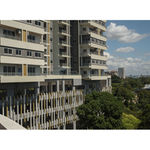
NHC balances premium and affordable housing to meet Tanzania’s needs
NHC Arusha Regional Manager, Mr Nistas Mvungi
What you need to know:
A recent opinion article in The Citizen titled Luxury apartments: Who is NHC really building for? by Charles Makakala has prompted discussions about the National Housing Corporation’s (NHC) role in Tanzania’s housing sector. The article suggested that the Corporation may be straying from its founding mandate by engaging in premium housing developments.
While it is valid to question public institutions, the piece painted a misleading picture, omitting key facts about NHC’s business model, the structure of Tanzania’s real estate market and the Corporation’s long-standing social mission.
Established in 1962, NHC was created to tackle Tanzania’s severe housing shortage and to ensure the provision of decent accommodation for citizens across all income levels.
Over six decades later, this mandate remains the Corporation’s core objective. In 2005, the Miscellaneous Amendment Act introduced a requirement for NHC to operate commercially in a competitive real estate market. This did not change its social mandate but added the responsibility of financial self-sufficiency: NHC is expected to operate without government subsidies while paying all taxes and dividends due to the state.
It is in this context that premium housing projects in Central Business Districts (CBDs) and other high-value urban areas must be understood. Far from being a diversion from its mission, these developments are a strategic tool to sustain the Corporation’s operations.
Revenue generated from mid-range and premium projects is reinvested into affordable housing, allowing NHC to maintain a balanced national portfolio that serves low-, middle-, and high-income Tanzanians alike. Affordable housing projects have been implemented in nearly every region of the country, including Dar es Salaam’s Mwongozo, Boko and Kibada, as well as Geita, Ruangwa, Buhare, Mvomero, Buswelu, Lindi, Kigoma, Kongwa, Iyumbu, and Uyui, among others. Across the country, NHC continues to expand homeownership and rental access for ordinary citizens, employing a structured cross-subsidisation model that leverages commercial projects to finance social housing schemes.
The assertion that NHC is abandoning its purpose overlooks the practical realities of urban development. Constructing affordable housing on prime land such as Kawe or CBD locations requires high-rise, premium developments to reflect land values, construction costs and infrastructure management.
Premium projects are thus a financing strategy rather than a departure from NHC’s institutional purpose. Rising land values, infrastructure investments and construction costs influence housing prices in all urban centres globally and NHC operates within these market realities while protecting long-term public value.
Indeed, the Corporation’s recent developments, including Kawe Samia Housing Scheme and Kawe 711, have sold out entirely, demonstrating the strong demand for quality housing. This success has prompted preparations for Phase Two construction in Medeli and Iyumbu in Dodoma, as well as Kijichi and Kawe in Dar es Salaam.
Ultimately, NHC’s performance must be evaluated across its national portfolio, considering its economic clout, operational efficiency and ability to deliver inclusive housing solutions. With a national deficit of approximately 3.8 million decent homes, collaboration with private-sector partners is essential to scale mass housing delivery and reduce costs for buyers and renters.
NHC remains steadfast in its mission to reduce Tanzania’s housing deficit, expand access to homeownership, and ensure that housing delivery is inclusive, sustainable, and aligned with national development priorities.
Far from abandoning its mandate, the Corporation demonstrates how commercial and social objectives can coexist to meet the pressing needs of Tanzanians today.
Issued by Public Affairs and Information Unit at the National Housing Corporation