Lushoto/Rombo. Four out of every ten secondary schools in Tanzania lack the minimum laboratory infrastructure required to deliver practical science education, undermining the country’s efforts to nurture a generation of scientists, engineers, and health professionals.
An investigation by a sister publication of The Citizen, Mwananchi, has found that nearly half of students enrolled in biology, chemistry, and physics study mostly through theory, with little or no hands-on experience.
Many complete their Ordinary Level education without performing a titration, handling laboratory apparatus, or observing biological specimens firsthand, contrary to the 2020 Guidelines for the Establishment and Registration of Schools.
Under Regulation 15(1)(c) of the 2020 Secondary School Registration Rules, regional or district education officers must verify the presence of functioning laboratories before granting registration.
Each school is expected to have three separate laboratories for physics, chemistry, and biology. While private schools are strictly monitored by the Ministry of Education, Science, and Technology to meet these standards, many government-run institutions fall far short.
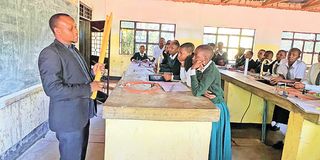
This shortfall has transformed science teaching into a daily struggle. In several schools, students reach Form Four, the final year of lower secondary education, having entered a laboratory only once.
When access is granted, five or more students often share a single piece of equipment.
Education experts warn that such conditions threaten the country’s long-term development objectives.
Science education depends on experimentation, observation, and application. Without laboratories, learning remains abstract, weakening comprehension and performance in national examinations.
The 40.68 percent laboratory deficit is more than a statistic; it reflects structural challenges affecting thousands of learners, particularly in rural and under-resourced districts.
Rombo and Lushoto: A snapshot of the crisis
The depth of the problem is evident in Rombo District in Kilimanjaro Region, where many schools operate with a single multipurpose room serving all three science subjects.
At Mraokeryo Secondary School, biology teacher Abdallah Thabiti says scheduling laboratory sessions is a logistical nightmare.
“There are times when two or three teachers need the laboratory at the same time. We have to coordinate strictly and rotate sessions. Often we use weekends or extra hours to ensure students gain practical exposure before examinations,” he explains.
At Makiidi Secondary School, science teacher John Venance says the school functions with only one laboratory despite the requirement for three.
“The infrastructure is inadequate. We follow a competency-based curriculum that emphasises practical skills, but we are forced to prioritise Form Four students. Lower forms rarely access the laboratory,” he said.
Fragile equipment and scarce chemicals further limit access. Another teacher at Makiidi, Ms Perpetua Tesha, notes that practical sessions are largely reserved for examination classes.
“For lower forms, science remains theoretical. We simply cannot afford to run experiments for everyone,” she said.
Storage challenges compound the problem. At Ubaa Secondary School, teacher Ms Krisamta Shirima says that even when equipment is provided, there is insufficient secure storage.”
“We spend too much time searching for materials in overcrowded storerooms. It reduces teaching time and discourages experimentation,” she explained.
National picture: Thousands of labs missing
Data from the 2025/2026 budget estimates by the Prime Minister’s Office – Regional Administration and Local Government (PMO-RALG) show that Tanzania requires a 40.68 percent expansion in laboratory infrastructure to meet the minimum standards in government secondary schools.
In the 2024/2025 financial year, 4,894 secondary schools required 14,682 laboratories, three per school. However, only 8,710 were available, leaving a deficit of 5,972 facilities.
Earlier findings in the 2021 Best Education report suggested the country required roughly 4,000 laboratories for each of the three science subjects. At the time, availability hovered around 50 percent.
Physics remains the most underserved subject, with only 1,813 functional laboratories nationwide, covering 44.6 percent of demand.
Beyond numbers: Quality concerns
Even where laboratories exist, quality is often poor. In Lushoto (Tanga Region) and Rombo, several facilities visited by this investigator were empty rooms lacking running water, gas connections, and adequate furniture.
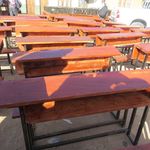
Some students are forced to stand for the duration of double periods due to a shortage of stools, leading to fatigue and reduced concentration.
Dust-covered apparatus suggests infrequent use, while safety standards are frequently compromised.
A biology teacher at Lushoto Secondary School, Ms Upendo Ayoub, says limited storage exposes equipment to damage.
“Heavy physics apparatus is stored alongside fragile glassware and slides. Breakages are common, and replacement is costly,” she said. The shortage of laboratory technicians compounds the problem. Of the eight schools visited in Lushoto and Rombo, only three had a dedicated technician.
In these schools, a single technician supports all three science subjects across multiple classes.
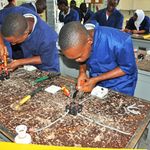
A technician at Shambalai Secondary School, Ms Hawa Rajab, describes the workload as overwhelming. “I coordinate with teachers daily to prepare materials before lessons. But with so many classes, it is a constant race against time,” she said.
Students feel the impact
For learners, limited practical exposure affects both confidence and academic performance. A Form Four student, Yosia Enock, says he has conducted a chemistry practical only once in four years and has never undertaken a physics or biology experiment.
“Sometimes we sit for ‘alternative to practical’ examinations, which involve answering questions on paper without performing the experiments,” he said. Form Five student Lucia Vicent emphasises the cognitive benefits of hands-on learning.
“When you experiment yourself, you remember it. When it is only theory, it is easy to forget,” she explained.
Education experts stress that practical skills are critical for examination success, as well as for tertiary education and professional training in science-related fields.
Local authorities cite funding gaps
District officials acknowledge the deficit but blame limited funding.
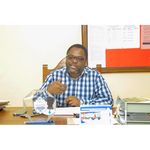
Rombo Secondary Academic Officer Vianne Mgoma says the district has 45 government secondary schools requiring 135 laboratories. Of these, only 69 are complete and operational.
“We continue to receive funds from the central government. The council also allocates resources to complete laboratories that are at various stages of construction,” he said.
In Lushoto District, Education Officer Shahara Shaibu reports that of 66 secondary schools, there are only 13 physics laboratories, 30 chemistry laboratories, and 15 biology laboratories, a total of 58 functional facilities, compared to a requirement of 198.
“Initial construction relied heavily on community contributions. The government now allocates funds annually to complete several laboratories at a time, and we are progressing gradually,” she explained.
Implications for national development
Tanzania has prioritised science and technology as pillars of socio-economic transformation. Persistent infrastructure gaps, however, threaten to slow progress.
Without proper laboratories, students struggle to develop analytical, observational, and problem-solving skills essential to science disciplines.
Teachers must balance curriculum demands with limited resources, often sacrificing personal time to cover practical sessions. Experts say addressing the laboratory deficit requires sustained investment, improved maintenance, and deployment of trained technicians.
Partnerships with development partners and the private sector could accelerate infrastructure development.
As thousands of students continue to rely largely on chalkboard explanations for subjects rooted in experimentation, the country faces a critical question: can it achieve its science and innovation ambitions without equipping schools with the tools of discovery?
In districts such as Rombo and Lushoto, the answer remains uncertain.
Register to begin your journey to our premium contentSubscribe for full access to premium content