UNICEF, FCS launch initiative to empower youth- and women-led organisations
Deputy Executive Director / Head of Program Quality and Learning at the Foundation for Civil Society (FCS), Ms. Cynthia Bavo Harris, speaks to the media during the launch of a capacity-strengthening initiative aimed at empowering youth- and women-led civil society organizations in Dar es Salaam, Zanzibar, and Songwe Region. She is flanked by the Community Development Officer for Dar es Salaam Region, Ms. Given Sure (left), and the Chief of Child Protection at UNICEF, Ms. Miranda Armstrong (right). PHOTO | COURTESY
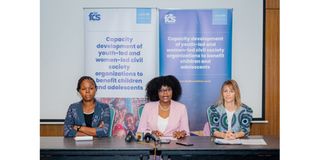
Dar es Salaam. UNICEF Tanzania, in partnership with the Foundation for Civil Society (FCS), has launched a capacity-strengthening programme aimed at empowering youth- and women-led civil society organisations (CSOs) across Dar es Salaam, Zanzibar and Songwe.
The initiative marks a significant milestone as FCS enters its first direct partnership with the United Nations, signalling progress in efforts to localise solutions for vulnerable children and adolescents in Tanzania.
Speaking at the launch, UNICEF Tanzania’s Chief of Child Protection, Miranda Armstrong, said the programme is designed with long-term impact in mind.
“By investing in the long-term capacity of youth-led and women-led CSOs, this programme equips them with the institutional and programmatic resilience needed to thrive beyond donor-funded cycles,” she said.
She noted that more than 30 organisations will benefit from practical training in project design and addressing child protection needs, with 15 set to receive grants of Sh25 million each after meeting required criteria.
Ms Armstrong said the interventions will focus on promoting gender equality, ending violence against children and women, reducing teenage pregnancies and improving adolescent reproductive health outcomes.
She added that the programme comes at a critical time as global funding for development, particularly in gender equality and child protection, continues to decline.
“This is an important moment to strengthen local responses. Even small-scale interventions can make a meaningful difference in the lives of boys and girls,” she said.
The selection of priority regions was informed by data, with Songwe identified as having the highest rates of teenage pregnancy in the country, while Dar es Salaam’s rapidly growing urban population presents unique challenges for youth-focused interventions. The programme will also extend to other regions, including Kigoma and Tabora.
Dar es Salaam Regional Community Development Officer, Given Sure, underscored the importance of collaboration during the launch.
“This partnership marks a meaningful step in our learning pathway, and we are proud to walk this journey alongside our CSO partners as we grow, learn, and create lasting impact together,” she said.
She said that strengthening youth- and women-led CSOs aligns with national priorities, including Tanzania Vision 2050 and the National Plan of Action to End Violence Against Women and Children, both of which emphasise inclusive development and community-led responses to violence.
Tanzania’s youthful population presents both opportunity and urgency, with adolescents aged 10–19 accounting for about 23 per cent of the population. However, many face challenges such as teenage pregnancy, child marriage, violence, limited access to youth-friendly services, and low participation in decision-making.
Youth- and women-led CSOs, officials say, are well placed to address these issues due to their close ties with communities, enabling them to respond quickly, build trust and advocate for change.
Speaking at the event, the Deputy Head of Programmes – Quality and Learning at FCS, Cynthia Bavo said the project is designed to strengthen organisations working with young people and women.
“We have launched a project aimed at empowering civil society organisations led by youth and women, as well as those implementing programmes focused on these groups,” she said.
The initiative, supported by UNICEF and implemented by FCS, will provide training to 30 CSOs, with 15 selected to receive funding upon meeting the set criteria.