Where water flows, equality grows: How UNICEF leverages partnerships to advance access to safe water for every child in Tanzania

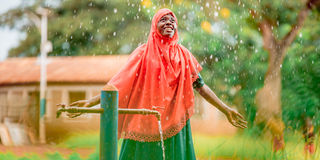
No more long walks along narrow village paths: Tausi’s smile says it all as she enjoys water flowing from a community tap in Kagalula Village. Bringing safe water closer to home is saving time for girls and women, opening more opportunities for learning, well-being, and daily life in the community ️UNICEF Tanzania /2024)


Twelve-year-old Tausi from Kaguruka village in Kigoma Region once began each day with a long, exhausting walk for water, a journey that often left her tired, late, or unable to fully participate in school.

Today, clean water flows just steps from her home. With more time to learn, rest, and play, Tausi is thriving. “The water is here; we are happy; we don’t get sick anymore. The availability of water near where I live has changed my life. I can attend school regularly, and I have performed well in class this year,” says Tausi.

Like Tausi, Ashura remembers waking up before sunrise in the same Kaguruka village. Like many women in rural Tanzania, she once spent hours each day walking long distances to collect water for her family.

The journey was exhausting, the water was often unsafe, and her children frequently fell sick. Today, clean water flows from a nearby tap, thanks to community water systems supported by UNICEF in collaboration with the Government and partners.

Her children now attend school regularly, and the family spends less time searching for water and more time learning, earning, and building their future.

Stories like Tausi’s and Ashura’s are becoming more common as access to safe water expands across the United Republic of Tanzania – reducing the burden on women and girls, improving health outcomes, and allowing children to stay in school.

This year’s Water Week global theme “Water and Gender Equality: Where Water Flows, Equality Grows,” underscores how equitable access to safe water opens path ways for women and girls, supports community progress, and creates opportunities across generations.

Across Tanzania, access to safe water is transforming the lives of women and children. From rural villages to schools and healthcare facilities, UNICEF, in collaboration with the Government of the United Republic of Tanzania, development partners and civil society organizations as well as communities is providing support for children and families to thrive while advancing gender equality and building stronger, healthier futures.

Water in communities: Bringing water closer to families

In many rural areas of Tanzania, women and girls still shoulder the responsibility of collecting water for their households. The time lost limits education, income generation, and rest; keeping families trapped in cycles of hardship and limiting opportunities for women and children.

To address these challenges, UNICEF works across both Main land Tanzania and Zanzibar in partnership with the Government of Tanzania and with support from development partners to expand reliable water supply systems that withstand climate impacts and improve access to safe water for communities.

Kigoma Region provides an example of this approach. Through the installation of solar-powered boreholes, piped water networks, and modern, climate-smart distribution systems, UNICEF is providing reliable access to safe drinking water for rural households, reaching nearly 200,000 people across more than 30 villages significantly reducing the burden on women and children.

Over the past five years, UNICEF-supported programmes have helped provide safe water services to over seven million people across Tanzania, demonstrating the power of strong partnerships and local leadership.

When water is readily available close to homes, children stay healthier and attend school regularly, while women gain time for livelihoods and leadership.