How state-owned telcom firm made a turnaround from losses to profitability

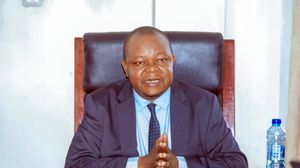
Director general of the Tanzania Telecommunications Corporation Limited, Moremi Marwa.  PHOTO | COURTESY 

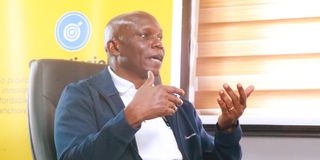
In this exclusive interview, the director general of the Tanzania Telecommunications Corporation Limited (TTCL), Moremi Marwa,  discusses his mandate to turn around the state-owned strategic telecommunications entity, the challenges of operating within a competitive market, and his vision for TTCL's role in Tanzania's digital economy.

You took over TTCL in 2024 following a government appointment, what specific turnaround mandate were you given?

One of the things we were mandated to do is the transformation of the corporation. TTCL is a state-owned entity, 100 percent owned by the government.

It manages, owns, and maintains different communication and strategic infrastructure for the country, but we are also in the commercial space.

Previously, the entity wasn't doing well commercially. It had minimal revenues, a historical background of loss-making, and struggling with liquidity issues.

In these 18 months, we have managed to transform. We are still early in the journey, but we are already seeing tangible results.

We have turned around from historical loss-making into profitability.

According to the recent report by the Controller and Auditor General (CAG), we increased our revenue by almost 30 percent in one year—from around Sh165 billion to around Sh220 billion in the financial year that ended June 2025.

We moved from a loss of almost Sh18 billion in 2023-2024 to Sh22.9 billion in profitability in 2024-2025. This year to date, our revenue has also increased by more than 30% compared to the first half of last year, and our liquidity is better.

What exactly did you have to change in terms of efficiencies and cost management to make TTCL profitable?

 To improve efficiency and cost management at TTCL, we had to address some fundamental operational areas. Access to finance, procurement systems, and human capital are critical to running any organisation, challenges in these areas inevitably affect performance.

Our process to accessing finance is complicated compared to those in the private sector. One has to go through the Planning Commission for the project to be processed, then you go to the Treasury Registrar, then ministry of Finance’s debt management department.

This entire process can take a while, given the bureaucratic nature of the state. This was one of the hindrances, but we found a way to shorten the process of access to finance.

On procurement, we have to follow the Public Procurement Regulatory Authority (PPRA) rules and regulations, meaning that our procurement process takes much longer than one who sits in the private sector.

On the human capital side, our process of hiring requires us to go through the Secretariat, and also letting people go isn’t as easy.

As a state-owned entity, we have to follow these rules and regulations, and we found a way of becoming more efficient within these processes.

We also focused on shifting the internal mindset, driving a cultural change that emphasized accountability and results. One of the key advantages of delivering positive outcomes is that it builds confidence within the team, people begin to see that progress is possible, which in turn motivates stronger performance.

On the financial side, we tightened controls around receivables and made a deliberate effort to reduce payables. In the 2023/2024 period, payables stood at around Sh160 billion. We have since brought that down to below Sh100 billion, even as the company continues to grow its revenue.

TTCL has a dual mandate where it operates as a profit-making institution, but also supports government’s digital service delivery. How do you manage to balance the two mandates?

The fact that we are profitable means we are managing that balance. Being a state-owned entity means providing services to the people is important, and shouldn’t be ignored.

We support digital penetration through the National ICT backbone, the data centres, and also the mobile business. It’s the mobile business that is a bit challenging because of market dynamics.

Other telecommunication companies make decisions on where they should put their telecom towers based on commercial viability, for us, service delivery even in areas that aren’t profitable is mandatory.

TTCL manages the National ICT backbone and data centers. However, revenue generated from the national fibre network is redirected to the Treasury. Explain to us this arrangement.

The National ICT Backbone was transferred to TTCL in November 2023. Under the current government arrangement, revenue generated from leasing the broadband infrastructure is shared; TTCL retains a portion to support operations and maintenance at the required quality standards, while the remaining share is remitted to the Treasury.

This model ensures the backbone remains functional and well-maintained.

As a state-owned national institution, TTCL operates in a market dominated by foreign companies. How prepared is TTCL in supporting Tanzania's cybersecurity working hand in hand with the regulator?

The regulator (Tanzania Communications Regulatory Authority) has tools to make sure the country is protected. As individual entities within the telecom space, we also have our tools and mechanisms. Protecting the National ICT Backbone is a key mandate established by law.

The President recently re-emphasized that the backbone has to be protected and secure.

TTCL has less than 2 percent mobile subscription market share. The CAG had advised considering offloading that portfolio. What are your thoughts and strategies regarding mobile subscription?

We are trying to leverage areas where we have strength. We are leading in the country in the fixed-line business, fiber to the office, fiber to home, and fiber to businesses.

Our focus is more on the fixed business, the national ICT backbone, the last mile (FTTH), and the data centre.

However, we are in the mobile space and will continue to be there for strategic purposes.

The government is investing heavily in rural connectivity. Other mobile network operators often don't have an interest in areas that are less commercially beneficial.

That's where the national telecommunication company kicks in. We have a lot of towers in villages and rural places where other operators are not present.

Because of the strategic interest of the nation, we have to be in the mobile business to ensure every citizen is connected.

You are 100 percent owned by the government. How independent are you when it comes to decision-making, especially considering government bureaucracy versus the need for private-sector efficiency?

We are independent, but we are a state-owned entity, and the state has interests, primarily ensuring services reach its citizens. We provide services, but we are also doing business.

It can be complicated because we have to follow laws, rules, and regulations that our competitors don't have to follow.

For example, access to finance. A competitor can get board approval, go to a bank, and have access to finance in a month or two.

For us, even with board approval, we have to go through the planning commission, the Treasury Registrar, and the ministry of Finance's debt management department. That process can take more than six months.

You’re implementing a plan to provide internet access to 1 million homes by 2027. What is the current status of this initiative?

We started this project a year ago. For this financial year, we planned to reach 208,000 home, and we are currently above 200,000.

We anticipate reaching our goal by June. The project is being executed at the expected speed. For next year, we anticipate 400,000 home passes, and for 2027-2028, we expect to reach another 300,000 to 350,000 homes.

At the end of your tenure, what would you want your success to be measured by?

Number one, we should be seen as a key enabler of the digital economy, which is part of Vision 2050. As a state-owned entity owning strategic telecom infrastructure, if we fail to be a key enabler, I'll have failed in my mandate.

Secondly, sustainability. My intent is to make sure that whatever we are doing, putting systems in place, going digital, is achieved in a sustainable way.