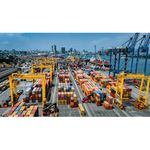
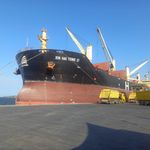
Dar es Salaam. Tanzania's ports are recording strong growth in vehicle imports, container traffic and dry bulk cargo, reflecting increased trade activity and investment in port infrastructure.
Latest performance data show cargo volumes and vessel calls rose across most categories during the 2026 reporting period, reinforcing the role of the Port of Dar es Salaam as a regional trade gateway.
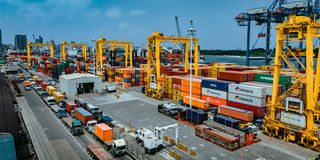
Roll-on/Roll-off (RoRo) cargo recorded the highest growth. The number of units handled increased by 88 percent to 30,442 in May 2026, up from 16,177 in the corresponding period last year. The figure was also more than double the 14,645 units recorded in May 2024.
RoRo vessel calls rose to 20 from 13 in May 2025 and nine in May 2024, indicating increased vehicle imports and shipping activity.
Container traffic also grew significantly. DP World handled 44,001 twenty-foot equivalent units (TEUs) in May 2026, compared with 27,953 TEUs a year earlier, representing a 57 percent increase. Volumes have more than tripled from 13,779 TEUs recorded in May 2024.
Container vessel calls at the terminal increased to 20 from 13 in May 2025 and seven in May 2024.
Tanzania Ports Authority (TPA) Director General Plasduce Mbossa said the figures reflect rising trade volumes and the need to improve cargo movement beyond the port.
“The growth in RoRo, container and dry bulk volumes shows stronger cargo movement through Tanzania’s port system.
Our focus now is to ensure that this growth is matched by faster cargo clearance, reliable evacuation and stronger links to inland destinations,” he said.
Dry bulk cargo volumes increased by 27 percent to 267,560 metric tonnes in May 2026 from 210,488 metric tonnes in the same period last year.
Compared with May 2024, volumes were more than three times higher.
Bulk vessel calls rose to eight from six in 2025 and three in 2024.
General cargo was the only category to register a decline, falling by two percent to 204,978 metric tonnes from 210,079 metric tonnes a year earlier.
However, volumes remained significantly higher than the 113,699 metric tonnes handled in May 2024.
At the East Africa Gateway Terminal (EAGTL), container traffic remained relatively stable, increasing by one percent to 85,243 TEUs from 84,127 TEUs in May 2025.
Industry stakeholders attribute the growth to infrastructure investments, operational improvements and the involvement of private terminal operators.
Tanzania Shipping Agents Association chairman Daniel Malongo said the engagement of private operators has improved efficiency and increased confidence among cargo owners.
“This has been a key driver behind the sustained growth in cargo volumes witnessed in recent years,” he said.
Mr Malongo said government plans to add three new berths and ongoing yard expansion projects are expected to support future growth.
He added that the Tanzania Railways Corporation is expanding its capacity to move cargo to the Kwala Inland Dry Port, helping reduce congestion at the port and private inland container depots.
Tanzania Freight Forwarders Association (TAFFA) executive secretary Liston Goodluck said investments in port and logistics infrastructure, including the engagement of DP World and EAGTL, have improved cargo handling and reduced transit times.
“As operational efficiency continues to improve, more cargo owners are choosing the Port of Dar es Salaam because it offers a faster and more reliable gateway to regional markets,” he said.
According to him, expansion projects have enabled the port to receive larger vessels, contributing to higher cargo volumes at inland dry ports and across the logistics chain.
Chairman of the Clearance Inland Depot Association of Tanzania (CIDAT), Meleck Shange, said cargo volumes have been rising steadily over the past decade but growth accelerated following recent infrastructure upgrades and the entry of private operators.
He cited harbour dredging works, which have allowed larger vessels to dock at the port, as well as improvements in cargo-handling equipment that have reduced vessel turnaround times.
Mr Shange also highlighted the role of the Tanzania Electronic Single Window System (TanESWS), which has integrated key stakeholders into one digital platform and simplified cargo clearance procedures.
The increase in cargo volumes is expected to boost demand for transport services, warehousing, inland container depots, cargo handling, insurance and trade finance.
While the latest figures point to continued growth, industry players say the next challenge will be ensuring cargo moves efficiently from the port to inland markets and neighbouring countries that depend on Dar es Salaam as a trade gateway.
Register to begin your journey to our premium contentSubscribe for full access to premium content