Dar es Salaam. The rapid expansion of inland container depots (ICDs) in Dar es Salaam is putting increasing pressure on the city’s roads, forcing authorities to rethink how cargo is stored, transported and distributed.
As cargo volumes through Dar es Salaam Port continue to rise, the city is struggling to accommodate the growing number of trucks, warehouses and cargo facilities needed to serve businesses and consumers.
The challenge has shifted beyond the port, with authorities now considering a combination of ICDs, dry ports, rail transport, truck holding areas and better urban planning to ease congestion.
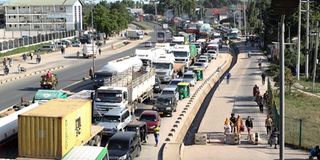
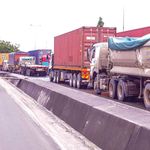
A recent survey by The Citizen along the Ubungo-Tazara-Kurasini and Mbagala corridors found growing pressure on major freight routes, particularly the Ubungo-Kurasini corridor, where heavy trucks compete for road space with commuters as cargo facilities expand near residential and commercial areas.
According to the Tanzania Shipping Agencies Corporation (Tasac), the pressure is partly a reflection of Dar es Salaam’s economic importance. Most of Tanzania’s industries are located in the city, meaning a significant share of cargo arriving through the port is destined for businesses, industries and consumers in Dar es Salaam.
The growth in cargo activity is creating jobs and business opportunities, but it is also increasing the burden on roads.
Transit truck driver Elibariki Ndossi said the growing number of trucks was providing employment opportunities, particularly for young people, but warned that congestion was becoming a serious problem.
“Traffic congestion is a major problem. There is a need to expand the road, particularly from Kibaha to Chalinze, where the situation is very difficult,” he said.
For food vendor Mwajuma Seleman, the logistics industry has brought more customers. Operating around Tabata Relini, she said truck drivers and their assistants had become an important source of business.
However, she also pointed to the risks faced by roadside traders operating close to busy freight routes.
For commuters, the economic gains are often overshadowed by time lost in traffic.
Mbagala resident Leah Kiondo said congestion had become increasingly unpredictable, with truck queues sometimes stretching towards Tazara following the establishment of a new ICD.
“There is a need for the government to look carefully into these traffic jams because they cause a lot of inconvenience, especially for those of us who use public transport. We end up arriving home late,” she said.
The congestion has revived debate over whether more cargo should be shifted to Kwala Dry Port in the Coast Region.
However, Tasac director general Mohammed Salum said Kwala alone could not solve Dar es Salaam’s cargo challenge.
He said transit cargo had increased by about 50 percent, while domestic cargo demand had also risen, creating a greater need for storage and distribution facilities within the city.
“As the government, we must ensure there is a way to store containers within Dar es Salaam,” Mr Salum said, noting that export and empty containers also require storage and proper management.
Tasac has suspended the establishment of new ICDs while assessments are carried out before further approvals are issued. Previously, local authorities issued permits, but the approval process is now under Tasac.
Mr Salum said much of the cargo arriving through Dar es Salaam Port was destined for the domestic market rather than neighbouring countries.
Dar es Salaam is also home to Kariakoo Market, one of Tanzania’s largest commercial centres, whose traders depend heavily on imported goods.
Mr Salum said authorities needed to plan for cargo facilities before allowing investments in areas that could worsen congestion.
He added that authorities were engaging local governments, noting that land-use planning and designation of commercial areas primarily fell under urban planning authorities.
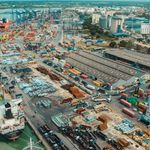
The scale of the challenge is reflected in the volume of cargo handled by Dar es Salaam Port.
The port director Abed Gallus Abed said the facility handled about 1.34 million containers in 2025/26.
“If you move 300,000 containers to Kwala, you still have more than one million containers that must be handled elsewhere,” he said.
Kwala is also still under development. Of the 502 acres allocated for the facility, only about five acres have so far been developed.
Rail offers part of the solution
Rail transport is another pillar of the government’s strategy to reduce the number of trucks using Dar es Salaam’s roads.
However, existing infrastructure cannot yet handle all the cargo that would need to be moved inland.
Mr Abed said relying entirely on the existing metre-gauge railway to transport large volumes of containers to Kwala could simply create another bottleneck.
Tasac estimates that the metre-gauge railway can currently move only part of the cargo, with a capacity of about 60 containers at a time.
The government is looking to the Standard Gauge Railway (SGR) to take on a greater share of freight movement, beginning with the Morogoro route before extending operations towards Kahama for wider cargo movement and transshipment.
“Despite the push for Kwala and rail, Dar es Salaam will continue to need ICDs because a significant proportion of cargo must remain close to industrial and commercial centres,” Mr Abed said.
Bravo ICD in Ubungo is also expected to expand beyond copper stuffing to handle a wider range of cargo. The expansion has raised concerns over road congestion, infrastructure damage and the location of cargo facilities in residential and commercial areas.
Mr Abed said a committee comprising the Tanzania Ports Authority (TPA), Tasac, Tanzania National Roads Agency (Tanroads), Tanzania Rural and Urban Roads Agency (Tarura) and planning authorities was being formed to assess proposed locations for ICDs and dry ports before they are approved.
The committee is expected to examine road capacity, projected truck traffic, potential congestion and the impact of cargo facilities on surrounding communities.
At the port, TPA is also working to reduce the time trucks spend inside the facility. Eight new cargo-handling machines have been acquired to speed up container evacuation, while two locomotives have been purchased to increase rail capacity.
Private sector seeks alternatives
The private sector is also exploring ways to keep trucks away from congested roads.
During a visit by Central Corridor members to Bravo Logistics in Ubungo in June, the company’s founder and managing director, Ms Angelina Ngalula, said plans were under way to establish a highway truck stop at Kiluvya.
The facility is intended to provide a designated parking and holding area for trucks outside congested parts of the city.
Ms Ngalula said trucks would be parked there and digitally summoned when their cargo was ready, reducing unnecessary waiting and movements around the port.
Register to begin your journey to our premium contentSubscribe for full access to premium content