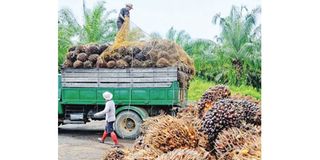
Dodoma. The global food security landscape is undergoing a profound transformation, prompting countries such as Tanzania to pursue edible oil self-sufficiency with renewed urgency.
The drive towards what policymakers describe as ‘oil sovereignty’ dominated discussions at the Edible Oil Investment Forum held in Dodoma on Thursday, July 30, 2026.
The forum was attended by government officials, financiers, and industry leaders who argued that geopolitical disruptions have made domestic production a strategic national priority.
The growing push for self-reliance reflects a wider international trend as countries seek to strengthen domestic industries and reduce dependence on imported commodities.
Speaking at the forum, Presidential Food and Agriculture Advisory Council executive secretary, Dr Florence Turuka, said African leaders resolved to accelerate food and edible oil production following vulnerabilities exposed by the Covid-19 pandemic and the Russia-Ukraine war.
“As we recall, those regions are major producers of wheat, edible oils and fertilisers. When the war broke out, there was a severe shortage. Our leaders said, ‘Enough is enough.’ Africa cannot continue relying on others for these essential commodities,” said Dr Turuka.
He said the January 2023 African Heads of State Summit marked a turning point, with Tanzania subsequently identifying edible oil as one of five strategic value chains to strengthen national food security and cushion the economy against external shocks.
Dr Turuka also warned that Indonesia’s decision to stop exporting products in raw form by 2030 should not be underestimated, saying the move could further affect countries that rely on crude edible oil imports from the Southeast Asia and Oceania nation.
During the forum, a participant identified by one name as Peter raised concerns over Indonesia’s reported plan to stop exporting products in raw form by 2030. Speaking during a question-and-answer session, he said he received the warning during a visit to Indonesia in October last year, where authorities indicated that the country would stop exporting raw commodities.
“This means Tanzania would no longer be able to import the crude palm oil it currently relies on,” he said, Agriculture Transformation Office (ATO) investment officer, Dr Juma Makaranga, stressed the need to shift focus from the market back to production, arguing that Tanzania must invest in the edible oil strategy to secure raw materials before international supplies become constrained.
He said the country had no option but to accelerate investment in plantation farming and modern seed varieties to bridge the looming supply gap.
Cereals and Other Produce Regulatory Authority (Copra) director general, Ms Irene Madeje Mlola, said the new edible oil strategy provides for digital registration and management of farming contracts, offering legal protection to both investors and producers. “Investors can now download contracts through our systems, negotiate directly with farmers and register the agreements digitally,” she said.
“This framework protects both parties while allowing processors to participate in production without necessarily owning large tracts of land,” added Ms Madeje, noting that access to finance remains a critical pillar of the strategy.
NMB Bank’s head of agribusiness, Mr Nsolo Mlozi, said the lender’s agricultural loan portfolio has grown to more than Sh2 trillion as it adopts flexible financing models tailored to the sector.
Rather than requiring land worth 125 percent of the loan value as collateral, he said the bank increasingly accepts financed machinery as security.
“For agricultural machinery, we now allow the equipment itself to serve as collateral,” he said.
Mr Mlozi said timely financing was equally important, warning that delays could undermine farmers’ ability to repay loans. “If a farmer requires fertiliser in February but receives financing in May, we are setting them up for failure.
Agricultural finance must be timely and designed around production cycles,” he said.
International banking partnerships are also helping investors acquire modern processing equipment. Stanbic Bank’s Ms Winifrida Tarimo highlighted the bank’s Africa-China Banking Proposition, which connects Tanzanian businesses with more than 5,000 verified manufacturers in China while facilitating procurement, logistics and financing.
“You do not have to travel to China. We help investors identify suppliers, negotiate purchases and finance machinery imports,” she said.
Azania Bank’s Mr Agustino Matutu proposed expanding decentralised processing instead of constructing additional large refineries while existing facilities remain underutilised.
“We should finance cottage industries at district level to process crude oil before supplying larger refineries. The Brazilian decentralised processing model offers useful lessons,” he said.
TADB managing director, Mr Frank Nyabundege, said the institution is positioning itself as a strategic policy bank focused on addressing challenges across the entire agricultural value chain, from “farm to plate” He said TADB provides short-, medium- and longterm financing, with longterm loans extending up to 10 years, a repayment period rarely offered by commercial banks.
“The bank uses two main financing approaches: direct lending to individual farmers, companies and agricultural projects, and indirect lending, where it provides wholesale financing to other financial institutions to expand access to credit,” he said.
A key part of this approach is the philosophy that ‘one finger does not kill a louse,’ which emphasises collaboration and co-financing among financial institutions rather than competition.
Register to begin your journey to our premium contentSubscribe for full access to premium content