Pulling together: Tanzania’s new grassroots push to rescue education financing
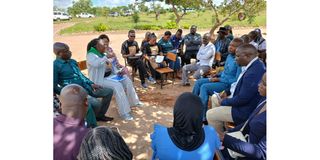
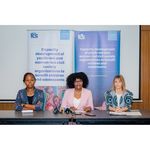
Coordinator of the TEN/MET network, Ms Martha Makala, accompanied by members of the education-focused civil society coalition, leads a discussion with community leaders, parents and teachers on addressing challenges at Songwe Girls’ Secondary School through the mobilisation of domestic resources, amid declining global funding for education. PHOTO | JACOB MOSENDA.
Songwe. As a deepening global financing crisis tightens its grip on education systems, Tanzania is witnessing a notable shift, one that could redefine how the sector is funded and sustained.
From the rolling hills of Momba District in Songwe Region, a new strategy is taking shape: one rooted in collective responsibility, domestic resource mobilisation and grassroots action.
During the 2026 Global Action Week for Education (GAWE) which started April 20, 2026 more than 66 organisations under the Tanzania Education Network (TEN/MET), an umbrella body of over 200 civil society groups, fanned out across schools and villages in some of the region’s most remote areas.
Their mission was not ceremonial; but to identify gaps, assess urgent needs and commit to co-financing solutions alongside government efforts.
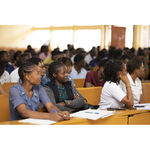
Their findings reflect a familiar but urgent reality- schools without adequate classrooms, a shortage of desks and science laboratories, insufficient teachers, and pupils walking long distances to access basic education.
These are not new challenges, but the response being proposed signals a shift in thinking.
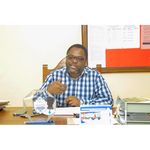
“We are positioning ourselves at the forefront of supporting the government to ensure all Tanzanians, regardless of their background, access inclusive and quality education,” said TEN/MET national coordinator, Ms Martha Makala.
She pointed to shrinking global aid and shifting international priorities as a wake-up call.
“The continued decline in funding for key social sectors like education and health due to global policy shifts is a clear signal. It requires us to mobilise our own resources and work in unison to support the implementation of the 2023 Education and Training Policy and the improved curricula,” she added.
Her remarks echo a broader global concern. According to the Sustainable Development Goals Report 2025, the world is off track in achieving SDG 4 on quality education by 2030.
The number of out-of-school children has risen to 272 million globally, with sub-Saharan Africa bearing the largest burden. At the same time, a financing gap estimated at nearly $100 billion annually continues to hinder progress in low- and lower-middle-income countries.
Even more telling, about 41 percent of countries do not meet the recommended benchmarks of allocating 4 to 6 percent of GDP or 15 to 20 percent of public expenditure to education.
Tanzania is not immune. Although the government has consistently increased its education budget over the years, it still falls short of global benchmarks.
This makes the current shift towards domestic and partnership-driven financing not just timely, but necessary.
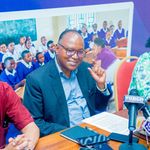
Songwe Regional Commissioner, Mr Jabir Makame, acknowledged both the progress made and the challenges ahead.
“Education is the heart of the nation. If we want to progress as a country, we must invest in it, through institutions, laboratories and qualified teachers,” he said.
While noting ongoing infrastructure improvements, he admitted that the government cannot do it alone.
“The implementation of the 2023 education policy will not be possible if the government carries the burden alone. We need stakeholders, especially as we approach 2028 when two student cohorts will transition to secondary education,” he said.
The region has already allocated Sh6.4 billion in the 2026/27 financial year to support education projects, signalling commitment at the sub-national level.
However, Mr Makame was clear: “We have done a lot, but we cannot manage on our own. We need stakeholders’ investment to complement government efforts.”
This is where TEN/MET’s model stands out. By bringing together civil society organisations, local governments and communities, the network is pushing for a shared responsibility approach.
Their engagements in Songwe included direct consultations with teachers, parents and local leaders, ensuring that proposed interventions reflect real needs.
Education experts say this model aligns with global recommendations. The Global Partnership for Education (GPE) has consistently emphasised domestic financing as the most sustainable backbone of education systems.
While international aid remains important, especially for programmes like early-grade literacy, school feeding and girls’ education, it is increasingly constrained.
UNESCO data shows that although global education aid reached a record $16.7 billion in 2023, its share in total development assistance has declined.
Meanwhile, donor countries are redirecting funds towards humanitarian crises, debt servicing and geopolitical priorities.
An education policy analyst based in Dar es Salaam, Dr Asha Mbelle, says Tanzania’s approach could serve as a blueprint.
“What we are seeing is a pragmatic shift, from dependency to co-creation of solutions. When communities, NGOs and local authorities invest in schools, accountability improves and interventions become more sustainable,” she noted.
Indeed, TEN/MET’s emphasis on inclusivity, ensuring access for rural learners, girls and children with special needs, reflects a broader understanding that equity must be central to financing strategies.