Revealed: What really drives East Africa fuel cost disparities

New Content Item (1)

Fuel prices have risen sharply across East Africa, precipitated largely by global supply disruptions caused by the US-Israeli war on Iran. PHOTO | FILE


Dar es Salaam. A regional debate over rising fuel prices has intensified after Kenyan President William Ruto attributed the country’s high pump costs to its expansive road network and middle-income status.
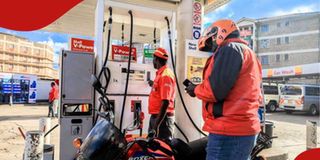
However, economists and emerging regional data suggest that this explanation may not fully account for the widening price differences across East Africa and beyond, pointing instead to taxation policies and state interventions as more decisive factors.

Speaking during a church service at Karen AGC Church in Nairobi on April 19, President Ruto cautioned against direct comparisons between Kenya and its neighbours, arguing that structural economic differences must be taken into account.

“Kenya is a middle-income country; our neighbours are least developed countries. If you want to compare Kenya fairly with others, do it with other middle-income countries and that is how you will get the figures right,” he said.

He added that part of the fuel price burden in Kenya is linked to infrastructure financing, particularly road construction and maintenance.

“Our fuel supports transport infrastructure. The 20,000 kilometres of tarmac roads we maintain here in Kenya is actually the same for the other six or seven East African countries,” he said.

Sharp increase

His remarks came days after the Energy and Petroleum Regulatory Authority (EPRA) announced a sharp increase in fuel prices on April 14.

Petrol prices in Nairobi rose by more than 16 percent, while diesel climbed by over 24 percent, pushing both fuels above 200 Kenyan shillings per litre for the first time in the country’s history.

The move triggered public frustration and reignited regional comparisons, with available data suggesting that Kenya’s prices remain among the highest in East Africa despite similar import dependence and shared supply corridors.

Currency conversion estimates based on exchange rates published by the Bank of Tanzania show that petrol in Tanzania currently sells at around Sh3,820 per litre.

In Kenya, petrol is priced at approximately 206.97 Kenyan shillings per litre—equivalent to roughly Sh4,140—placing it above most of its regional peers.

In Uganda, petrol sells at about 5,350 Ugandan shillings per litre, or approximately Sh3,760, although prices fluctuate due to reliance on imported fuel transported through Kenya and Tanzania.

Beyond the region, the contrast becomes even sharper.

In South Africa, petrol sells for about 23.36 rand per litre. This is roughly Sh3,250, partly reflecting government efforts to ease certain fuel-related taxes. In Nigeria, one of Africa’s largest oil producers, petrol costs around 1,350 naira per litre. This is about Sh2,320, largely due to domestic crude production.

This price spread has raised questions about whether infrastructure financing alone can justify Kenya’s relatively higher pump prices.

The debate has also gained traction in Tanzania, where Works Minister Abdallah Ulega appeared to challenge President Ruto’s claims while speaking in Dar es Salaam during the signing of a major infrastructure project in the Msimbazi Valley.

According to Mr Ulega, Tanzania’s road network is both extensive and steadily expanding, undermining the argument that Kenya’s infrastructure burden is uniquely large.

With a surface area of 947,300 square kilometres compared to Kenya’s 591,969 square kilometres, Uganda’s 241,550 square kilometres, Rwanda’s 26,338 square kilometres and Burundi’s 27,834 square kilometres, Tanzania is much larger than the other four countries combined, figures show.

It is therefore an open secret that Tanzania takes care of a much larger road network than Kenya does.

Mr Ulega said Tanzania has a road network of approximately 182,000 kilometres in total, of which nearly 16,000 kilometres are paved.

Data from Uganda’s Ministry of Finance for the 2026/27 financial year shows that Uganda has about 7,466 kilometres of paved roads and 13,999 kilometres of unpaved roads. When combined with Tanzania’s network, Mr Ulega argued, the figures exceed Kenya’s paved road length.

“If you add the paved roads of Tanzania and Uganda alone, the total already surpasses Kenya’s figure. Therefore, the statistics suggesting that Kenya’s road network is larger than those of all East African countries combined are not accurate,” he said.

Mr Ulega added that Tanzania currently has more than 5,100 kilometres of paved roads under construction, while another 3,700 kilometres have been contracted and are expected to commence soon.

He also noted that at independence the country had fewer than 600 kilometres of paved roads, indicating that more than 15,000 kilometres have been built through domestic efforts over time.

Tanzania’s infrastructure development accelerated significantly after independence in December 1961, following 42 year of limited investment when the country was a British Protectorate.

Amid the debate, Tanzanian authorities say they are taking a cautious approach to shield consumers from global price shocks.

Prime Minister Mwigulu Nchemba said the government is holding regular consultations with energy sector stakeholders to ensure stable supply and pricing.

“We are holding regular meetings between the government and sector stakeholders to evaluate the situation and ensure that fuel remains available and prices do not rise excessively,” he said during a visit to Chamwino District in Dodoma.

He acknowledged that global geopolitical tensions continue to pose risks to energy markets but urged calm among citizens.

Economists, however, argue that while infrastructure spending may shape fiscal priorities, taxation policies and state interventions remain the most decisive factors in determining pump prices.

Global volatility

Economist Donald Mmari said governments across Africa are under increasing pressure to cushion citizens from global energy volatility.

“In the current global environment, where geopolitical tensions continue to disrupt supply chains, governments should focus on reducing the burden on their citizens through temporary tax reductions or subsidies,” he said.

Similarly, Samson Rutashobya cautioned against politicising cross-country comparisons.

“No country runs another country’s economy. Leaders should concentrate on policies that protect their citizens rather than defending high domestic prices by comparing themselves with neighbouring states,” he said.

The discussion also intersects with Kenya’s classification as a middle-income economy.

According to the World Bank, sub-Saharan Africa has about 31 countries categorised as middle-income economies based on Gross National Income per capita, divided into upper- and lower-middle-income groups.

Countries such as Botswana, Mauritius, Namibia and South Africa fall into the upper-middle-income category, while Kenya, Tanzania, Nigeria and Ghana are classified as lower-middle-income economies.

Across the continent, responses to the current energy shock have varied. Zambia, for instance, suspended key fuel taxes by introducing a zero per cent value-added tax on fuel imports and halting excise duty between April 1 and June 30, 2026, in a bid to stabilise prices.

South Africa opted for targeted relief, reducing its fuel levy by about three rand per litre to contain inflationary pressure. Tanzania, on its part, has maintained its tax structure while deploying subsidies and regulatory controls through the Energy and Water Utilities Regulatory Authority (Ewura) to moderate price increases.


Fuel tax framework

Analysts note that while many governments have moved to ease the tax burden, Kenya has largely maintained its fuel tax framework—an approach that economists say continues to push its pump prices above those of its regional peers.

“Fuel pricing is now being driven more by global shocks than domestic narratives,” said Mr Rutashobya. “What governments in this region should be doing is short-term cushioning through tax adjustments or subsidies, because comparison politics does not reduce the price at the pump for ordinary citizens.”