When unveiling the Cabinet, in November 2025, Her Excellency, the President, made a fundamental change, which many may have not noticed, but which was significant for those with a keen interest in local government, in general, and in urban development, in particular.
The office of the Regional Development and Local Government, was shifted from the President’s Office, to the Prime Minister’s Office, PORALG to PMORALG.
The President had her reasons, but my gut feeling is that she wanted to shift this important office, to where action is supposed to be, that is, the Prime Minister’s Office. The Prime minister is the prefect for all government activities.
The move was very much welcome by all those who long to see active and functioning local governments.
Local governments in Tanzania, include those that are focused on rural governance and development (District Councils) and those that are trained on the governance and management of urban areas, that is city, municipal and town councils.
Way back in 1996, these was a Local Government Reform Agenda, which aimed at putting in place, semi-independent local government authorities, which, while implementing the national agenda and being agents of the central government, were, at the same time, expected to have their own programmes and to be responsive to local needs and aspirations.
They were expected to be largely financially independent, and to be able to hire and fire personnel as they deemed it necessary.
The Local Government Reform Agenda was kind of still-born, but the relationship between local governments and the central government was that which is described as D-by-D, that is Decentralization by Devolution.
The Prime Minister’s Office therefore needs to enforce this agenda. The reason why there needs to be a focus on urban areas is because the country is urbanizing.
Currently, the urbanisation rate is 35.76 percent of population (2024) and growing at (4 percent pa) faster than the national population growth rate.
Urban areas are supposed to be engines of development, yet urban areas in developing countries do not play this role, because they are unplanned, they lack the necessary infrastructure; they are generally generating costs more than benefits.
Among the reasons for this situation, are the fact that some 60 percent of urban land in Tanzania, for example, is in informal or unplanned areas.
The proportion of urban residents living in unplanned areas is much higher, given that more than one households, occupy on piece of land or house.
Transport is a huge problem and urban dwellers spend hours and a high part of their budget, on congested roads and in overloaded means of transport.
The litany of what is wrong in urban areas is long. The question is, who should take action? Today we all agree that the majority of urban residents live in informal areas; that urban areas are developing in an unplanned manner; that most people earn their livelihood by undertaking activities in the informal sector.
Who should be tasked with the current situation of unplanned development in urban areas throughout the country? Is it the Ministry of Lands? Or the Ministry responsible for local government?
This is an area that needs urgent resolution. The onus of managing urban areas, including ensuring that they grow in an orderly manner, lies with local authorities, not with sector ministries, such as that of lands, or of transport, or of telecommunication.
If urban areas must govern and manage themselves, they need strengthening. The urban directors must be experts who are well-versed in managing urban areas. If we do not have such cadre of personnel, they must be trained.
Urban directors must be appointed on merit and through competition. They must be tasked to solve the myriads of problems in their urban areas.
In London, the problem of transport lies to a large extent, with the London government not with the central government. The Mayor of London, Sadiq Khan, has earned himself world and local fame, for ensuring smooth and efficient public transport in that largest City in the UK.
The way things are in Tanzania, is that residents of the largest urban area in the country, Dar es Salaam, have no idea who their mayors and directors are. They have no idea who manages the city.
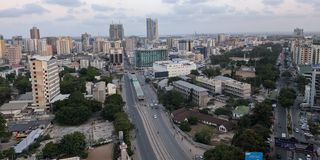
Projects like BRT and DMDP and those implemented by DAWASA, TANROADS, TARURA, or sector Ministries, are identified more with the central government than with local governments
One area where the Prime Minister and his Minister of State, need to focus their attention on, is to groom urban authorities so that they, to a large extent, run their affairs.
They are no longer babies. They need to be weaned from, and stop being spoon-fed by, the central government.
In our next article, we will argue why the Vice President’s office also needs to have a serious urban agenda.