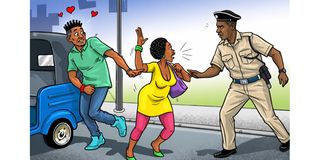
Why reporting assault should not be another struggle

So the other day I went to Kariakoo and Karume for my usual shopping.

But this time, I came prepared. Not with extra money nor bargain strategy. With a whole survival plan.

I wore what I confidently call my “look-ugly-not-so-inviting” outfit. Zero effort. Maximum invisibility.

The kind of outfit you hope convinces brother John, Samwel, and Ibrahim that today is not their day to test boundaries or demonstrate their “stretching-arm” skills.

And yet… it still didn’t work.

The “ksiiiih ksiiiih” soundtrack followed me like I owed it rent.

Anyway. On my way to Karume, I bumped into an old high school friend. And I immediately understood she was on the same mission… survival dressing, low visibility, maximum camouflage.

We were both trying not to be seen. A few steps later, she suddenly turned around and slapped a man behind her.

“Try again!” she said. I froze. I asked her what happened.

She said casually, “Kanishika nyonyo.” Like it was nothing. Like it was just someone stepping on her shoe in a daladala queue.

And that’s what unsettled me. Because this level of “normal” is not normal.

Then my mind went to a TikTok video I had seen earlier… a young woman recording herself after a Bajaji driver allegedly assaults her.

She is shaken, but she does what we are always told to do, she reports. And then reality begins its own performance.

Instead of immediate action, she is redirected.

“Go to that officer.”

“No, try the other one.”

By the time the system finished its internal routing process, the alleged driver had already left.

Gone.

And just like that, urgency evaporated into procedure.

So the question becomes unavoidable, When someone reports assault in real time, what exactly is supposed to happen and why does it so often not happen?

Because this is no longer just about one incident. It is about a pattern of response or delay disguised as process.

We are constantly told systems exist. That victims can report. That Gender and Children Desks are there. That justice begins with speaking up.

But what happens when speaking up turns into another obstacle course?

A while ago, a sketch from Tracey Ullman’s Show went viral.  A man reports a mugging, only to be questioned about his clothing, behaviour, and decisions. It is satire but only just.

Replace the mugging with sexual harassment, and suddenly it stops being funny.

Because many victims are not silent because they lack courage. They are silent because they are unsure whether courage will meet competence.

And when stories like the Bajaji incident surface…. raw, immediate, recorded, they expose that gap in real time.

Assault does not schedule itself. It happens instantly. So response must match that urgency, not lag behind it.

This is not about blaming individuals in uniform. It is about asking whether the system, as it operates on the ground, is actually aligned with its mandate on paper.

Are officers empowered to act immediately? Are victims guided or redirected? And when response fails, who carries accountability?

Because every time a woman steps forward to report, she is not just seeking justice.

She is testing trust.