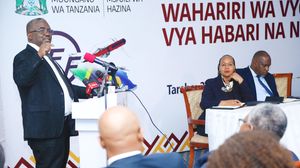
Dar es Salaam. The Tanzania Football Federation is positioning itself to tap into the vast commercial potential of the global betting industry, estimated to be worth billions of shillings, as local betting firms scramble to secure formal partnerships linked to domestic football fixtures.
In a bold strategic shift, TFF has announced plans to formalise and monetise betting rights associated with its competitions.
The move signals the federation’s intention to treat its fixtures not merely as sporting events, but as valuable intellectual property assets within a rapidly expanding betting ecosystem.
He said the Tanzania Mainland Premier League is now ranked sixth on the African continent, a position that underscores its growing significance in the development and valuation of the competition.
The pilot phase of the initiative will centre on the highly anticipated Kariakoo derby between Young Africans and Simba, scheduled for March 1 at the New Amaan Complex in Zanzibar. Betting companies across the country are now locked in fierce competition to secure rights linked to the blockbuster encounter. TFF has invited licensed betting firms to bid for partnership rights for the match.
The primary objective of the pilot project is to gather key data, including the number of bettors participating and the total revenue generated from wagers placed on the game.
According to sources, the collected data will provide the federation with a clearer picture of the scale and economic impact of betting activities surrounding domestic fixtures.
The source said the insights will also feed into TFF’s ongoing valuation process of its leagues and other football assets to determine their true commercial worth.
“In what could be a first in the country, TFF is expected to conduct a live auction process to award betting partnership rights, marking a significant evolution in how football properties are commercialised locally,” said the source.
A source close to the development said the federation’s decision is aimed at ensuring Tanzanian football benefits directly from wagers placed on its competitions. “The betting industry, driven by digital platforms, mobile money penetration and growing fan engagement, has witnessed exponential growth across Africa.
Tanzania is no exception, with thousands of fans placing bets weekly on local and international matches,” the source said.
By asserting greater control over fixture-related rights, TFF aims to create a regulated framework under which betting companies can access official data and branding through structured agreements.
He said such arrangements would open up new revenue streams for the federation, potentially supporting grassroots football development, improvements in refereeing standards, women’s football programs and national team preparations.
The development mirrors broader continental and global trends, where football governing bodies are increasingly recognising the commercial value embedded in match data and fixtures.
In South Africa, the Premier Soccer League previously defended its intellectual property in a landmark legal battle over betting rights, reinforcing the principle that leagues and federations hold proprietary interests in their competitions.
South Africa’s PSL discovered their fixtures generated 300 million rands (Sh42 billions) annually.
TFF’s initiative could therefore mark a turning point in the financial sustainability of Tanzanian football.
“Globally, modern sports business models now rely heavily on diversified revenue architecture that includes data rights, streaming partnerships and regulated betting collaborations.
If successfully implemented, the strategy could significantly reshape the economic landscape of the game in Tanzania,” he said.
By unlocking the commercial value of its fixtures, TFF would not merely be pursuing short-term financial gains, but laying the foundation for a stronger, self-sustaining football ecosystem. Ultimately, the federation’s ambition is clear: to ensure that a meaningful share of the billions circulating within betting markets flows back into the development and growth of the sport at home.