Those appointed to the commission include Mr Salum Othman Simba, a retired valuation expert. Other members are Mr Mussa Kombo Mrisho, a lawyer from the Office of the President, State House and Mr Khamis Muhidini Bakari, an engineer from the Zanzibar Airports Authority.
Unguja. Zanzibar President Hussein Mwinyi has formed a commission to review and assess compensation issues affecting residents displaced by development projects, following persistent complaints that affected citizens are being underpaid.
The move comes amid the implementation of various development projects by the Revolutionary Government of Zanzibar across Unguja and Pemba, which have triggered grievances from residents who say the compensation offered does not reflect the true value of their properties and land.
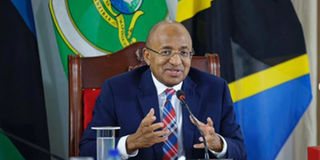
In a statement issued to the media yesterday, by the Deputy Director of Presidential Communications at State House, Ms Raqey Mohamed, Dr Mwinyi announced the appointment of an eight-member team of experts drawn from both public institutions and the private sector to undertake the task.
However, the statement did not specify the duration within which the commission is expected to complete its work.
Those appointed to the commission include Mr Salum Othman Simba, a retired valuation expert. Other members are Mr Mussa Kombo Mrisho, a lawyer from the Office of the President, State House and Mr Khamis Muhidini Bakari, an engineer from the Zanzibar Airports Authority.
Also appointed are Ms Fauzia Sindi Hassan, a registrar at the Contractors Registration Board; Ms Sabrina Yussuf Hassan, an information and communication technology specialist from the Office of the President, State House; Ms Mwanaidi Suleiman Ali, a social affairs expert from the Zanzibar Economic Crimes Authority (Zaeca); and Mr Ramadhani Nassoro Mwinyi, a finance expert from the private sector.
The eighth member is Mr Abdallah Khatib, a public affairs specialist from the private sector.
According to the statement, members of the public have been urged to cooperate fully with the commission when it visits the respective project areas to enable it to carry out its mandate effectively.
The formation of the commission fulfils a pledge Dr Mwinyi made during the election campaigns, when he met various groups of citizens and listened to their concerns. Among the key complaints raised was the issue of residents being unfairly compensated to make way for government projects.
The matter featured prominently in campaign meetings held in areas such as Fumba, Nyamanzia and Dimani, where many residents who were given the opportunity to speak cited inadequate compensation as a major grievance.
In responding to the concerns at the time, Dr Mwinyi acknowledged that in some areas the valuation process had been unsatisfactory and assured residents that once he returned to office, he would establish a commission to address the problem.
However, the President also cautioned that in certain cases, people had settled or developed land in areas that were not designated for development, resulting in compensation demands that exceeded the cost of the projects themselves.
“All these factors are important. Citizens are important because without them there can be no development, but development projects must also be implemented, because without them we cannot move forward,” Dr Mwinyi said at the time.
Another area that generated significant compensation-related complaints was the urban roads construction project, which includes the building of two flyovers at Amani and Kwerekwe. Residents affected by the project protested, arguing that the compensation offered was too low and even threatened to refuse to vacate their properties.
The situation prompted the intervention of two ministers—then Minister for Finance and Planning Dr Saada Mkuya and Minister for Works and Transport Dr Khalid Mohamed Salum—who met with the affected residents to address their concerns.
During a meeting held at the Kwa Wazee Hall, the ministers explained the government’s plan to conduct a fresh valuation of the affected areas in order to establish the actual amounts each individual should be paid.
Dr Mkuya explained that in the earlier valuation exercise, land had not been fully factored into the assessment, which partly explained why the compensation appeared low.
Subsequently, Dr Mwinyi provided further clarification, stating that the government had decided to engage a private valuation firm after identifying shortcomings in the valuation conducted by government assessors.
Reacting to the establishment of the commission, some residents of Kwerekwe welcomed the move, expressing hope that it would lead to a fair and lasting solution.
“The valuations that have been carried out are confusing. Some people are paid large sums, while others are short-changed. We believe this commission will provide clear answers. We commend the President for this decision,” said Mr Rajab Hassan, a resident of the area.
The commission is now expected to review existing valuation and compensation practices and make recommendations aimed at ensuring fairness, transparency and public confidence as Zanzibar continues to roll out major development projects.