How does a nation allow the least competent people to rise to the very top and determine its fate?
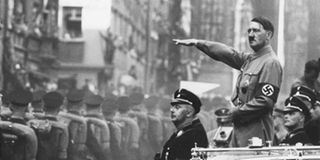
That question has haunted me since my teenage years. Back then, my fixation centred on a single, unsettling puzzle: how did Adolf Hitler—an intellectually shallow, emotionally volatile man—ascend to lead one of the world’s most advanced nations?
This was the Germany of Goethe, Einstein, Beethoven, and Max Planck. A society of profound scientific and philosophical achievement. Yet it handed its destiny to an imbecile. This contradiction holds a universal warning: the path to national ruin is usually paved by a series of conscious, catastrophic allowances by the elites.
Germany, after the First World War, was wounded. Defeated, humiliated, and economically strangled by the Treaty of Versailles, it watched its monarchy collapse.
In its place stood the fragile Weimar Republic, born into chaos: hyperinflation that vaporised savings, mass unemployment, street warfare between communists and nationalists, and a populace starving for stability and scapegoats.
Into this void stepped Adolf Hitler. He had no substantive achievements, but an uncanny talent for rambling and for channelling collective grievance.
Hitler said nothing new. The antisemitism he spewed was already endemic in Europe. The violence he endorsed was already present. His genius lay in amplifying what already existed and giving it a single, furious voice.
Here lies our first warning: When injustice is tolerated long enough, the extremist does not appear as a monster. “Yes, he is harsh,” people will rationalise, “but it is not the first time, is it?” When prejudice is normal, escalation feels incremental.
Silencing a critical newspaper, detaining a few opponents, stretching the law just a little further. You do not notice the slope until you are hurtling toward the abyss.
This is usually accompanied by the second, more subtle failure: we see the problem, but underestimate the danger. Surely, he cannot go that far. This was the precise miscalculation of Germany’s elites—industrialists, conservative politicians, military leaders—who believed Hitler could be used and tamed.
They handed him the keys to the chancellery in January 1933, believing that he could be civilised—that his rough edges would be softened by responsibility.
They were wrong.
Their error was compounded by a third: the dismissal of explicit rhetoric. Hitler had written his manifesto. Hitler’s book, Mein Kampf, was not a metaphor; it was a literal declaration of war against others – Jews, the France, critics.
The blueprint was published, sold, and debated. Yet it was dismissed as mere raving. Taking it seriously would have demanded action—so it was easier to ignore.
Once in power, Hitler started using the law to destroy the rule of law. He suspended civil liberties and granted himself dictatorial powers. Tyrants often arrive wearing legal robes. They hollow out constitutions, clause by clause, while a weary public applauds the illusion of stability.
Doesn’t that sound familiar?
The attacks on critics followed a calculated sequence. First, the communists. Germans didn’t like communists. Then, the Jews. They hated the Jews, too.
Then, any dissenting voice. Each move was branded as necessary, temporary, and directed only at “troublemakers.” Most citizens were not affected, so they were complacent. Martin Niemöller captured that fatal arithmetic of silence: “First they came for the Jews, and I did not speak out, because I wasn’t a Jew.”
Sounds familiar?
Many elites, meanwhile, adapted. Some prospered under new contracts, enjoyed restored “order,” and told themselves they were pragmatists. Artists, industrialists, politicians, judges, and so on. Their silence was purchased with power and profit. The problem is – when the privileged benefit from decay, they become its most effective proponents.
Familiar?
While this was going on in Germany, the world watched on. The French didn’t prepare for war. The Americans denounced war. The British chose appeasement – Neville Chamberlain met Hitler and came back to announce ‘Peace in Our Time’. But you cannot satisfy tyrants with concessions. That tends to encourage them.
The aftermath needs no embellishment: the Holocaust, the moral annihilation of a nation, and finally, the physical destruction of Germany—cities in rubble, a continent in ashes.
Why revisit this now? Because the pattern is not uniquely German. In nations like ours and across the world, we so often see the least competent elevated to the most powerful posts. Not because the elites are foolish, but because they are comforted by the lie that “it cannot get that bad”.
History’s clearest verdict is that it can, and it does.
The ultimate tragedy is not that the Hitlers of this world rise to power but that they are allowed to rise—step by step, warning by ignored warning, law by corrupted law—while those who know better wait for someone else to act. Mein Kampf was published. The speeches were broadcast. And still, a nation chose convenience over courage.
That is the final lesson: Nations are not destroyed by nincompoops like Hitler alone. They are dismantled by ordinary people who see the danger, name it in whispers, and do nothing in public—until there is nothing left to save.
Charles Makakala is a Technology and Management Consultant based in Dar es Salaam
Register to begin your journey to our premium contentSubscribe for full access to premium content