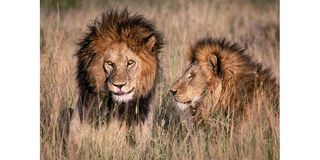
I write this article from a tent in the Serengeti, at midnight, with lions roaring outside. A piece of canvas is all that stands between my family and the lions. This is not my idea of fun.
For years, I’ve filed my weekly column from every conceivable place—airport lounges, city cafes, hotel desks. Deadlines wait for no one.
But never have I typed with quite this feeling: a low hum of primal fear, a profound vulnerability. It focuses the mind wonderfully. Out there, it is pure, instinct. In here, I am a writer on borrowed time, kept from becoming food by a piece of tent cloth.
This journey wasn’t my idea. My sense of adventure tops out at Arusha’s coffee shops. But for my children, for the indelible stamp of such an experience, I agreed.
But, first, you must endure the journey. We left Dar at 3am, aiming for an 11am arrival in Arusha. We rolled in at 3pm. Our roads—clogged with towns, markets, and the inevitable accidents—tend to bring things to a standstill. Our salvation was our driver.
A man of middle age and evident education, he possessed a deep knowledge of the land. He didn’t just know the routes; he knew the stories. Who owns what, which scandal haunted which politician, and so on.
This man understood the country in a way textbooks never will. I specialise in systems. He specialises in people. And in Tanzania, people are the system.
Arusha greeted us like an old friend—cool air, red earth, smiling faces. I spent many memorable years in Arusha, and I just love it here. But the Airbnb prices? Charging five-star rates for a bed and locked fridges? What happened to the breakfast in ‘bed and breakfast’? The market really needs to correct this.
Then came the road to Ngorongoro—about 160 kilometres of smooth tarmac through Manyara, Mto wa Mbu, Karatu. Twenty-six years ago, when I went that way, the tarmac ended abruptly past Makuyuni, and the real punishment began. Now? You can enjoy the journey.
And Mto wa Mbu—that lush, fertile valley town—humming with quiet potential. When the world properly discovers it, there will be a gold rush.
At Loduare Gate, you begin the ascent up the Ngorongoro Crater’s rim. So much is said about the animals below—the dense, living postcard of the crater floor. But what struck me most was the green.
A soaring, misty, primordial forest. It is a breathtaking overture – the guides are trained to sell you the Big Five, but this emerald world sells itself.
Then, Tanzania reveals its scale. Three hours from Ngorongoro in Arusha to Serengeti in Mara—mile after mile of vast, rolling land that settles into your bones.
At last, the Nabi Gate: you cross into the Serengeti. The Maasai named it “endless plains” for a reason. Before you, a sea of gold and grass spills to every horizon. The geology that created this is a mystery I must solve.
In Serengeti, the animal kingdom is not a scarce commodity to be tracked. It is the overwhelming reality. Herds of wildebeest, lines of elephants, prides of lions. You move from exhilaration to a surreal nonchalance: “Oh, look, another lion!” You are a spectator at the greatest show on earth, one that operates on its own timeless schedule.
But as night falls, the situation shifts. The camp is brilliant, the staff wonderful. Yet the mind rebels: I am not built for this. I miss solid walls. Doors that lock. Up close, adult lions are massive beasts that are built to kill. And my barrier is sewn fabric? Whoever thought that this is a good idea needs to have their head examined.
I don’t know what motivates people to come here. For me, it became an essential contrast. After a year of a sickening inversion of the natural order, I could use a change. Here, the lion’s roar is honest. There is no corruption. Out there, it is a pity what Tanzania has become.
We Tanzanians live in a land of staggering abundance. Yet too many in power treat that blessing as an excuse for complacency. They mistake God’s generosity for their own competence. But nature doesn’t reward laziness. The lion doesn’t care how powerful you are in Dodoma. And drought doesn’t check your party affiliation.
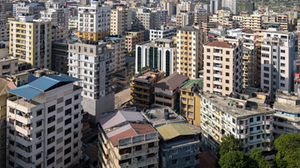
So, I write this from my flimsy tent, listening to the true rulers of this land. This is a journey of a lifetime. It reminds you of your place in the world. It shows you raw beauty and honest danger. The lions outside are predictable. They follow a code. It’s the predators in our cities, the ones who operate without any law, who should keep us awake.
Nevertheless, I still miss real walls. I am not cut out for life in the jungle. But this piece of cloth that is protecting me from the savannah is a thin line between the wild we understand and the jungle we have created.
I wouldn’t mind leaving both of them behind.
Charles Makakala is a Technology and Management Consultant based in Dar es Salaam
Register to begin your journey to our premium contentSubscribe for full access to premium content