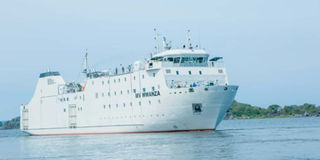
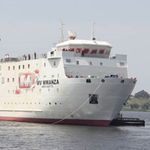
Mwanza. The recent launch of the modern MV New Mwanza ferry marks a major step in strengthening trade, transport and economic activity in Tanzania’s Lake Zone and neighbouring East African countries.
The vessel will initially operate between Mwanza, Kemondo and Bukoba ports, before extending services to Port Bell in Uganda and Kisumu in Kenya.
MV New Mwanza can carry 1,200 passengers, 20 vehicles and 400 tonnes of cargo, travelling at 16 knots (30km/h). The ferry is expected to link domestic and regional markets, reduce transport costs, attract investment and increase the contribution of Lake Victoria communities to the national GDP.
Mwanza Regional Commissioner Said Mtanda said the ferry would benefit about 3.6 million residents and boost their economic contribution.
“Mwanza is among the top contributors to the national economy at 7.2 percent, second nationally. Strengthened lake transport will allow residents to expand economic activities and contribute more to the national GDP,” he said.
MV New Mwanza is built to international standards, designed for safety, efficiency and faster transit. Its 400-tonne cargo capacity makes it unique in East Africa, compared with previous vessels on Lake Victoria. The ferry provides a reliable alternative to road transport, which often faces high costs, delays and product damage.
Tanzania Shipping Services Company (Tashico) chief executive Eric Hamissi said discussions are underway with the Tanzania Tourism Board to use the ferry for inland water tourism, supporting President Samia Suluhu Hassan’s plan to boost the sector.
Economic analyst Ally Mkino said the ferry would stimulate Lake Zone economies by easing trade and transport.
“MV New Mwanza improves on MV Bukoba. Its large cargo capacity will support agriculture, fishing and industrial products,” he said.
Mr Mkino added that the ferry will strengthen trade between Tanzania, Uganda and Kenya, particularly for goods long transported across Lake Victoria, including edible oils and crops.
“A large ferry improves supply chains, creates jobs in transport, agriculture and fishing and attracts investment in ports.”
Mr Mkino expects Kemondo Bay Port to benefit from increased commercial activity, boosting government revenue. Traders were advised to track ferry schedules, understand cargo capacity and follow regulations, while farmers were encouraged to increase production to take advantage of lower transport costs.
Mr Hamissi said the project provided hands-on training for marine engineers and technicians. Around 500 formal and informal jobs were created during construction, raising incomes and supporting the local economy.
Traders in the Lake Zone said the ferry addresses cargo transport challenges.
Banana trader Mabula Kija said: “I have used the ferry two or three times. It is excellent and passengers are satisfied. Transport costs should drop from Sh30,000 to Sh25,000 per tonne.”
Fish and grain traders said the ferry will speed delivery, reduce spoilage and enhance cross-border trade with Kenya and Uganda.
The Permanent Secretary in Uganda’s Ministry of East African Community Affairs, Edith Mwaje, praised Tanzania for the ferry, saying it would ease travel between Kampala and Mwanza.
Lake Victoria Basin Commission executive secretary Masinde Bwire said the vessel is unique in East Africa and will transform transport, trade and tourism across Tanzania, Uganda and Kenya.
“The ferry is not just for passengers and cargo; it is a catalyst for tourism and regional cooperation,” he said.
Register to begin your journey to our premium contentSubscribe for full access to premium content