‘Why not now?’: US defends review of Tanzania relations
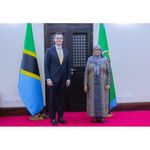
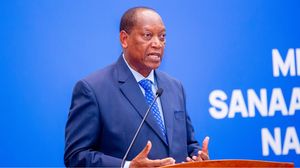
Acting US Ambassador to Tanzania, Andrew Lentz, responds to a question during an exclusive interview hosted by Mwananchi Communications Ltd Executive Editor, Mpoki Thomson.
Acting US Ambassador to Tanzania, Andrew Lentz, explains why Washington has decided to review its ties with Tanzania, citing concerns over investment, governance and rights, and outlining a new path anchored on reciprocity. The interview was hosted by MCL Executive Editor, Mpoki Thomson. Read on.
The most recent public statement on bilateral relations between the U.S. and Tanzania referred to a review by your government, prompted by serious concerns about restrictions on religious freedom and free speech, obstacles to U.S. investment, and violence against civilians during the October 29, 2025 elections. How far has this review progressed?
The events before, during, and after the October 29 elections were really shocking. The killing of civilians, assault on free speech, the closing of churches, and attacks on some religious figures. These events caused real concerns and questions in Washington on the future of our bilateral relations and whether Tanzania’s historic role of being a stable country in the region that respected and protected religious freedom was still intact.
'Why not now?': Inside the US review of Tanzania's relations
American companies kept coming to us with complaints that they were facing non-tariff barriers and regulatory tax burdens that prevented them from doing business in Tanzania, while other competing companies seemed to be doing well.
When all of this is put together, I think our December 6 statement was a necessary intervention.
We have been engaging with the government about these concerns, and we are making progress across a range of issues.
Is the public statement still in place?
The public statement is still in place. The review is ongoing. I’m optimistic that we are going to be able to reset this relationship, and that it will be stronger than it was before.
Western allies are increasingly prioritising domestic development over international assistance. The U.S. no longer treats Africa as a priority. What does this signify for broader US–Africa ties?
The U.S. has not deprioritised Africa or our commitments to health initiatives. What we have done is start a conversation with countries around Africa and around the world about a more effective way of cooperation. We are meeting Tanzania where it is.
Tanzania, as a lower-middle-income country with aspirations of becoming an upper-middle-income country by 2050, wants to move away from a donor-recipient relationship.
Tanzania doesn’t want to be waiting for handouts from the American government or any other government. Tanzania wants a relationship on an equal footing, one that is of mutual benefit and reciprocity.
Why is the review happening now under the administration of President Trump? Why not earlier?
Why not now? There is no question that what we achieved together in the past was fantastic. For example, we increased Tanzania’s life expectancy over the last two decades by 15 years, reduced the HIV mortality rate by 80 percent, and came close to eliminating malaria in Zanzibar.
But now we need to ask ourselves whether the old relationship was sustainable.
The U.S. also has its own needs. Our health system is under strain, and we have needs in other social services. With Tanzania’s growth trajectory being positive, it was time to reset the foundation of this relationship and forge something new and more dynamic.
Recent U.S. health agreements with African countries are being challenged in courts for lack of transparency and parliamentary oversight. Why did America decide to shift its approach to health cooperation from aid-focused to bilateral agreements?
What we aim to achieve is a more dynamic and stronger health partnership with Tanzania. We want Tanzania’s health systems to be stronger and more robust by the end of a five-year cycle, through a mix of assistance, government funding, and private-sector investment. This kind of system is sustainable whether the U.S., China, or anyone else is supporting it.
We want to see concrete steps by the Government of Tanzania based on shared values of security and prosperity.
Who benefits the most from these U.S. reviews—the two governments, or the Tanzanian people who are most impacted?
Our focus should be on the people and on health outcomes.
This was not an abrupt stop. We transitioned the assistance portfolio from USAID to the Department, ensuring continuity in managing that portfolio. We also established a bridge funding plan of roughly $165 million, which continued as we moved from the old system to the new one, and this will run until May this year.
Decisions by the Trump administration on trade tariffs have affected African economies, with countries now facing minimum tariffs of around 10 percent. How has this impacted trade between the U.S. and Africa?
Let’s look at the context of where this came from and why this policy was established. Historically, the U.S. has had one of the most open economies in the world. Yet, when American businesses and investors went overseas, they often faced tariffs and non-tariff barriers that limited their access to partner markets. This lack of reciprocity was unfair and posed a threat to America’s national and economic security interests.
As a result, we decided to reset and review our established relationships with our partners around shared values of prosperity and security, and on the basis of reciprocity, mutual benefit, and fairness.
If the Tanzanian government enacts reforms to address our concerns and remove what is impeding investment into the country, we will start seeing growth.
So non-tariff barriers are among the reasons Tanzania is recording limited investment from American investors?
Yes, they are connected, especially in the U.S. desire to reset our trade and economic relationship based on reciprocity, fairness, and mutual benefit.
For too long, American investors trying to enter the Tanzanian market have seen their investments and projects delayed. They face obstacles such as predatory tax policies or non-tariff barriers. For example, the LNG deal has been a priority for multiple governments over 13 years, yet it has not been finalized, even though one of the biggest American companies in the world is part of the consortium trying to close the deal.
I think there is a commitment on the part of the government to finalise this deal. If the government were to close this $42 billion project, which is nearly half the size of Tanzania’s GDP, it would send an incredible signal to international investors that big deals can be done in Tanzania.
Do you think American companies are being targeted?
I’m not going to argue that American companies are being targeted, but they are certainly facing obstacles. I hear concerns from many companies—not just American ones—who say that it is often too difficult to do business in Tanzania.
They want to do business here and see the potential returns. They believe that if Tanzania implements targeted reforms, it will be much easier to operate, and growth potential and returns will improve significantly.
Recent U.S. travel restrictions affecting parts of Africa have raised concern. How should Tanzanians interpret these measures, which affect people-to-people exchange, education, tourism, and business mobility?
There are real concerns driving American policy. Over the years, many people have travelled to the U.S. for legitimate purposes such as studying, work, tourism, and sports. However, there have been many cases where individuals overstayed their visas and decided to remain in the U.S. illegally, overwhelming our system.
This was a real problem that needed to be addressed. Unfortunately, Tanzanians were among those overstaying their visas. Over the past couple of months, we have been engaging with your government on how we can address these challenges.
The U.S. House of Representatives has approved a bill to renew AGOA to December 31, 2028. The bill now moves to the U.S. Senate. As African governments and the AU call for expedited approval, how optimistic are you that the bill will be approved soon?
The fact that the House took it up should be seen by Africa and the Tanzanian government as a positive indicator that the U.S. wants to establish a fair, reciprocal, and mutually beneficial trade relationship with Africa. Ultimately, the debate will centre on how this programme helps us reach those goals.
Tanzania should start looking at how to make better use of AGOA. When AGOA offered tariff-free access to the U.S. market, it was underutilised. Tanzania was not fully taking advantage of the opportunity.
Tanzania has raised concerns about rules of origin and limited product diversification.
AGOA is not meant to be a back door for other countries to route their goods through Tanzania with marginal value addition before exporting to the American market. Tanzania needs to take steps now to attract investment that enables real value addition and beneficiation domestically.
How does the U.S. ensure its security cooperation with Tanzania remains a partnership of equals that respects Tanzania’s sovereignty?
America’s national security strategy places strong emphasis on respect for sovereignty, which is a core principle of U.S. foreign policy. However, President Trump and the U.S. will act if there is a real threat to America’s national security.
The U.S. has robust engagement with the Tanzania People’s Defence Forces, and we share an understanding of the security challenges facing Tanzania and East Africa, as well as a shared commitment to addressing them together.
Tanzania is surrounded by terrorist threats. There is regional conflict in eastern DRC, and security concerns in the Indian Ocean, including piracy and illegal fishing.
Register to begin your journey to our premium contentSubscribe for full access to premium content