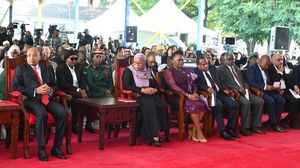
Zanzibar. The reconciliation agreement signed on Thursday, July 9, 2026, by the Zanzibar government, the ruling CCM and the opposition ACT-Wazalendo is expected to strengthen investor confidence, improve the business climate and support the Isles' ambition of becoming a regional hub for trade, tourism and maritime services.
Leaders from both sides said the accord extends beyond political reconciliation, arguing that lasting peace and stable governance are critical to attracting investment, expanding businesses and creating jobs in an economy driven largely by tourism, trade and services.
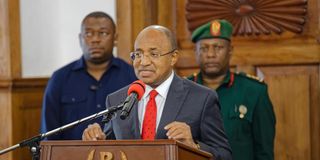
Speaking after the signing ceremony, Zanzibar President Dr Hussein Ali Mwinyi said political stability was the cornerstone of economic transformation, noting that investors and development partners seek confidence in governance, institutions and the rule of law before making long-term commitments.
He said the agreement marked the start of a broader process to address governance and electoral challenges while creating conditions for sustainable development.
"Zanzibar needs a stable political environment, strong institutions and good governance if it is to realise its ambition of becoming a leading centre for trade, tourism and transport services," Dr Mwinyi said.
He stressed that the reconciliation process was intended to serve the interests of Zanzibar and future generations rather than those of political parties or individuals.
"Zanzibar's interests must come first. This process is about building trust, strengthening unity and laying the foundation for development," he said.
Dr Mwinyi said the next phase would involve continued dialogue through a joint committee tasked with examining agreed issues and proposing reforms to strengthen governance, the electoral system and public confidence.
He added that the initiative's success would depend on commitment, honesty and cooperation among all stakeholders.
President Hassan described the agreement as a demonstration of political maturity, saying reconciliation reflected leaders' willingness to place national interests above political differences.
"Reconciliation is not weakness; it is political maturity. Leaders may differ in their views, but they can still agree on issues that matter for the country and the wellbeing of its people," she said.
She said Tanzanians wanted peace, security and stability that would enable them to participate in economic activities and improve their livelihoods.
"Our people do not need endless political conflict. They need peace, security and stability. They need a government that delivers quality services, strengthens economic activity and creates employment opportunities," she said.
President Hassan said political stability and economic prosperity were inseparable, warning that prolonged political tensions could undermine development.
"Where politics is driven by hatred and endless confrontation, opportunities for development disappear. But where there is peace, development has room to flourish," she said.
She urged political leaders and citizens to safeguard the agreement and preserve the trust built through the dialogue process.
ACT-Wazalendo national chairman Othman Masoud Othman said the agreement should be viewed not merely as a political settlement but as a platform for Zanzibar's social and economic transformation.
He said the Isles' ambition of becoming a competitive hub for trade, tourism and maritime services required strong governance capable of attracting investment and supporting business growth.
"Zanzibar needs more than political solutions. It needs systems that promote good governance, accountability, justice and economic confidence," Mr Othman said.
He added that countries achieving sustained economic progress had done so by prioritising political stability, effective institutions and respect for the rule of law.
Mr Othman said the dialogue aimed to resolve issues that had undermined political trust and ensure future generations inherit a more stable Zanzibar.
The agreement is expected to send a positive signal to investors, businesses and development partners by demonstrating a shared commitment to peace, political stability and predictable governance.
With tourism, trade and services remaining the main pillars of Zanzibar's economy, leaders said sustaining political stability would be essential to attracting investment, expanding economic opportunities and creating jobs.
They noted that the real measure of success would be the implementation of the agreed reforms and whether they deliver tangible benefits for citizens.
As Zanzibar seeks to strengthen its position as a regional economic hub, the reconciliation agreement offers an opportunity to translate political stability into sustained economic growth and long-term prosperity.
Register to begin your journey to our premium contentSubscribe for full access to premium content