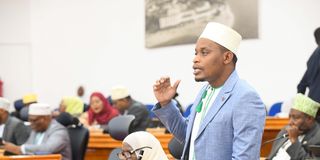
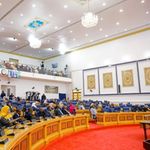
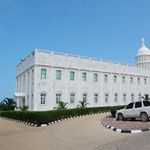
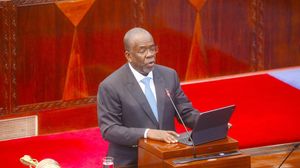
Unguja. Members of the Zanzibar House of Representatives said the persistent land disputes on the islands can only be resolved through the development of a comprehensive master plan, as debates on the Ministry of Lands and Housing Development’s 2026/27 budget continued.
The remarks were made on Wednesday, June 3, 2026, during deliberations on the ministry’s estimates of revenue and expenditure for the 2026/27 financial year.
Uzini Representative, Mr Said Azana Msingiri, said most land conflicts arise due to the absence of proper surveying and formal recognition of land boundaries.
He said urgent action was needed to survey unplanned areas, including land claimed by both residents and security institutions.
“Therefore, the ministry should urgently survey these areas so they are officially recognised.
Even security forces should know their boundaries, because there is growing conflict, with residents claiming ownership while the military also claims the same land,” he said.
He added that several areas remain available for farming, but disputes continue to limit their use.
“There are still major disputes in our areas, so the ministry should sit with citizens and resolve these conflicts,” he said.
Women special seat Representative, Ms Moza Mohamed Khamis, ACT-Wazalendo, said compensation complaints were widespread, noting that many citizens depend on land for their livelihoods.
“People depend on land and the government should support them, not oppress them,” she said.
Ms Khamis also cited the absence of a clear strategic framework, saying weak planning and lack of surveying were at the centre of most disputes.
Wawi Representative, Mr Bakar Hamad Bakar, CCM, said a well-structured master plan would be the key solution, as it would clearly define land use and ownership across all areas.
“Each area will have its designated purpose, which will eliminate current challenges and reduce government costs, especially compensation payments,” he said.
He also called for improved monitoring systems to track land issues and prevent recurring disputes.
Mfenesini Representative, Mr Othman Machano Said, CCM, said despite government efforts, the lack of systematic land surveying continues to create challenges for citizens.
Paje Representative, Mr Jaku Hashim Ayub, called for a review of land laws, arguing that current legislation no longer reflects Zanzibar’s realities.
He also questioned the practice of forced evictions by the Housing Corporation, including cases involving elderly tenants.
“In housing investment, there are major challenges that need to be reviewed,” he said.
Women Special Seat Representative, Dr Nasra Nassor Omar, ACT-Wazalendo, said some land disputes were also being fuelled by the land commission, adding that ordinary citizens often suffer financial losses due to compensation-related conflicts.
Earlier, the Minister for Lands and Housing Development, Ms Rahma Kassim Ali, said the ministry was allocated Sh308.057 billion in the 2025/26 financial year to implement five key priorities.
These include construction of residential and commercial houses, maintenance of existing housing units, preparation and review of master plans and land-use plans for Unguja and Pemba, development of ICT systems for service delivery, surveying and identification of land areas, public education through land clinics, and preparation of housing construction guidelines.