Dar es Salaam. Inflation is expected to remain within the 3–5 percent range in the second quarter of 2026, despite pressure from rising global fuel prices, the Bank of Tanzania (BoT) has said.
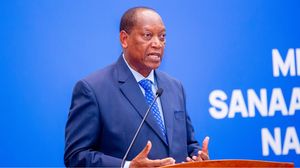
Deputy Governor, Dr Yamungu Kayandabila, in charge of economic and monetary policy, made the remarks yesterday while presenting the Monetary Policy Committee’s (MPC) statement following its recent meeting.
He said that energy and transportation costs continue to drive inflationary pressures, after global crude oil prices rose from $60 per barrel in the first quarter of 2026 to over $100 currently.
“Despite these developments, inflation remained low, averaging 3.3 percent on the mainland in the first quarter, and is expected to stay within the target,” he said.
“Lower food prices and the stability of the shilling are helping to ease inflationary pressures,” he said.
Dr Kayandabila noted that, globally, inflation remains relatively low in many countries, though risks have increased due to rising energy and transport costs linked to geopolitical tensions in the Middle East.
“Central banks may need to adjust interest rates if conflicts persist or intensify,” he added.
In response, the MPC maintained the Central Bank Rate (CBR) at 5.75 percent for the second quarter, signalling a cautious approach to contain inflation while supporting growth.
Despite escalating global tensions, Tanzania’s economy has remained resilient, posting strong growth in the first quarter.
“Mainland Tanzania expanded by an estimated 6.2 percent, while Zanzibar grew by 6.7 percent, supported by construction, agriculture, financial and insurance services, and tourism,” said Dr Kayandabila.
Economic momentum is projected to remain solid in the second quarter, with growth forecast at 6.1 percent for the mainland and 6.6 percent for Zanzibar, underpinned by productive sectors and steady domestic demand.
However, rising global uncertainties pose risks of imported inflation, particularly through higher fuel and transportation costs.
To enhance policy effectiveness, the MPC narrowed the CBR corridor from 200 basis points to 150 basis points, effective April 2026.
This sets the target band for the seven-day interbank rate between 4.25 percent and 7.25 percent, with the central bank committed to guiding short-term market rates within this range.
Inflation in the first quarter averaged 3.3 percent on the mainland and 4.5 percent in Zanzibar, supported by prudent monetary policy, stable food prices, and a relatively steady exchange rate.
Nevertheless, upward pressure is expected in the coming months due to higher global energy costs.
The banking sector continues to show strength, with high liquidity and adequate capital buffers.
Credit to the private sector grew by 22.8 percent, while the non-performing loans ratio declined to 2.9 percent, well below the five percent benchmark.
Externally, the current account deficit narrowed to 2.2 percent of GDP in the year ending March 2026, supported by strong exports of gold, tourism, and agricultural products.
Zanzibar maintained a surplus, driven largely by tourism earnings, while foreign exchange reserves remained adequate at over $6.2 billion, covering 4.8 months of imports.
Fiscal performance has been encouraging, with tax revenues exceeding targets due to stronger economic activity and improved administration.
Government spending has remained aligned with available resources, supporting macroeconomic stability.
Looking ahead, the MPC stressed the need to closely monitor global developments, particularly geopolitical tensions, which continue to pose risks to inflation and growth. The committee will reassess conditions at its next meeting in July 2026.
Meanwhile, the vice-chairman of the Tanzania Bankers Association, Geoffrey Mchangila, welcomed the maintained CBR. “The banks are confident and will continue to offer loans,” he said.
Register to begin your journey to our premium contentSubscribe for full access to premium content