Josephine Christopher is a senior business journalist for The Citizen and Mwananchi newspapers
Mwananchi Communications Limitted
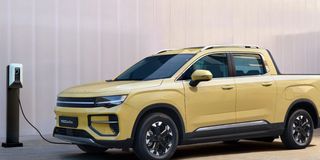
Dar es Salaam. A new entrant into Tanzania’s commercial vehicle market has pledged to slash per-kilometre operating energy costs by up to 86 percent, as the country receives its first fully electric dual-cab pickup trucks.
Local electric vehicle firm JTP Auto told The Citizen that the launch marks a significant milestone in the shift towards cleaner and more affordable transport solutions.
According to company specifications, the pickup offers a driving range of up to 450 kilometres on a single charge, positioning it against the diesel-powered vehicles that dominate Tanzania’s construction, mining and distribution sectors.
Founder Dr Amar Shanghavi said the move reflects structural changes in the market rather than opportunism.
“What really changed the equation is that three things came together at the same time. First, battery range has improved significantly, which addresses range anxiety. Also, Tanzania’s electricity supply has stabilised, with generation now meeting demand,” he said.
“And finally, innovation and competition in China mean electric vehicles are now truly on par with internal combustion engine vehicles in terms of performance and durability,” he added.
He said the economics underpin the company’s pitch. Beyond lower energy costs, maintenance expenses are projected to be about 50 percent lower over a ten-year period, even after factoring in a full battery replacement.
Electric drive-trains have fewer moving parts than internal combustion engines, reducing wear and tear and lowering servicing requirements — a factor that could appeal to fleet operators whose margins are vulnerable to fuel price volatility.
Diesel prices in Tanzania have historically tracked global oil markets, exposing transport-intensive sectors to foreign exchange and import cost pressures. Electricity, by contrast, is largely domestically generated, with tariffs among the lowest in the region.
Infrastructure, however, remains a key consideration. Dr Shanghavi said each vehicle will be supplied with a standard charger compatible with ordinary electrical outlets, enabling overnight charging nationwide.
At the same time, the company is developing a fast-charging network branded JTP-BOOST to support commercial and intercity operations. It said it is installing what it describes as Tanzania’s first public high-speed charging station this month.
The firm is initially targeting commercial fleets, particularly last-mile delivery operators in the fast-moving consumer goods segment, where predictable routes make charging logistics manageable and cost savings easier to quantify.
“The biggest challenge is that electric vehicles are still new for many consumers,” Dr Shanghavi said.
“That means we need to build trust both in the technology itself and in us as a company. Education, transparency and real-world demonstrations are key.”
Looking ahead, the company plans to establish local assembly operations within two years, subject to regulatory facilitation and sustained policy support for e-mobility.
Discussions with the Tanzania Investment Special Economic Zones Authority (TISEZA) are ongoing, according to Dr Shanghavi.
If realised, the adoption of electric pickups would represent more than a technological upgrade.
It would signal the early stages of a structural transition in a transport sector that underpins trade, agriculture and construction — and where cost per kilometre ultimately determines competitiveness.