Feasibility study for Mchuchuma-Liganga restarts as contract talks reach final stage

Dar es Salaam. The long-awaited Liganga and Mchuchuma project has entered a new implementation phase, with the National Development Corporation (NDC) and its new investor commencing an updated feasibility study while contractual negotiations advance to about 95 percent completion.

This comes at a time when Tanzania must urgently fast-track the long-delayed Liganga and Mchuchuma projects or risk missing out on a narrowing window of opportunity created by Africa’s rising demand for steel and the global shift toward strict environmental standards.
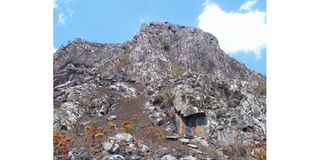
Although the projects located in the country’s mineral-rich southwestern corridor have been discussed for more than a decade, the current global trends make their speedy implementation more critical than ever.

Africa’s industrialisation is accelerating, and so is the world’s transition to clean energy, a shift that could soon reshape the market for coal, iron, and other stone-based products.

According to the World Steel Association’s Short Range Outlook, Africa’s demand for raw and semi-finished steel products is projected to grow at a compound annual rate of 2.2 percent until 2035.

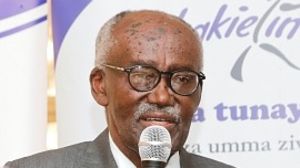
NDC Director General, Dr Nicolaus Shombe told The Citizen that the feasibility study for steel production is a large and comprehensive exercise aimed at reassessing the project’s viability under current global and regional economic conditions.

“The study is expected to analyse the steel market domestically and across the region, as well as demand for associated minerals critical to sustaining an integrated iron and steel industry,” he explained.

He noted that the study will further examine enabling infrastructure requirements, including roads, railways, electricity, water supply, and communications systems, alongside environmental considerations, technology options, site planning, mineral quantity and quality assessments, and financial governance and accountability frameworks necessary for a multi-billion-dollar industrial complex.

He noted that the investor, a Chinese state-owned company, Shudao Investment Group Company Ltd (SDIG), is in the final stages of concluding key contractual matters, raising expectations that agreements could be signed within the year.

“We expect to sign the contracts within this year, and this will be a major part of implementing Vision 2050, as the Liganga and Mchuchuma project is one of the strategic programmes," Dr Shombe said.

He added that the feasibility study update commenced about three weeks ago through joint data collection between NDC and the investor to ensure the findings reflect current market realities, technological advancements, and environmental standards.

“This is a large exercise expected to take about one year and will involve many stakeholders. It is a very important step,” he said.

The renewed momentum follows ownership changes in 2024, when SDIG acquired shares from Sichuan Hongda, prompting the government to restart negotiations after earlier concerns over financial and technical capacity to implement the multi-billion-dollar project. Engagements intensified in 2025 through formal meetings and a high-level government visit to China to resolve shareholding and implementation issues.

Located in Ludewa District, Njombe Region, the project is valued at about $3 billion and is designed as an integrated industrial complex combining coal mining at Mchuchuma, a 600 MW power plant, and iron ore mining alongside a steel plant at Liganga. The government has already completed compensation for more than 1,100 residents to pave the way for construction, signalling a renewed push to unlock the strategic project that has been under discussion for over a decade.

Once implemented, the project is expected to create over 6,600 direct jobs and about 26,000 indirect jobs, while significantly reducing Tanzania’s dependence on imported steel and key industrial raw materials.

Historical perspective

In 1996, cabinet paper No. 06/96 directed that the Liganga and Mchuchuma projects be developed. Another cabinet paper No. 14/2007 of 2007 instructed that investors be sought. The process took four years to 2011 when a joint venture agreement was signed.

In June 2023, the government paid compensation amounting to Sh15.4 billion to residents to pave the way for project activities.

Following advice from the Attorney General, the Ministry of Industry and Trade formed a Government Negotiation Team (GNT), which held four negotiation meetings between January and August 2025 with the new investor, Shudao Investment Group Company Limited (SDIG).

Furthermore, from 17 to 22 June 2025, a high-level government delegation visited China to address, in particular, the issue of shareholding structure and to obtain assurances regarding the investor’s readiness to implement the project in the national interest.