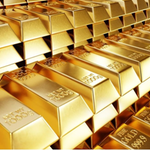
Dar es Salaam. Global gold prices have rebounded in the world market after falling sharply in June, with renewed investor demand pushing the precious metal above its level at the end of May.
According to gold news and analysis company Kitco and the London Bullion Market Association (LBMA), a global authority on precious metals, gold stood at $4,532.03 per troy ounce at the end of May before falling to $4,022.29 in June, a decline of about 11.2 percent.
The market stabilised in July, with the price rising slightly to $4,049.83 per ounce at the end of the month.
The recovery then gained momentum in August, with spot gold reaching $4,624.87 per ounce on Tuesday, August 25, according to Kitco which provide live precious metal prices.
The latest price is about 14.2 percent higher than the end-July level and two percent above the end-May price, meaning gold has more than recovered the losses recorded in June.
The rise has been supported by several factors, including a weaker US dollar, changing expectations about US interest rates and renewed demand for gold as a safe-haven asset.
A weaker dollar generally supports gold prices because the metal becomes cheaper for buyers using other currencies. Conversely, higher interest rates can reduce demand for gold because, unlike interest-bearing investments, the precious metal does not generate interest income.
Bank of Tanzania Governor Emmanuel Tutuba said geopolitical developments, including the conflict in the Middle East and changes in oil prices, were among the factors affecting the gold market.
“The gold market is one of the areas affected by the ongoing conflict in the Middle East and rising oil prices,” Mr Tutuba said.
He said expectations about US interest rates had also influenced investors, with some increasing their holdings of gold because of its traditional role as a safe-haven asset during periods of economic and geopolitical uncertainty.
Mr Tutuba also pointed to the relationship between the US dollar and gold prices.
“When the dollar strengthens, gold tends to weaken, while when the dollar weakens, gold tends to strengthen,” he said.
He added that continued purchases by central banks were supporting demand as some institutions seek to diversify their reserves.
“Some investors are buying gold now with the expectation that its value will increase in the future, allowing them to sell at a higher price,” he said.
Independent financial analyst Oscar Mkude said fluctuations in gold prices were normal because commodity markets respond to changes in supply, demand and wider economic conditions.
“Fluctuations, whether prices are rising or falling, are normal in the market. They are largely driven by changes in prices and demand, as well as developments affecting supply chains,” Mr Mkude said.
He said further increases in gold prices over the coming months would not necessarily be unusual, particularly if supply disruptions and strong demand continued.
“If gold prices continue to rise over the next two months, it would still be considered a normal market movement, particularly if there are continued disruptions in the supply chain,” he said.
Mr Mkude said investors and policymakers should monitor whether the upward trend continued and how supply and demand conditions changed. “What is important is to observe whether the movement persists and how market conditions, including supply and demand, evolve over time,” he said.
For small-scale miners, however, changes in global gold prices have a direct effect on their earnings.
Small-scale miner Nurath Athumani, from Butundwe Luhuha at the Imalabuhabi mine, said a fall in global gold prices could force miners to delay selling their gold until prices improved.
“When the global price falls, we are forced to wait until it rises again before selling. We prefer to sell when prices are high, but when they fall, we keep the gold until the market improves,” he said.
Register to begin your journey to our premium contentSubscribe for full access to premium content