Lissu challenges credibility of prosecution’s witnesses
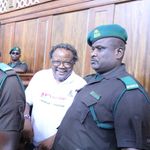
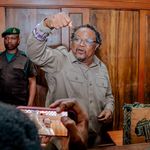
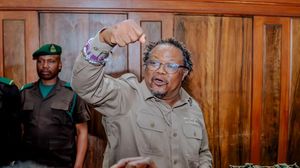
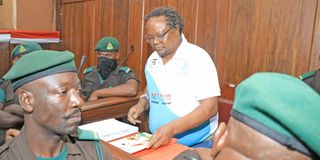
Chadema Chairman Tundu Lissu stands in the dock at the High Court’s in Dar es Salaam yesterday, as he prepares to begin his defence in the treason case facing him. PHOTO | SAID POWA
Dar es Salaam. Chadema chairman Tundu Lissu has challenged the credibility of prosecution witnesses in his treason case, alleging that some of those who testified against him had admitted to planning criminal acts but were released without being charged.
Mr Lissu made the allegations yesterday, as he continued with defence in the case before the High Court’s Dar es Salaam Sub-Registry.
He is facing a treason charge in which the prosecution alleges that on April 3, 2025, Mr Lissu, with seditious intent, incited the public to prevent the 2025 General Election by making statements aimed at pressuring Tanzania’s top government leader.
The case is being heard by a three-judge panel comprising Justices Dunstan Ndunguru, James Karayemaha and Ferdinand Kiwonde.
During his testimony, Mr Lissu examined the categories of prosecution witnesses, questioning why the prosecution had not called 13 of the 30 witnesses it initially listed during the preliminary hearing.
He said the 17 witnesses who eventually testified comprised eight police officers and nine protected witnesses whose identities, residences, occupations and other personal details were unknown to the defence and the court, apart from pseudonyms.
He argued that the protected witnesses could be present in court during proceedings but remained known only to the prosecution.
Mr Lissu also questioned the credibility of the eight police witnesses, saying he had had disagreements with their senior officers for more than 24 years and alleging that this could have created personal animosity towards him.
He singled out the evidence of the first and 16th prosecution witnesses as particularly important in assessing the nature of the evidence presented against him.
The first witness, Assistant Commissioner of Police (ACP) George Bagyemu, led the investigation team until a day before Mr Lissu was arrested.
Mr Lissu said the witness testified that he communicated with Director of Criminal Investigations (DCI) Ramadhani Kingai through Deputy Commissioner of Police (DCP) Ramadhani Ng’azi.
However, Mr Lissu said ACP Bagyemu told the court that he had not communicated with the Zonal Police Commander and the Director of Public Prosecutions (DPP), who coordinate criminal investigations, or the regional security officer regarding the case.
Mr Lissu said ACP Bagyemu also testified that he had formed three teams — investigation, intelligence and advisory — but denied ordering Mr Lissu’s arrest and said he did not know who had ordered it.
According to Mr Lissu, ACP Bagyemu said he learnt of the arrest after receiving a telephone call from DCP Ng’azi informing him that Mr Lissu had been arrested in Mbinga.
“Therefore, my evidence, Your Lordships, is that I was arrested on the orders of Ramadhani Kingai (DCI) and presumably Camillius Wambura (IGP), and they are the ones who have been behind efforts to imprison me for 24 years,” Mr Lissu alleged. He said the account by ACP Bagyemu was supported by the evidence of the 16th prosecution witness, ACP Amini Mahamba. Mr Lissu alleged that the evidence of the other police witnesses was from officers linked to DCI Kingai and Inspector General of Police Wambura, whom he accused of pursuing his imprisonment.
He said he would demonstrate during his closing submissions why their evidence should not be relied upon because they had vested interests.
Turning to the nine protected civilian witnesses, Mr Lissu said their written and oral evidence showed that they had admitted to planning criminal acts during the October 29, 2025 General Election.
He alleged that all but one had been arrested by police between April 4 and 8, 2025 over the alleged plans and that they therefore became known to investigators. Mr Lissu further alleged that after their arrests, the witnesses admitted to planning criminal acts but were released and later approached by police.
He said ACP Mahamba subsequently asked them to agree to testify against him, allegedly promising that their own charges would be dropped if they agreed.
“All of them, Your Lordships, admitted to committing crimes, were arrested and then released,” Mr Lissu said, adding that he would explain in his final submissions why such witnesses should not be considered credible.
He also sought to link the witnesses’ alleged admissions to deaths recorded during the October 29 events, citing figures contained in the report of the Commission led by Justice Joseph Chande.
Mr Lissu said two of the witnesses were from Dar es Salaam, where he cited the commission as reporting 182 deaths; two were from Arusha, where he cited 53 deaths; two were from Mbeya, where he cited 80 deaths; and two were from Songea, where he said the commission reported deaths but did not give a figure.
Regarding the evidence of ACP Mahamba, Mr Lissu said the officer testified that he was part of the investigation team but acknowledged that police had taken no action against the people who allegedly admitted to planning criminal acts.
“Your Lordships, this is the Government’s evidence against me: people who committed crimes, who admitted planning crimes, were arrested and then released,” Mr Lissu said.
He said he would address the admissibility and credibility of such evidence in his closing submissions.
Register to begin your journey to our premium contentSubscribe for full access to premium content