Ndejembi to Pura: Prepare locals to reap LNG project benefits
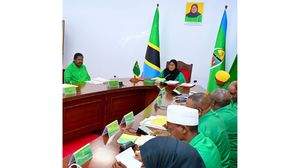
Energy Minister, Mr Deogratius Ndejembi, addresses members during the fifth meeting of the second council of employees of the Upstream Petroleum Regulatory Authority (Pura) held in Morogoro Region on Thursday, February 26. PHOTO | HAMIDA SHARIFF
Morogoro. Energy Minister, Mr Deogratius Ndejembi, has directed the Petroleum Upstream Regulatory Authority (Pura) to prepare Tanzanians to participate in the liquefied natural gas (LNG) processing project, ensuring they benefit first before foreign investors.
Mr Ndejembi issued the directive on Thursday, February 26, 2026, while opening the fifth meeting of the second council of Pura employees in Morogoro town.
He emphasised that Tanzanians should be engaged from the outset to fully benefit from their natural resources, rather than giving priority to foreign companies.
“Today, we have this oil and gas resource. Let us ask ourselves what conditions we have created for your grandchildren to use in the coming years. Pura must begin preparing Tanzanians to ensure these opportunities reach them, rather than benefiting foreign companies registering here as locals,” said Mr Ndejembi.
He added that early involvement is crucial so that when implementation begins, no one is left behind due to a lack of expertise.
Additionally, the minister urged Pura to accelerate research to identify new oil and gas blocks, attracting investors to explore for oil and gas in untapped areas.
Speaking on clean cooking energy, the minister noted that to achieve the national clean cooking energy strategy (2024–2034) goals, Pura has a key role in producing natural energy.
He further instructed Pura to monitor the development of oil and gas blocks allocated to investors in Tanga and Ruvu that have yet to commence extraction, identify the causes of delays, and take necessary action.
Pura Director General, Mr Charles Sangweni, said the authority will continue protecting investors in oil and gas, noting that onshore well drilling averages $20 million (S50 billion) and offshore wells $80 million (Sh120 billion).
He reported that out of 96 drilled wells, 44 produced gas, indicating significant investment loss.
He noted that Pura faces challenges, including delays in approving model production sharing agreements (MPSA) and slowing the fifth round of block promotion.
Other challenges include delayed approval of key regulations for oil and gas operations and management, such as exploration and production, third-party infrastructure access, health, safety, environmental regulations, restoration rules, and proposed petroleum law amendments.
Energy Ministry Permanent Secretary responsible for Oil and Gas, Dr James Matarajio, urged Pura to conduct preliminary surveys for new oil and gas areas, as none have yet been done, and to compile data to attract investors.
Register to begin your journey to our premium contentSubscribe for full access to premium content