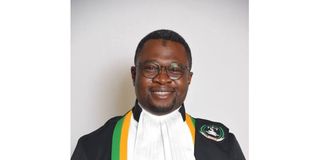
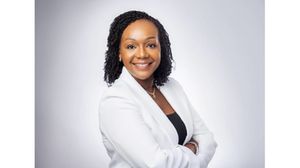
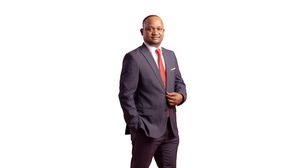
Arusha. The African Court on Human and Peoples’ Rights (AfCHPR) has elected Justice Blaise Tchikaya of the Republic of Congo (Brazzaville) as its new President, following the unexpected early departure of Justice Modibo Sacko of Mali.
Justice Sacko had been elected on June 2, 2025, for a two-year term scheduled to run until June 2027. However, his tenure lasted only six months, prompting questions and speculation over the reasons behind his early resignation.
According to official information published on the Court’s website, Justice Sacko will continue to serve as a member of the Bench, while Justice Tchikaya assumes the presidency for the remainder of his predecessor’s term.
Sources indicate that Justice Sacko formally tendered his resignation from the presidency without publicly disclosing detailed reasons. No official statement has been issued elaborating on the circumstances surrounding his decision.
Justice Tchikaya is therefore expected to serve the remaining one year and six months of the term, after which he may seek election for a full two-year mandate in accordance with the Court’s rules.
In his acceptance remarks, Justice Tchikaya described his election as a profound honour and pledged to uphold the Court’s authority, particularly as it prepares to mark its 20th anniversary.
“I undertake this responsibility with deep commitment to safeguarding the Court’s mandate,” he said, noting his intention to work closely with fellow judges, the Registrar, staff and stakeholders to consolidate achievements, address persistent challenges and strengthen the Court’s role in protecting human and peoples’ rights across Africa.
Justice Tchikaya assumes office at a critical juncture. The Court continues to face mounting concerns over non-compliance by several member states of the African Union with its rulings, particularly in cases involving human rights violations.
Persistent failure by some states to implement judgments has raised concerns about the institution’s credibility and long-term authority.
During his tenure, the new President is expected to intensify engagement with AU organs and human rights partners to strengthen enforcement mechanisms and promote greater adherence to the Court’s decisions.
Another priority will be expanding ratification of the Protocol establishing the Court. Of the 55 AU member states, only 34 have ratified the Protocol, and just eight — Burkina Faso, Gambia, Ghana, Guinea-Bissau, Mali, Malawi, Niger and Tunisia — have deposited the declaration under Article 34(6), allowing individuals and non-governmental organisations direct access to the Court.
Encouraging more states to ratify the Protocol and accept the Court’s jurisdiction remains essential to broadening its reach and reinforcing Africa’s regional human rights framework.
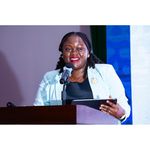
Former President of the Court, Justice Imani Daud Aboud of Tanzania, previously described non-implementation of judgments as the institution’s greatest weakness. She noted that during her tenure, discussions were initiated with senior AU officials to explore sustainable solutions.
“Our concern is that the Court risks losing relevance if stakeholders begin to perceive it as a forum whose decisions carry no practical weight,” she said, emphasising that enforcement lies with the AU Executive Council, composed of Ministers of Foreign Affairs.
“As Justice Tchikaya begins his leadership, expectations remain high that the Court will consolidate its authority and reaffirm its central role in advancing human rights and justice across the continent,” said a Senior Law Lecturer at the Faculty of Law, Tumaini University Makumira, Dr Elifuraha Laltaika.