Josephine Christopher is a senior business journalist for The Citizen and Mwananchi newspapers
Mwananchi Communications Limitted
Dar es Salaam. Tanzania’s economy ended 2025 on firmer footing, buoyed by rising exports, record gold earnings, and stronger-than-expected tax collections.
But business leaders say sustaining that momentum will require widening the tax base, accelerating mineral project,s and easing bottlenecks in logistics and digital payments.
Data from the Bank of Tanzania (BoT) show exports rose to $3.1 billion in the quarter ending December 2025, up from $2.91 billion in the corresponding period of 2024.
Gold exports alone climbed to Sh3.15 trillion from Sh2.7 trillion a year earlier, helping push mining and quarrying’s share of GDP to 12.7 percent by September 2025, from 10.6 percent previously.
At a pre-budget forum hosted by PwC Tanzania in Dar es Salaam, tax and industry executives said the numbers point to opportunity — but also structural risks.
Country manager at Sotta Mining Corporation’s Nyanzaga Gold Project Mr Isaac Lupokela, said the current mining performance reflects higher prices more than higher output.
“With the very few mines that we have, production itself has not increased significantly compared to last year, but we are taking advantage because of the price of gold,” he said.
To make growth durable, he argued, Tanzania must bring pipeline projects into operation across gold and other minerals such as graphite, nickel, and uranium.
“If these mines become operational, we will not only benefit from prices but also from increased production volumes,” he said, adding that the country’s mineral endowment remains underutilised.
Stronger mining receipts have fed into public finances. Domestic revenue collection reached 112.5 percent of the quarterly target, with tax revenue attaining 118 percent of projections, according to BoT data.
PwC Tanzania’s partner and tax leader Mr Rishit Shah, cautioned that rising collections must keep pace with demographic pressures.
“We need a significant increase in tax collections to cater for population growth and other matters,” he said.
Mr Shah also cautioned that much of the revenue growth is coming from the same large taxpayers.
He added, “If you look at where the growth has come from, it’s largely large taxpayers. The trend we need to see is domestic tax growth. We need to widen the tax base.”
With real GDP growth accelerating to 6.4 percent in the third quarter of 2025, from 6.1 percent a year earlier, and population growth adding fiscal pressure, expanding compliance among smaller and informal businesses will be critical to sustaining revenue without overburdening established corporates.
Transport and storage activities rose to 8.1 percent of GDP from 7.1 percent over the same period, reflecting higher cargo throughput and regional transit trade.
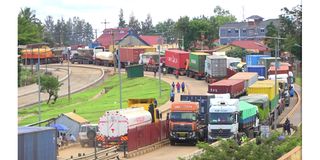
But Tanzania Truck Owners Association (TATOA) Chairman Elias Lukumay warned that logistics gains risk being eroded by congestion and infrastructure constraints.
Registered trucks have surged from about 28,000 two years ago to 50,000 today, he said, increasing pressure on roads and port access routes.
For Tanzania to consolidate its position as a regional trade hub, panelists suggested prioritising road upgrades, port decongestion, and smoother cargo clearance systems.
Foreign exchange reserves stood at $6.32 billion in December 2025, equivalent to 4.9 months of import cove,r providing a buffer against external shocks.
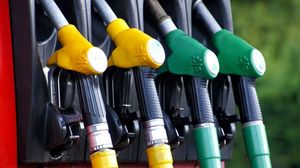
Tanzania Association of Oil Marketing Companies (Taomac) executive director Mr Raphael Mgaya had stated that in the energy sector, global disruptions, including the war in Ukraine and dollar shortages, strained the sector.
However, Bank of Tanzania's measures to curb dollarisation have supported stability. He expects relatively stable fuel prices in 2026, provided global conditions remain manageable.
Even as the economy digitises, industry players cautioned against excessive transaction layering.
Selcom Chief Operating Officer Sarah Mohamed said multiple taxes applied along the digital transaction value chain ultimately fall on the consumer, discouraging adoption.
“At each layer, there is a tax, and the end consumer bears that cost,” she said, warning that high transaction costs could slow financial inclusion and formalisation, both essential to widening the tax base.
As policymakers prepare the next budget, the message from industry appears consistent: momentum is building, but sustaining it will require broader tax participation, infrastructure upgrades, and careful calibration of fiscal measures to avoid undermining growth.
Register to begin your journey to our premium contentSubscribe for full access to premium content