Josephine Christopher is a senior business journalist for The Citizen and Mwananchi newspapers
Mwananchi Communications Limitted
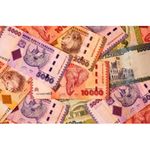
Dar es Salaam. A combination of timely central bank interventions and a surge in export earnings has helped stabilise the Tanzanian shilling, enabling the local currency to withstand volatility that peaked mid-year.
Despite sustained global pressures and a spike in dollar demand that pushed the shilling to record lows in May, the Bank of Tanzania (BoT) has managed to guide the currency towards a stable close for 2025.
Official data show that the shilling, which traded at an average of Sh2,454.04 in January before weakening to Sh2,697.17 in May, has since recovered to Sh2,440.75 as of Friday.
The rebound was largely supported by the BoT’s decision to inject $175 million into the interbank foreign exchange market between May and December 2025 through foreign exchange auctions.
During the period, the central bank offered $140 million, while banks submitted bids totalling $264.5 million. Of these, the BoT accepted $175 million.
BoT Director of Financial Markets Emmanuel Akaro said the interventions were aimed at achieving several policy objectives.
“These include smoothing short-term excessive volatility, accumulating foreign exchange reserves, facilitating the attainment of monetary policy objectives and creating avenues for providing liquidity,” he said.
The interventions were conducted under the Interbank Foreign Exchange Market (IFEM) framework in line with the Foreign Exchange Intervention Policy of 2023.
The currency came under its most severe pressure in May, when banks submitted bids worth more than two-and-a-half times the available supply, pushing the Shilling to its weakest level during the period under review.
However, the pressure began to ease in June as the central bank intensified its market presence. By the fourth quarter, interventions in October and November helped the Shilling trade within a narrower range, signalling an end to sharp speculative depreciation.
Mr Akaro told The Citizen that the interventions had resulted in improved exchange rate stability, increased market activity and enhanced confidence.
“For instance, the average daily turnover in the foreign exchange market reached $65 million in May 2025. Furthermore, the Shilling has appreciated,” he said.
In addition to direct central bank action, the currency benefited from strong export performance. Gold exports rose by 38.9 per cent to $4.59 billion by October, buoyed by record global bullion prices.
Export of goods and services rose to $17.05 billion in the year ending October 2025, from $15.13 billion in the corresponding period in 2024.
Traditional exports such as tobacco and cashew nuts also increased by 25.2 per cent, generating $1.43 billion, while cereal exports to neighbouring countries climbed to $312.5 million.
Financial analyst Christopher Makombe said the shilling’s resilience in 2025 reflected a combination of structural and market-driven factors.
He noted that consistent earnings from gold—whose price peaked at $4,380 per troy ounce—alongside prudent liquidity management, helped neutralise speculative pressures.
“As a result, there was no significant pressure on the shilling that would have caused sharp movements in the USD/TZS pair,” he said.
“At the current level of reserves held by the BoT, coupled with a likely continued rise in gold prices, shilling stability in 2026 is further assured.”
The stabilisation effort has also been reinforced by the BoT’s firm stance on de-dollarisation.
Seasoned banker Kelvin Mkwawa said the regulator’s directive requiring all local transactions to be conducted in shillings significantly reduced demand for the US dollar.
“By limiting dollar-denominated loans and requiring local businesses to borrow in the national currency, the BoT has reduced the artificial demand that often fuels exchange rate volatility,” he said.
In an interview with The Citizen in October, BoT Governor Emmanuel Tutuba said the central bank continuously monitors the balance positions of all commercial banks to ensure smooth functioning of the foreign exchange market.
Register to begin your journey to our premium contentSubscribe for full access to premium content