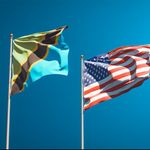
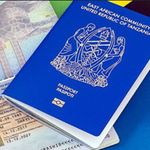
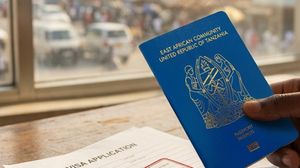
Dar es Salaam. When Mohamed Jawad Khaki speaks about the recent US visa restrictions on Tanzanians, his concern goes beyond politics and policy. It is deeply personal.
“I have my in-law who was to come to the US to see the grandchildren, but now that seems remotely possible. This visa ban goes beyond politics; there are real social impacts people do not see,” said the Tanzanian born in Songea who relocated to the US.
The restrictions came as a shock to many Tanzanians at home and abroad, particularly given the long-standing ties between Tanzania and the US.
In 1963, Tanzania’s founding president, Mwalimu Julius Nyerere, was received at the White House with full military honours, symbolising a relationship that would strengthen over the decades.
That history made Tanzania’s inclusion on a list of countries facing US visa restrictions all the more surprising to analysts, media commentators and the diaspora community.
The measures affect several visa categories, including student visas—long seen as a vital pathway for Tanzanian youth seeking access to some of the world’s leading universities, six of which are in the US.
These two nations have forged a very close tie. In 1963, Mwalimu Nyerere walked into the White House with full military honours, accompanied by the American military brass band playing on the lawn.
“Students face similar uncertainty. Education abroad has long been a pathway to opportunity, knowledge transfer, and national development.
Shortened visas, increased scrutiny, and slower approvals disrupt plans for Tanzanian youth who have invested years of effort and families who have invested significant resources in their education,” said Mohamed.
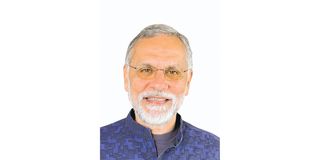
Mr Khaki, a member of the Tanzanian diaspora community, is an accomplished entrepreneur, investor, and dedicated community volunteer.
Now residing in Seattle, US, he was dismayed by the impartial visa restriction imposed on Tanzania. As a family man with grandchildren, he raised concerns about how the ban would affect families, students, and professionals in the country.
“While the policy is framed as a response to administrative challenges, gaps in vetting systems and higher-than-average visa overstays, it carries real consequences for ordinary Tanzanians and their American hosts,” he pointed out.
He further explained that, for many families, these restrictions translate into missed weddings, delayed reunions, and grandparents who may never meet their grandchildren.
In a culture where family bonds are central, such separations are deeply felt, even if they appear invisible in official statistics. Most Tanzanian diaspora in the US have parents and grandparents who have chosen to stay back in Tanzania and would only make occasional visits during important family events, celebrations, and burials.
These events have cultural significance with ties to traditional practices, which most Tanzanians in the diaspora faithfully observe.
With the New Year dawning in Tanzania, uneasiness lingers in some homes, as families worry that they may never see their children, brothers, or sisters on US soil for a long while. Mohamed said in the Qur’an, Surah Al-Hujurat (49:13).
“O mankind! We created you from a single male and a single female and made you into nations and tribes so that you may know one another. Indeed, the most honoured of you in the sight of Allah is the most righteous of you,” he quoted.
Mr Mohamed highlights the economic consequences, stating that they extend beyond individual households. Reduced mobility slows remittances, discourages diaspora-led investment, and limits skills transfer back home.
At the same time, the US loses as well, missing out on talented students, professionals, and entrepreneurs who enrich its universities, workforce, and communities. Mobility benefits both sides, and restrictions shrink the opportunity for all.
Immigrants have significantly contributed to the US in vital sectors that drive the nation. From the South African immigrant, billionaire Elon Musk, to David Oyelowo, the Nigerian actor and producer, and the magnitude of Tanzanians who have made the US their home, including the Tanzanian Mohamed Jawad, who, from 1979 to 2015, played a pivotal role in the development of operating systems, networking, and cloud computing software.
A 20-year veteran of Microsoft Corporation, served as a corporate vice president, contributing significantly to the company’s technological advancements. These immigrants are the fabric of what makes America a great nation.
Tanzania has contributed intellectuals who have been valuable to the country. Mohamed’s contributions have been recognised nationally and internationally. In May 2003, he received the prestigious sixth annual Walter Cronkite Faith and Freedom Award from the Interfaith Alliance Foundation.
Later that year, in October, he was appointed an honorary professor by Beijing University of Posts and Telecommunications. In November 2012, he was awarded an honorary Doctorate of Technology from the University of East London.
Americans have also benefited from coming to Africa. Reaping billions of profits from their investments on the continent. Though some Americans do not permanently move to Africa, they are afforded room to create revenue streams from the continent.
Mr Mohamed noted that Tanzania could decide to retaliate and block American investment into its lucrative natural resources and its abundant minerals or even the tourism sector, and that would heavily impact Americans.
The question on many Tanzanians’ heads is, how did we get here? Considering the Tanzanian diaspora community in the US is comparatively smaller than other African nations, with an estimate of less than 50,000 Tanzanians living in the US, measured against a country like Kenya, which has more than 200,000 people in the nation.
Even amidst the deportation order, the Tanzanian Embassy confirmed only 24 people believed to be of Tanzanian nationality were held by the Immigration and Customs Enforcement (ICE) waiting to be deported.
A far smaller number than the thousands of other African nations detained to be kicked out of the country. Tanzanians have rarely been associated with crime or scams that the Trump administration has identified as the reason for the mass deportation initiative.
So what made the country a target for the extensive visa ban?. Mr Mohamed stresses that these policies are not accusations of criminality. They are administrative measures that, unfortunately, treat large numbers of law-abiding Tanzanians as potential risks.
“A more constructive approach would involve bilateral cooperation, improved data systems, and clear benchmarks for lifting restrictions. Security and compassion need not be at odds,” he explained.
He underscored that Tanzanians affected by these changes are not merely statistics; they are parents, students, carers, and professionals striving to follow the rules while maintaining ties to their families and careers.
Mr Mohamed still believes in the power of America’s rich tapestry of pluralism, embracing all ethnicities and religions to inspire not only its citizens but also people around the world. He has embraced America as his new home, and he hopes the Tanzanian community will continue to grow.
He has actively volunteered in various capacities across non-profit organisations in Africa, Asia, Europe, and now the Greater Seattle area in the USA. In 1997, he co-founded the Ithnaasheri Muslim Association of the Northwest (IMAN), where he continues to serve as its president.
Together with his wife, Kaniz, he established the Khaki Foundation in December 2003, focusing on supporting society’s most vulnerable members by addressing essential needs and promoting educational initiatives aimed at alleviating poverty and suffering.
On 17th December, the Tanzanian government, through its Foreign Affairs and East African Cooperation ministry, put out a statement that acknowledged the partial visa ban.
It reacted to the US decision with affirmation to continue pursuing diplomatic engagement and address concerns, especially the overstays among Tanzanian nationals who travel to the US. They promised to work towards a lasting solution that could reverse the restriction.
The Tanzanian government urged Tanzanians to comply with the visa conditions, which could help support efforts to lift the ban. “By recognising the human cost and encouraging targeted solutions, both countries can safeguard security without undermining the bonds and opportunities that connect us.” Mohamed pointed out.
Register to begin your journey to our premium contentSubscribe for full access to premium content