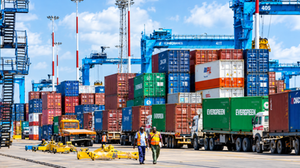
Tanzania aims to save over Sh2.8 trillion by boosting local production

The Minister of State in the President’s Office (Planning and Investment), Prof Kitila Mkumbo

Dar es Salaam. Tanzania expects to save more than Sh2.8 trillion annually by cutting reliance on imported goods, as the government steps up an ambitious industrialisation drive aligned with the first phase of Dira ya Maendeleo 2050, the country’s long-term national development vision set to begin next year.

The plan, unveiled by the Minister of State in the President’s Office (Planning and Investment), Prof Kitila Mkumbo, marks a major shift in Tanzania’s economic strategy. It is aimed at strengthening domestic manufacturing, reshaping investment incentives and tackling the country’s growing youth unemployment crisis.
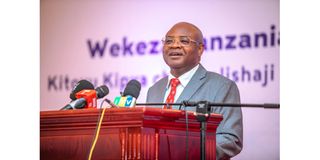
Speaking to journalists in Dar es Salaam on Monday, December 8, 2025, Prof Mkumbo said the government had identified eight priority products from the 96 items worth Sh15 trillion imported in 2024 and would now work with investors to produce them locally.

“Our target is to save Sh2.8 trillion by replacing imports with local production,” he said. “From next year, Tanzania will no longer need to import sugar. In fact, we will be looking for export markets for the surplus we produce.”

Sugar and edible oil top the priority list. While Tanzania has processing plants for sunflower oil, raw material shortages remain a challenge.

“The problem is not processing capacity,” Prof Mkumbo noted. “It is the lack of raw materials. That is why new investment must include contractual farming arrangements, similar to those used in the sugar sector.”

Other targeted imports include wheat, dairy and beef products, as well as fish from deep-sea and cage-based aquaculture. Tourism and real-estate development are also highlighted, with plans to revitalise urban areas such as Vingunguti, Manzese and Buguruni through public-private partnerships, replacing old structures with modern commercial and residential buildings.

Prof Mkumbo said the approach aims to shift Tanzania from a consumption-driven economy to a production-led one, boosting exports and stabilising foreign exchange flows.

Investment strategy

To attract the scale of private-sector participation needed, Tanzania is overhauling its investment climate. The government is strengthening the One-Stop Facilitation Centre to ensure investors obtain permits and registrations “in one place, with full authority”.

The Tanzania Investment and Special Economic Zones Authority (TISEZA) now manages a national land bank of 170,176 hectares, including 78,444 hectares of large farms earmarked for agricultural investment.

“The challenge of land for investment has reduced significantly,” Prof Mkumbo said. “Anyone with a large farm can now submit it to TISEZA, which will then secure investors for joint development.”

The country currently has 34 Special Economic Zones covering 22,623 hectares, with more planned as the government prepares to roll out a national investment platform and hold quarterly sessions with investors to resolve bottlenecks more swiftly.

Investment projects will be prioritised based on job creation, export potential, and value-addition capacity, especially in mining, where policy dictates that investors must process minerals domestically before export.

Economist Prof Benedict Mongula described the plan as “logical and overdue” but warned that its success hinges on investor confidence.

“This requires the private sector to be central,” he said. “The government must make the environment predictable, transparent and cost-effective. Investment flows where confidence is strong.”

Industrial policy analyst Dr Neema Laurent said the Sh2.8 trillion target is achievable only if structural weaknesses are addressed.

“We must invest heavily in agricultural technology, logistics and skills development,” she said. “Otherwise, factories will continue to face raw-material shortages.”

She added that the policy’s biggest test will be its impact on youth unemployment, one of Tanzania’s most pressing socio-economic challenges.

A direct response to youth unemployment

With over 900,000 young Tanzanians entering the labour market each year and only a fraction securing formal jobs, youth inclusion has become a pressing issue.

Prof Mkumbo acknowledged the gap and outlined a strategy to “make young people feel part of the government’s economic agenda”.

A new youth investment programme will be launched within EPZA zones, offering technical training, enterprise incubation and access to seed capital.

The government has already allocated 340 acres in Nala (Dodoma), Bagamoyo, Pwani, Mara and Ruvuma for young graduates—particularly from technical universities—to start manufacturing ventures.

“We want to change the mindset that employment exists only in government,” he said. “Young people will be supported to form companies, access land, and link up with industrial investors.”

Financial institutions have already agreed to participate, he added.

Political stability and long-term confidence

Prof Mkumbo said investment thrives on political stability, noting that Tanzania’s recent turbulence would be managed.

“Every nation faces difficult moments. We will overcome ours and remain a united country,” he said.

As Tanzania prepares to implement Dira 2050, the government’s import-substitution drive represents more than an economic reform—it is an effort to redefine the country’s development model.

Success will depend on investor trust, policy consistency, and the country’s ability to harness the energy and innovation of its young population.

But the goal is clear: a more self-reliant Tanzania that produces more, imports less, and creates jobs in the process.