Dar es Salaam. Tanzania has moved to reassure investors of a more predictable, fair and modern tax environment, following renewed commitments made during the 2026 Tanzanian–Chinese Enterprise Tax Exchange and Training Conference.
At the centre of the discussions between the Tanzania Revenue Authority (TRA) and the Chinese investors yesterday, was the government’s pledge to fully implement 284 tax reform recommendations initiated under President Samia Suluhu Hassan recently.
This, according to experts, is an agenda seen as critical in strengthening investor confidence and sustaining inflows, particularly from China, the country’s leading investment partner.
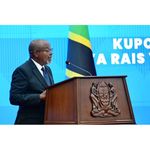
TRA Commissioner General Yusuph Mwenda said the reforms would be implemented in phases- short, medium and long term, but stressed that the direction was clear.
“I want to assure you, the business community, investors and diplomats, that TRA will fully implement all the 284 recommendations as confirmed by Her Excellency the President,” he said.
He added that the reforms are aimed at building “a modern, fair and predictable tax system,” where all taxpayers- regardless of size or origin- are treated equally under the law.
“We mean all who deserve to pay tax should pay tax… Whether they are small or large, they should all pay based on their income,” he emphasised.
The conference, jointly organised by the Chinese Enterprise Association and OASIS Financial Services Limited, served as a platform to address long-standing tax concerns while reinforcing a partnership approach between the tax authority and investors.
Mr Mwenda underscored that enforcement would remain firm but fair, targeting non-compliance rather than specific nationalities.
“TRA is not against the Chinese business community. TRA is against the few companies who are not complying with tax laws,” he said.
He added that the authority would continue to strengthen lawful enforcement while improving taxpayer services, dispute resolution mechanisms and transparency in tax administration.
Among the key reforms being prioritised are the digitalisation of tax systems, improved coordination of audits, consistent interpretation of tax laws and enhanced customer care.
TRA has already automated most of its customs and domestic tax processes, with plans underway to expand accessibility through mobile platforms to ease compliance.
“We want a system where you can operate wherever you are… This is part of implementing a convenient tax system,” Mr Mwenda said.
The authority also acknowledged past concerns, including multiple audits, arbitrary assessments and enforcement practices, promising improvements through better institutional coordination and professional conduct.
The reassurances come against the backdrop of China’s dominant role in Tanzania’s investment landscape.
According to official reports, China has consistently ranked as the top source of foreign direct investment (FDI) projects in recent years, accounting for a significant share of registered projects in sectors such as manufacturing, construction, transport and telecommunications.
Chinese Ambassador to Tanzania, Ms Chen Mingjian, said the evolving tax environment was already strengthening cooperation and compliance among Chinese firms.
“The improvement of tax policies and laws in Tanzania has increased understanding among Chinese companies on tax compliance and strengthened cooperation with TRA,” she said.
She added that the Chinese government would continue to encourage its companies to comply fully with Tanzanian tax laws and regulations.
“We urge all Chinese companies to pay taxes in accordance with the law, avoid tax evasion and cooperate fully with TRA,” she said.
Reforms boosting investor confidence
OASIS Financial Services Limited director, Mr Stambuli Myovela, said ongoing reforms had already begun to improve the business environment, attracting more investors into the country.
“Through various tax reforms, many investors have been attracted to Tanzania, while the remaining challenges are being addressed,” he said.
He noted that China’s position as Tanzania’s leading investor makes tax cooperation between TRA and Chinese companies particularly significant.
“This is a big step in resolving challenges and finding common solutions. Many issues that were barriers to investors have been addressed,” he added.
TRA collected nearly Sh24.5 trillion in the past eight months, a performance Mr Mwenda attributed partly to voluntary compliance by businesses, including Chinese enterprises.
“This could not be achieved without the full support of businesses… I commend you for your tax contribution,” he said.
For one Chinese investor who attended the conference, the reforms signal a maturing investment climate.
“The systems are becoming clearer and more digital. This reduces uncertainty for us as investors and helps us plan long term,” he said on the sidelines of the meeting.