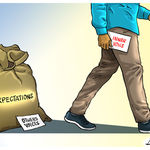
In Tanzanian families, success is rarely a story of individual achievement. It belongs to everyone. The degree you earn, the job you secure, the house you rent, these things ripple outward.
Relatives call asking for help. Friends look up to you for advice. For many parents, your progress becomes reassurance that their sacrifices were worth it.
Being the first to do something in your family sounds like a badge of honour, and in many ways, it is. The first to graduate, the first to move out, the first to earn a stable income, the first to choose a different kind of life. You’re celebrated, admired, and held up as proof that progress is possible. But beneath the pride often lies a quiet kind of pressure that few people talk about.
When you’re the first, you become more than yourself. You become a symbol. Every choice you make carries meaning, not just for you, but for everyone watching. You start to live between gratitude and guilt, proud of what you’ve achieved, yet weighed down by the feeling that you can’t afford to fall short.
In Tanzanian families, success is rarely a story of individual achievement. It belongs to everyone. The degree you earn, the job you secure, the house you rent, these things ripple outward. Relatives call asking for help. Friends look up to you for advice. For many parents, your progress becomes reassurance that their sacrifices were worth it.
It’s a form of collective pride, but it can also become a quiet burden. The moment you earn a little more, you inherit responsibilities you never applied for. Suddenly you’re expected to contribute to everything: school fees, hospital bills, weddings, even unplanned family projects. Saying no feels impossible because your success is seen as the family’s success.
Psychologists refer to this as role strain, when one person carries multiple, often conflicting roles that pull them in different directions. You’re a provider, a sibling, a child, and a role model, all at once. The result is emotional fatigue that hides behind your achievements.
The loneliness of progress
Progress can be isolating when you’re the first to experience it. You move to a new city for work, or you start living differently, and suddenly, the people who used to understand you the most feel distant. Conversations change. The jokes don’t land the same way. You start censoring yourself because you don’t want to sound like you’ve changed.
Many first-generation professionals in Dar or Arusha describe this quiet disconnection. You visit home and feel gratitude, but also a sense that you’re no longer fully understood. You’ve outgrown certain worries, but new ones have taken their place: rent, burnout, maintaining appearances. You love where you come from, but you’re also learning to love where you are, and that in-between space can feel lonely.
Carrying two worlds
Being the first often means you’re translating between worlds. You speak English at work and Kiswahili at home, balancing two versions of yourself. You think about mental health, therapy, and work-life balance, while your parents believe strength means endurance. You want to rest, but rest looks like laziness to them. You’re trying to build new habits while honoring the traditions that raised you.
This duality creates what psychologists call cultural dissonance, the tension that comes from navigating conflicting values or realities. It’s not rebellion. It’s adaptation. You’re not rejecting your roots; you’re trying to make room for growth without severing connection. That balance is delicate, and it requires a kind of emotional maturity that often goes unseen.
When pride turns into pressure
The praise that comes with being the first can be double-edged. Every achievement raises expectations. You get used to hearing “we’re so proud of you,” but also “usituangushe.” The fear of disappointing people creeps into everything. It shapes how you make choices, even the smallest ones.
You take on extra work because you don’t want to seem ungrateful. You hide your stress because everyone thinks you’re doing great. You stay quiet about burnout because, compared to what your parents faced, you feel like you shouldn’t complain.
Over time, success stops feeling like freedom and starts to feel like performance. The same progress that once made you proud now makes you tired.
Redefining what it means to be first
Maybe being the first isn’t about perfection or constant achievement. Maybe it’s about creating space for those who come after you to have more balance than you did. To work hard, yes, but also to rest. To give, but also to set limits. To celebrate progress without carrying the whole family on one's back.
Being the first should not mean being the most exhausted. It should mean being the one who builds differently, someone who shows that success can include stillness, boundaries, and self-trust.
Psychologically, this redefinition matters. It helps shift collective expectations from sacrifice to sustainability. Progress shouldn’t have to come with guilt. It should come with lessons that make life lighter for the next person in line.
Being the first is rarely as glamorous as it looks from the outside. It’s a journey filled with pride, fatigue, and quiet resilience. It means learning to hold both gratitude and frustration without letting either consume you. It means knowing when to step forward and when to pause.
The truth is, progress often costs more than people realise. But if you can learn to move through it with honesty, to ask for help, to rest, to say no when needed, then you begin to carry it differently.
The goal isn’t to prove that you’re stronger than everyone before you. It’s to make sure your success doesn’t silence your humanity. That the story you’re writing isn’t just one of survival, but of peace, too.
Haika Gerson is a writer and psychology student at the University of Derby, passionate about human behaviour and mental well-being.