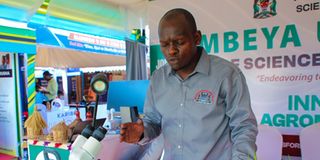
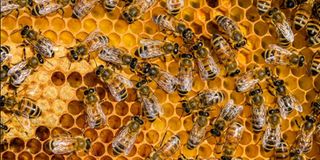
Inside a laboratory at Mbeya University of Science and Technology (MUST), a group of honeybees is being trained for a task that sounds more like science fiction than medical science: detecting cancer.
But for laboratory technician Jaffet Mbowe and his team, this is no longer science fiction. It is an experiment that is already yielding promising results.
Their experiments have shown that honeybees can recognise chemical signals associated with cancer, raising the possibility of developing a simpler and potentially cheaper approach to early cancer detection in Tanzania.
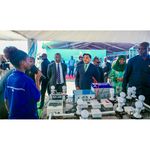
The innovation was among the technologies showcased during the recently concluded National Education, Skills and Innovation Week in Tanga, where researchers and innovators presented solutions aimed at addressing some of the country's most pressing development challenges.
Mbowe says the breakthrough comes from exploiting one of the honeybee's most powerful natural abilities — its extraordinary sense of smell.
Rather than asking a machine to identify cancer directly, the team has trained bees to recognise the distinctive chemical signals associated with the disease.
“We have already proved that honeybees can detect cancer. We have tested them and they are able to differentiate between cancer-related samples and those from healthy individuals,” Mbowe says.
The significance of the finding lies in what happens before cancer becomes obvious through conventional symptoms.
According to Mbowe, cancer cells undergo metabolic changes that can alter the chemical compounds released by the body.
“Some of these volatile organic compounds, or VOCs, can be present in breath and other bodily secretions,” he explains to Your Health.
The bees, with their highly sensitive olfactory system, Mbowe notes, can pick up these subtle chemical differences.
He explains that the team trains the bees using a conditioning process in which a particular odour is associated with a reward.
“Once the bees learn the target smell, their response can be observed when they are exposed to another sample, he says, adding that one of the clearest signs is the extension of the bee's proboscis — its feeding tube — when it recognises the trained odour.
The team's experiments have involved about 50 honeybees, using synthetic breath mixtures designed to represent cancer-related and healthy chemical profiles.
The results, Mbowe says, showed that the insects could distinguish between the different samples, demonstrating that the biological system could detect chemical changes that may be difficult to identify through conventional observation.
“This is not something we are saying might happen. We have tested it. The bees responded differently when exposed to the cancer-related samples compared with the normal samples,” he says.
That distinction is important in Tanzania, where cancer remains a major public-health challenge and delayed diagnosis continues to undermine treatment outcomes.
The International Agency for Research on Cancer estimates that Tanzania recorded 44,931 new cancer cases and 29,743 cancer deaths in 2022. Cervical cancer was the country's most common cancer, followed by prostate and breast cancers.
The scale of mortality has also been linked to late presentation.
The World Health Organisation has previously reported that more than 90 percent of cancer patients in Tanzania present at hospitals when the disease is already at an advanced stage.
This is where Mbowe believes the bee-based technology could eventually make a difference.
If cancer-related chemical signatures can be identified before the disease reaches an advanced stage, screening could potentially become more accessible, particularly in settings where sophisticated diagnostic equipment is expensive, unavailable or concentrated in major urban centres.
“The problem with cancer is that when someone starts showing serious symptoms, sometimes the disease has already progressed. We want to look at what happens much earlier,” Mbowe says.
The concept is not without scientific precedent.
In the United States, researchers at Michigan State University demonstrated that honeybees could detect chemical concentrations associated with lung cancer in human breath.
The researchers also found that the insects could distinguish between different lung cancer cell types using the smell of cell cultures.
Their work showed that bees could respond to cancer-related compounds at extremely low concentrations.
The MUST innovation therefore sits within a wider field of research exploring the remarkable sensory abilities of insects as biological detectors.
But Mbowe's interest is not simply in reproducing what has been achieved elsewhere. His ambition is to adapt the principle to Tanzania's circumstances and eventually turn the research into a practical diagnostic technology.
The potential advantage is that the bee itself does not need to be turned into a complicated machine.
Instead, he affirms: “the biological response can be captured and translated into a system that tells a user whether the chemical signature being tested resembles the target associated with cancer.”
That could ultimately open the door to a portable screening device requiring significantly less infrastructure than some conventional diagnostic technologies.
“We are looking at how we can make this technology simple enough to be used by people. The bee is doing the sensing, but we need technology that can interpret that response and provide information that can be used by health professionals,” he says.
For Tanzania, that ambition comes at a time when the health system is under increasing pressure to strengthen early detection while expanding access to cancer services.
The Ministry of Health's recent population-based cancer registry reporting has highlighted challenges including incomplete records, underreporting and limited dedicated personnel for cancer registration.
The ministry says improving cancer surveillance is important for strengthening early detection, resource allocation and cancer-care outcomes.
This makes innovations that can complement existing diagnostic systems particularly relevant.
Mbowe is careful, however, to explain that the bees are not intended to replace doctors, laboratories, scanners or other established diagnostic technologies.
“Our proposed technology could serve as an early screening mechanism, helping to identify people who may need further clinical investigation,” he insists.
That distinction could be crucial if the technology progresses towards real-world use.
A positive result from a bee-based system would not by itself constitute a final cancer diagnosis. It would instead indicate that further medical examination may be necessary.
The government has seen this. Prime Minister Dr Mwigulu Nchemba while closing the Education, Skills and Innovation Week, directed ministries and institutions to work together.
He said research prototypes and innovations with the potential to solve national challenges should be taken through all necessary scientific, regulatory and accreditation procedures before being adopted and scaled up as locally made products.
Nchemba's intervention was particularly significant for health innovations, where promising research can take years to move from a prototype to an approved product.
At the Tanga exhibition, Dr Nchemba recognised Mbowe research as well as Muhimbili University of Health and Allied Sciences (MUHAS) that showcased work on a medicine targeting prostate disease.
“I want all relevant ministries and institutions to ensure that products with scientific potential are taken through the full process required to establish their safety, effectiveness and quality,” he directed.
He argued that once a locally developed medicine has passed the necessary research, laboratory and regulatory requirements, including international standards, it should be recognised as a modern medicine made in Tanzania rather than being dismissed simply because it was developed locally.
For Mbowe and his team, the next challenge is translating that biological response into a reliable, standardised and scalable technology.
Mbowe says the team is working towards developing the system further so that it can eventually be tested under conditions that resemble actual clinical screening.
Register to begin your journey to our premium contentSubscribe for full access to premium content