Arusha. A review of statistics from the Office of the Registrar of Political Parties (ORPPs) shows that Tanzania has 19 political parties with full registration.
Yet, judging by the conduct of some opposition parties, there is a growing argument that constitutional reforms may be needed to allow independent candidates by 2030.
Despite the large number of registered parties, only a few appear to be actively performing core political functions. In contrast, others are often dismissed by critics as inactive or aligned with the ruling party, CCM.
This perception, whether accurate or not, has contributed to declining public trust in parts of the political system.
In my view, the opposition party that most consistently fulfils its political role is Chadema, despite the challenges it faces.
Other parties such as ACT-Wazalendo, NCCR-Mageuzi, and CUF are also visible, but several others are rarely heard in public debates on national issues, surfacing mainly during elections or through occasional statements.
Some parties are hardly seen holding internal meetings or engaging citizens under their constitutions, appearing mainly during election periods or issuing statements that leave citizens questioning their relevance to everyday concerns.
Today, if some party leaders are asked when they last held a meaningful public meeting, where it took place, and what feedback they received, many would struggle to answer.
This has fuelled perceptions of declining political legitimacy among sections of the electorate.
There is also a belief among critics that some opposition leaders underestimate today’s electorate, particularly younger voters, assuming political awareness remains the same as at independence.
In reality, today’s Tanzanians are far more informed and politically conscious.
In such a context, many citizens no longer view some parties as genuine vehicles for democratic change, but rather as platforms driven by personal interests.
This perception, whether accurate or not, continues to weaken confidence in the multiparty system.
At a time when the country faces significant political and socio-economic challenges, questions are being raised about how effectively these parties are shaping national discourse ahead of key electoral cycles.
Article 3(1) of the 1977 Constitution states that the United Republic of Tanzania is a democratic state adhering to a multiparty system.
However, questions remain about how many of the registered parties are truly effective in practice.
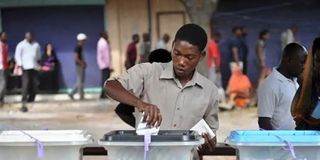
The current constitutional and legal framework requires that candidates for positions such as village chairperson, councillor, Member of Parliament, and President be sponsored by political parties.
This raises a fundamental question: what options exist for citizens who do not belong to any of the 19 registered parties, or who do not subscribe to their ideologies?
It is unrealistic to assume that all Tanzanians can or should belong to CCM or any other party, especially given the structured nature of party competition that extends from the grassroots to the national level.
Some citizens may prefer to participate in elections without party affiliation.
This becomes even more relevant when considering concerns about the effectiveness of some opposition parties in organising internal activities and engaging the public consistently.
Chadema remains the main opposition force, but questions have been raised about how citizens can fully exercise their democratic rights in periods when major parties boycott elections or limit participation.
One proposed solution to this democratic gap is the introduction of independent candidates.
There has long been debate on this issue, including court rulings associated with the late Reverend Christopher Mtikila and others who argued in favour of independent candidature.
The government, however, has continued to challenge such rulings through appeals and legal processes.
In 2013, the Constitutional Review Commission, chaired by Judge Joseph Warioba, proposed a draft Constitution that included provisions for independent candidates under Article 75(g), reflecting a broader push for electoral reform.
However, the draft Constitution process ultimately stalled in the Constituent Assembly, where critics argue that political interests influenced the removal of several provisions that had been recommended by citizens.
Given the current political environment, the question of independent candidates remains unavoidable.
As the constitutional review debate continues, this issue should be treated as a priority, not an afterthought.
It is difficult to justify a system in which any citizen wishing to contest public office must first be endorsed by a political party, particularly if that citizen does not subscribe to existing party ideologies.
This raises a broader question: what options are available for politically active citizens who do not align with CCM, Chadema, ACT-Wazalendo, CUF, or other registered parties?
There is also uncertainty about why the idea of independent candidates continues to face resistance from some quarters, despite repeated legal and constitutional arguments in its favour.
The matter has been revisited in various reform discussions, including proposals linked to the Chande Commission, which suggested a new Constitution by 2028 for use in the 2029 local elections and the 2030 general election.
If such timelines are to be meaningful, reforms should begin now rather than later.
A constitutional framework that excludes independent candidates risks limiting democratic participation and undermining political inclusivity. Similarly, delays in reforming key institutions may weaken public confidence in the electoral system.
Blocking reforms that could strengthen institutions such as the Electoral Commission, Parliament, and the Judiciary risks slowing democratic progress at a time when citizens are increasingly demanding accountability and openness.
Daniel Mjema is a journalist and PhD student in Public Communication at the Open University of Tanzania. For enquiries, contact 0656600900.
Register to begin your journey to our premium contentSubscribe for full access to premium content