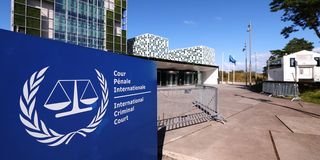
Dar es Salaam. For years, the International Criminal Court (ICC) has been viewed as the ultimate avenue for justice when domestic institutions fail victims of political violence.
Yet experience shows that once the Court becomes involved, investigations rarely follow political expectations.
Instead, they often expose both governments and their opponents, making the ICC what legal experts describe as a double-edged sword.
That debate has resurfaced in Tanzania after a fresh communication was submitted to the Office of the Prosecutor, urging the ICC to investigate alleged crimes committed by state institutions, opposition leaders, activists, protest organisers and social media influencers during violence that followed the October 29, 2025 General Election.
The 79-page communication, submitted under Article 15(2) of the Rome Statute, argues that organised non-state actors planned and executed violence that claimed hundreds of lives. It urges prosecutors to examine their conduct alongside allegations against state officials to ensure impartial assessment.
The filing follows another communication submitted in November 2025 that focused primarily on alleged crimes by state institutions and security agencies.
While neither means the ICC has opened an investigation, together they have reopened an important debate about how the Court operates, who it prosecutes and whether political actors understand the consequences of inviting international criminal scrutiny.
Political analyst Salbinus David of the University of Dar es Salaam says Tanzania is witnessing a pattern that has emerged repeatedly in other African countries.
“Many political actors assume the ICC is a tool that can be used against their opponents,” he says. “But the Court does not work that way. Once the Prosecutor determines there is a legal basis to proceed, investigations are guided by evidence rather than political preference.”
According to him, the ICC's record demonstrates that no political camp can assume immunity. “The Court follows evidence rather than political narratives. That explains why parties that initially welcomed ICC intervention have, in several countries, later found themselves facing investigations.”
The principle is embedded in the Rome Statute itself. Unlike many domestic systems that prosecute institutions, the ICC prosecutes individuals. Articles 25 and 28 establish individual criminal responsibility, meaning political leaders, military commanders, financiers, organisers or anyone who orders, facilitates, aids or incites crimes may be investigated.
Kenya as an example
Perhaps the clearest example came in neighbouring Kenya. Following the 2007–08 post-election violence, opposition politicians strongly supported international intervention, believing investigations would target state officials.
Instead, the ICC pursued individuals from both sides. Former Deputy Prime Minister (Later the Kenya’s President) Uhuru Kenyatta, Head of Public Service Francis Muthaura and Police Commissioner Mohammed Hussein Ali all faced ICC proceedings. At the same time, opposition figures William Ruto and Henry Kosgey, together with broadcaster Joshua arap Sang, also became suspects. Although most cases later collapsed because of insufficient evidence, witness interference and prosecutorial challenges, Kenya fundamentally changed perceptions about how the ICC functions.
“The Kenyan experience remains Africa's biggest lesson,” says State University of Zanzibar political analyst Ali Makame Ussi. “Political actors initially thought they were inviting the Court to prosecute their rivals. Instead, the investigations expanded across the political spectrum.”
He says Tanzania should study Kenya's experience carefully before assuming any group is beyond scrutiny. “Once international investigations begin, they become evidence-driven rather than politically directed. That changes the entire landscape.”
Kenya is not the only country where expectations collided with ICC realities. In 2003, Uganda referred the conflict involving the Lord's Resistance Army (LRA) to the ICC expecting investigations to focus solely on rebel commanders. However, former ICC Prosecutor Luis Moreno Ocampo later confirmed that his office was also examining allegations involving Uganda's armed forces, although no prosecutions followed. The development later prompted President Yoweri Museveni to accuse the Court of operating as a neo-colonial institution.
Similar debates have emerged elsewhere. In Côte d'Ivoire, both former President Laurent Gbagbo and youth leader Charles Blé Goudé were prosecuted following post-election violence, while investigations in the Democratic Republic of Congo, Sudan, Libya and the Central African Republic have likewise shown that the ICC follows those it believes bear the greatest individual criminal responsibility rather than political affiliation.
Law lecturer at the University of Dar es Salaam Dr Onesmo Kyauke says much of the public debate surrounding the ICC is shaped by political perceptions rather than legal reality. “The ICC does not prosecute governments or political parties,” he says. “It prosecutes individuals where there is evidence that they personally bear criminal responsibility under the Rome Statute.”
According to him, many people mistakenly believe the Court only targets state institutions. “That misconception has persisted for years. Legally speaking, anyone—including politicians, activists or other non-state actors—may face investigation if prosecutors conclude there is sufficient evidence linking them to crimes against humanity, genocide or war crimes.” He adds that advances in technology have transformed how international crimes are investigated. “In previous decades prosecutors depended heavily on witness testimony. Today, social media posts, encrypted messaging, livestreams, financial records and mobile phone data increasingly form part of evidential material.”
The latest communication concerning Tanzania argues that digital platforms were extensively used to mobilise demonstrations and circulate inflammatory content during the election period. Whether prosecutors consider that material sufficient remains entirely within the discretion of the Office of the Prosecutor.
Another law lecturer, Mr Selestine Kingu of Saint Augustine University of Tanzania, says strengthening domestic institutions remains the country's best safeguard against international intervention. “The Rome Statute operates on the principle of complementarity,” he explains. “That means the ICC is intended to intervene only where national authorities are unwilling or genuinely unable to investigate and prosecute.” He says Tanzania therefore bears the primary responsibility for investigating any crimes arising from the 2025 post-election violence. “If credible domestic investigations address allegations against everyone involved, the justification for ICC intervention becomes significantly weaker.”
Criminal conduct
That debate has gained further significance after President Samia Suluhu Hassan established a Criminal Investigation Commission chaired by Court of Appeal Judge Justice Shabani Ally Lila to investigate criminal conduct identified by the Chande Commission.
Legal analysts say the credibility and independence of those investigations may shape international perceptions of Tanzania's willingness to pursue accountability through its own justice system.
The Chande Commission concluded that the violence claimed 518 lives, including 502 civilians and 16 security officers, injured more than 2,300 people and caused economic losses estimated at Sh125 billion. It also found that the violence appeared organised rather than spontaneous.
Former CHAUMMA Secretary General Salum Mwalimu has also argued that anyone alleged to have planned, financed or encouraged the violence should not assume geographical distance offers protection, saying international criminal investigations can extend beyond national borders where legal requirements are met.
Yet while debate continues over accountability in Tanzania, the ICC itself faces perhaps the greatest political challenge in its history. In recent years, the Court has encountered growing resistance from some of the world's most influential powers, particularly the United States, which has never ratified the Rome Statute.
Washington has consistently challenged the Court's jurisdiction over nationals of non-member states and has opposed investigations involving American military personnel, especially those linked to Afghanistan. Successive US administrations have also imposed sanctions and travel restrictions on senior ICC officials during periods of heightened disagreement, arguing that the Court exceeded its mandate and infringed upon national sovereignty.
Several American allies have voiced similar concerns over investigations touching on sensitive geopolitical conflicts, arguing that the Court has at times exercised its powers inconsistently. Supporters of the ICC, however, maintain that political pressure from powerful nations undermines the principle that international justice should apply equally to everyone.
ICC’s greatest dilemmas
Prof Ussi says the contradiction highlights one of the ICC's greatest dilemmas. “Many developing countries are encouraged to cooperate fully with the Court, yet some powerful states reject its authority whenever investigations affect their own interests. That inconsistency continues to fuel criticism about the unequal application of international justice.”
Mr David agrees, saying the Court operates within an international system where law and politics often intersect. “The ICC seeks universal justice, but it functions in a world where major powers possess enormous diplomatic influence. That reality inevitably shapes perceptions of the Court.”
For Tanzania, however, analysts say the more immediate lesson lies closer to home. Rather than viewing the ICC as either a weapon against political opponents or a threat directed at one side alone, they argue the country should strengthen domestic accountability mechanisms capable of investigating all credible allegations without fear or favour.
“The Kenyan experience should serve as a warning,” says Dr Kyauke. “Once the ICC enters a situation, nobody controls the direction investigations take—not governments, not opposition parties and not those who submitted the original communication.”
Register to begin your journey to our premium contentSubscribe for full access to premium content