In a remote mountainous pocket of Morogoro Region, the Uvidunda community once lived largely detached from the accelerating forces of the modern world.
For generations, their language, Chividunda, carried their identity, history and worldview. Yet, by 2022, this small ethnic group, numbering approximately 20,000 across the country, faced an unsettling reality: their language was on the brink of extinction.
Like many minority communities, the Uvidunda found themselves gradually absorbed into dominant linguistic systems. Younger members of the community, who travelled beyond the mountains for trade and interaction, increasingly adopted Kiswahili.
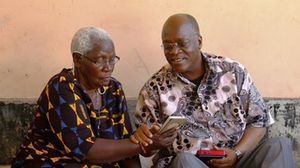
The same language dominated classrooms and official communication. Over time, Kiswahili replaced Chividunda in everyday use, relegating it to conversations among elders.
As the older generation aged, they took with them not only memories but also the linguistic heritage of their people. Chividunda began to fade quietly, spoken less frequently and valued less by the youth who perceived it as outdated.
At one point, the then minister for Information, Culture, Arts and Sports, Dr Harrison Mwakyembe, publicly identified Chividunda as one of Tanzania’s endangered languages, underscoring the urgency of its preservation.
Historically, the Uvidunda people were part of the Hehe before branching into a distinct community.
Amid this decline, an unexpected intervention emerged, not from within the community, but from a tourism entrepreneur based in Mikumi. In 2014, Makene Ngoroma launched the Uvidunda Mountains Cultural Tourism Enterprise, driven by a vision that cultural tourism could serve as both an economic lifeline and a tool for cultural preservation.
Mr Makene had long been familiar with the mountainous terrain and its people. He recognised something the community itself had overlooked: immense tourism potential embedded in their culture, landscape and traditions.
The hills were rich with lush vegetation, scenic viewpoints, sacred ritual sites and winding hiking routes.
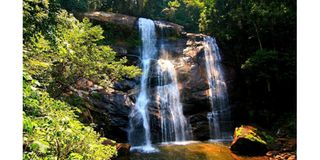
At the centre of it all stood the Chizua Waterfall, a striking natural feature that remained largely untouched due to local fears.
For years, villagers avoided the waterfall, guided by a long-standing legend of a giant serpent believed to inhabit its depths. The myth effectively preserved the site but also prevented its appreciation.
Makene, however, viewed the story differently. “I suspect the elders created that narrative to protect the area from destruction,” he remarked.
Determined to challenge the perception, he began leading small groups of tourists to the waterfall in 2015. Initially, the villagers watched in disbelief as he repeatedly ventured into what they considered a forbidden place. Over time, curiosity replaced fear.
Mr Makene recruited a local young man as a guide, assuring him of the area’s safety. As the guide began earning income from accompanying visitors, interest grew among other villagers. Slowly, perceptions shifted. The once-feared waterfall became a source of opportunity.
This transformation did not occur in isolation. Mr Makene’s engagement with the Uvidunda community had begun earlier through his work as a wildlife conservationist. Initially assigned to the area while working with Kilosa District, he encountered a community struggling with human-wildlife conflict. In their fight over water resources, some villagers resorted to poisoning elephants and killing lions.
Rather than viewing the community as adversaries, Mr Makene saw potential partners in conservation. He believed that if the people could derive tangible economic benefits from their natural environment, they would be more inclined to protect it.
In 2020, after years of building trust, he formalised this relationship through a Memorandum of Understanding with village elders.
The agreement allowed him to expand tourism activities while involving local youth in conservation efforts. These young men and women became custodians of their environment, ensuring that the waterfall and surrounding areas remained pristine.
“Through tourism, we encourage the conservation of our natural resources,” Mr Makene explained.
At the outset, the community struggled to see value in their surroundings. Their culture and environment had long been taken for granted. However, their proximity to Mikumi National Park provided a strategic advantage.
Mr Makene leveraged this by promoting Uvidunda as an off-the-beaten-path destination to tourists already visiting the park. He collaborated with hotels and lodges in the area, distributing brochures and directly engaging with visitors.
The response was immediate. Many travellers, particularly those seeking authentic and less commercialised experiences, were intrigued by the prospect of visiting a remote mountain community.
What followed was a profound shift, not just economically, but culturally. Tourists were captivated by Uvidunda traditions. They admired the community’s dances, the rhythm of their drums and the uniqueness of their language.
This external appreciation had an unexpected effect. For the first time, the Uvidunda people began to see the value of what they had nearly lost.
The youth, who had once dismissed Chividunda as irrelevant, began to embrace it anew. They sang traditional songs for visitors, taught them basic phrases and incorporated their language into performances. Cultural pride, once diminished, began to flourish.
Today, it is common to find members of the community speaking their language openly and confidently. What was once a fading identity has become a defining strength.
Despite this progress, the Uvidunda remain one of Tanzania’s smallest ethnic groups. Without deliberate efforts, there is still a risk of assimilation through intermarriage, migration and continued exposure to dominant cultures.
“There are people within Morogoro who are not even aware that this community exists,” Makene noted.
To counter this, Mr Makene has actively promoted traditional expressions such as the Ngwendu dance, which features bamboo instruments scraped with wire to produce distinctive sounds. These performances have encouraged the creation of new songs in Chividunda, further reinforcing its use among younger generations.
By linking cultural expression with economic benefit, the community has found a compelling reason to preserve its heritage. As Mr Makene succinctly put it, “They will not allow their language to disappear now that it sustains them.”
The journey, however, has not been without challenges. It required years of negotiation, patience and sustained engagement with community leaders. Building trust was essential, as was demonstrating that tourism could bring tangible improvements to livelihoods.
Today, the results are visible. The once-avoided Chizua Waterfall has become a symbol of transformation, drawing visitors from across the globe, including the US and Europe. Tourists hike the mountain trails, immerse themselves in local traditions and contribute directly to the community’s economy.
Equally significant is the shift in identity. In the past, some community members hesitated to associate themselves with Uvidunda. Now, that identity is worn with pride.
“They see visitors travelling great distances to experience their culture, and they understand its value,” Mr Makene observed.
Digital platforms have also played a role in this transformation. Through social media, Mr Makene has been able to showcase the uniqueness of Uvidunda to a global audience. Additionally, partnerships with local hotels have enabled him to reach tourists directly, often persuading them to venture beyond conventional itineraries.
Interestingly, his primary clientele consists of solo travellers, individuals seeking destinations that are unspoilt and less frequented. For them, Uvidunda offers a rare combination of authenticity and adventure.
“Many travellers are no longer interested in crowded attractions,” he explained. “They are searching for places that feel undiscovered.”
This shift in tourist preferences has worked in Uvidunda’s favour. By offering something distinct, the community has positioned itself as a niche destination within Tanzania’s broader tourism landscape.
Makene also highlights a broader issue often raised by visitors.
“They ask why a country with more than 100 tribes is globally represented by only a few, particularly the Maasai,” he said.
In response, he introduces them to Uvidunda, a small community with a rich yet previously overlooked heritage. What visitors may not immediately realise is that their presence contributes to something far greater than tourism.
It is helping to save a language from extinction.
Through a blend of cultural revival, conservation and entrepreneurship, the Uvidunda story illustrates how targeted interventions can safeguard intangible heritage. It is a testament to the power of recognising value where it has long been overlooked, and to the profound impact that even a small community can have when given the opportunity to rediscover itself.