Dar es Salaam. Perched along the ocean-front at The Slipway, with a line-up of tempting eateries nearby, lies the gateway to Bongoyo Islet, a short 30-minute boat ride away.
The islet forms part of the Dar es Salaam Marine Reserve System, a protected cluster of islets established to conserve marine biodiversity while allowing controlled eco-tourism activities.
Historically, Bongoyo was a quiet, uninhabited islet used mainly for fishing and occasional visits by coastal communities.
Over time, as Dar es Salaam expanded and tourism along the coast developed, it gradually became one of the city’s most accessible marine escapes. Despite its growing popularity, it has largely retained its natural character due to conservation rules that restrict permanent development.
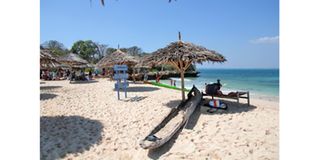
Despite Bongoyo islet’s growing popularity, it has largely retained its natural character due to conservation rules that restrict permanent development. PHOTO | ANGANILE MWAKYANJALA
Small makeshift boats operated by experienced skippers ferry passengers to a larger vessel anchored offshore. From there, travellers transfer to another small boat that takes them directly to the islet’s shore.
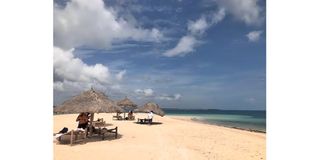
The islet quickly comes to life as visitors arrive. Its beaches are clean and unpolluted, with palm-thatched umbrellas scattered across the shoreline to provide shade.
Woven coconut-leaf structures enhance the islet’s natural aesthetics, reinforcing its rustic and eco-friendly appeal.
Visitors can relax on rope loungers, read a book, or catch up on urgent emails while still in holiday mode.
Bongoyo is widely regarded as an ideal spot for sunbathing, particularly for those seeking a quick escape from the city without long-distance travel.
From the islet, Dar es Salaam’s skyline is still visible, though its noise and bustle fade into the distance.
This sense of separation, despite physical proximity, is what makes Bongoyo particularly appealing to both residents and tourists.
Unlike urban beaches that are often crowded, visits to Bongoyo tend to be deliberate, creating a calmer and more intimate experience.
The water is crystal clear and the sand soft, making it suitable for picnics, provided visitors bring their own food, drinks and blankets.
Gentle winds reduce the likelihood of blowing sand, preserving the islet’s picturesque setting.
Visitors also walk along the shoreline collecting shells, while others enjoy jogging or yoga in the open space.
There are no known shark threats in the waters surrounding Bongoyo, making it one of the safer swimming spots near Dar es Salaam. This makes it particularly attractive for those seeking to swim in the ocean during hot weather, especially as temperatures rise during midday hours.
Freshly caught seafood is available around midday at a nearby restaurant, with octopus, fish and prawns on the menu.
Informal food stalls also serve grilled seafood along the beach. Coconut vendors move around the islet, offering fresh drinks cracked open on the spot with machetes.
After meals, visitors often rest for hours, enjoying the tranquillity and disconnecting from city life.
The contrast between white sand beaches, turquoise waters and the distant skyline makes Bongoyo a popular location for photography and video shoots.
Content creators also favour the islet for its relatively untouched and less commercialised setting. No filming permits or fees are required, adding to its accessibility for creative work.
Hiking is another activity on the islet, with two trails passing through dense coastal forest. One route leads to the remains of an old German colonial structure that once served as an outpost during the early colonial period.
Though not formally preserved as a heritage site, it remains of interest to history enthusiasts and casual explorers.
Snorkelling is also available, with visitors exploring coral patches and observing tropical fish in shallow waters.
Experienced divers may also explore deeper waters to view marine life and occasional shipwrecks scattered offshore.
As the sun sets, boats return to ferry visitors back to Dar es Salaam, marking the end of a day of quiet escape.
The islet’s proximity to the city makes it ideal for day trips requiring minimal planning. Visitors can leave in the morning and return by sunset.
Despite its accessibility, Bongoyo remains relatively unspoiled, with no major hotel developments or permanent commercial infrastructure.
Its inclusion in the marine reserve system has helped regulate access while preventing overcrowding and unchecked development seen on other urban beaches.
Entry remains affordable and informal, without the pressure of high-end tourism spending. Visitors enjoy a rare sense of seclusion, free from traffic noise and urban pressure. Most journeys begin and end at The Slipway, which also offers evening entertainment, including live jazz and bongo flava music as night falls.
In a fast-growing coastal city, Bongoyo continues to stand out as a reminder that simplicity, nature and accessibility can still coexist.
Register to begin your journey to our premium contentSubscribe for full access to premium content